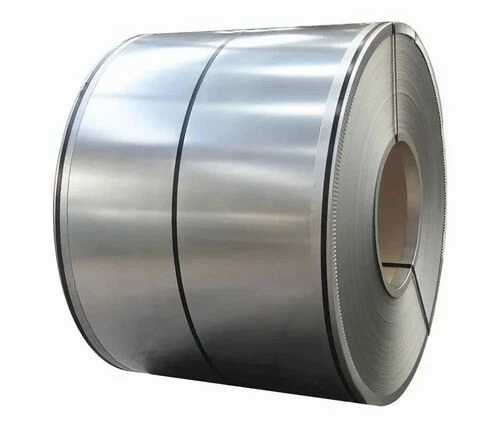
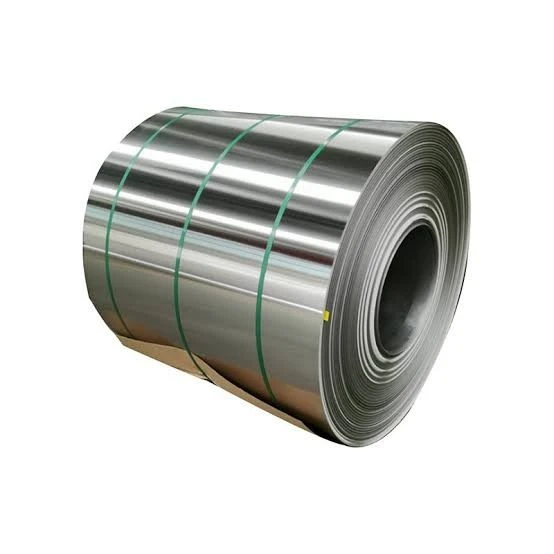
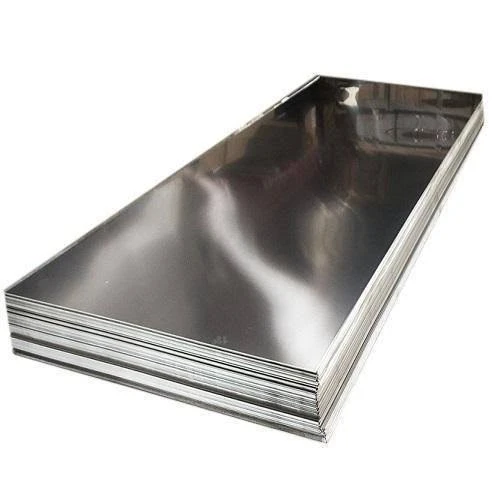
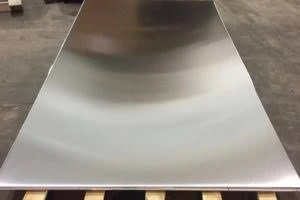
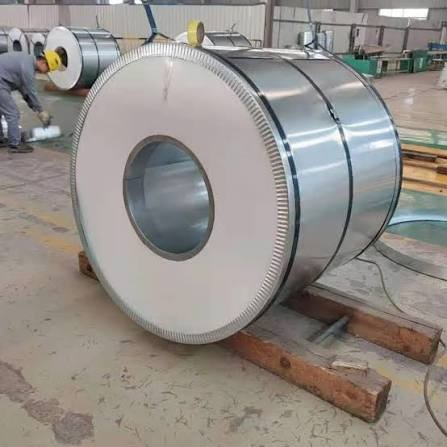
Austenitic stainless steels 304, 304L, 316 and 316L remain the practical backbone for industrial sheet and coil in corrosive or hygienic service. Their combination of chromium-nickel (and molybdenum in the 316 family) delivers reliable passivity, formability and weldability across chemical processing, structural cladding and water infrastructure. These grades are specified under ASTM A240/A240M for plate, sheet and strip, with chemical limits and minimum mechanical properties defined by heat analysis and annealed condition testing.
Composition and Corrosion Behaviour
tandard 304 contains 18.0–20.0 % Cr and 8.0–11.0 % Ni with carbon ≤0.08 %. The low-carbon 304L version limits carbon to ≤0.030 % (nickel range 8.0–12.0 %), reducing the risk of chromium carbide precipitation and intergranular corrosion after welding. 316 and 316L add 2.00–3.00 % molybdenum, lowering chromium slightly to 16.0–18.0 % while raising nickel to 10.0–14.0 %; carbon limits mirror the 304 pair. The molybdenum addition measurably improves resistance to pitting and crevice attack in chloride-bearing media.
In practice this means 304/304L perform well in neutral or mildly acidic aqueous environments common to many process water systems and indoor architectural exposure. 316/316L become the default where chlorides, dilute acids or saline cleaning agents are present-conditions frequently encountered in chemical reactors, desalination pre-treatment and coastal structures.
Mechanical Performance
Under ASTM A240 annealed condition requirements, both 304 and 316 deliver minimum tensile strength of 515 MPa and 0.2 % yield of 205 MPa, with 40 % elongation. The L grades are specified at 485 MPa tensile and 170 MPa yield while retaining the same elongation minimum. These values support cold forming of tanks, ducting and façade panels without intermediate annealing in most thicknesses. Continuous service temperature capability typically spans cryogenic levels to approximately 800 °C for 304-family grades and slightly higher for 316, limited by oxidation and long-term strength.
Application Contexts
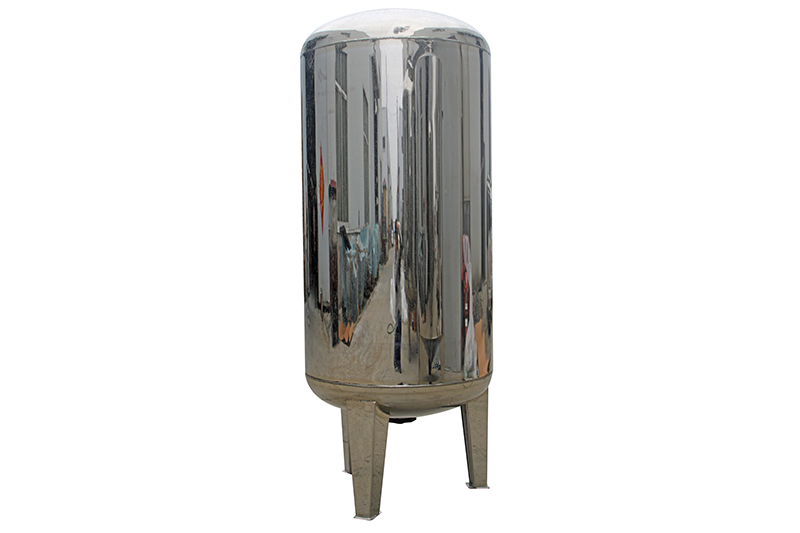
In chemical plants, 304L is routinely selected for welded vessels and piping handling organic acids or low-chloride process streams because post-weld heat treatment can be omitted. 316L is preferred for chloride-containing catalysts, scrubbers or coastal chemical terminals. Water-treatment installations-filtration housings, membrane support structures and distribution piping-use 304 for general municipal service and 316L where residual chlorine or brackish feed water raises pitting risk. Architectural and civil construction applications include curtain-wall cladding, handrails and structural supports in industrial buildings; here the choice often balances cost against local atmospheric chloride load, with 316L specified near marine or de-icing salt exposure zones.
Product Parameters
Typical supply ranges for industrial sheet and coil (cold-rolled or hot-rolled, solution-annealed) are summarised below, based on common mill practice aligned with ASTM A240 and related dimensional standards:
| Parameter | 304 / 304L | 316 / 316L |
|---|---|---|
| Standard | ASTM A240 / ASME SA240 | ASTM A240 / ASME SA240 |
| Thickness | 0.3–6 mm (CR); up to 20 mm (HR) | 0.3–6 mm (CR); up to 20 mm (HR) |
| Width | 1000 / 1219 / 1500 mm (slit from 40 mm) | 1000 / 1219 / 1500 mm (slit from 40 mm) |
| Surface finish | 2B, BA, No.4, polished | 2B, BA, No.4, polished |
| Tensile strength (min) | 515 MPa (304); 485 MPa (304L) | 515 MPa (316); 485 MPa (316L) |
| Yield 0.2 % (min) | 205 MPa (304); 170 MPa (304L) | 205 MPa (316); 170 MPa (316L) |
| Typical forms | Sheet, coil, slit coil, cut-to-size | Sheet, coil, slit coil, cut-to-size |
Surface finishes are selected for cleanability in process equipment or aesthetic requirements in construction. Material test certificates provide heat-specific chemistry and mechanical results for traceability.
Selection is driven by the chloride and temperature profile of the service environment rather than generic "premium" labelling. When weld integrity without subsequent heat treatment is critical, the L grades are specified; when pitting resistance is the limiting factor, molybdenum-bearing 316/316L is required. These four grades therefore continue to serve as the default industrial stainless solution across chemical, construction and water-treatment projects worldwide.
Hot Tags: 304 / 304l / 316 / 316l industrial stainless steel, China 304 / 304l / 316 / 316l industrial stainless steel manufacturers, suppliers, factory