

Galvanized Steel for Solar Mounting: The Ultimate Guide for PV Systems
1. Introduction: The Rising Demand for PV Infrastructure
The world is rapidly expanding renewable energy. Solar PV plays a key role in the global green transition. Its installation scale grows faster every year.
The CPIA (China Photovoltaic Industry Association) forecasts global new solar PV capacity will reach 500GW–667GW in 2026. Meanwhile, SolarPower Europe reports global cumulative installed PV capacity will exceed 7TW by 2029 in its medium growth scenario.
According to China's National Energy Administration, China's cumulative solar installed capacity hit 1,200GW (1.2TW) by the end of 2025. This figure represents a 35.4% year-on-year increase.
Solar mounting structures are the core of PV system stability and durability. Solar brackets act as the "steel backbone" of PV plants. They must endure harsh outdoor conditions for decades.
These conditions include extreme temperatures, high humidity, corrosion, and mechanical stress. They create strong demand for high-performance materials.
Galvanized steel is the top material for solar mounting. It delivers excellent durability, strength, and cost efficiency. This guide covers definition, production, advantages, types, applications, selection, installation, and trends. It helps PV developers, installers, and investors make better decisions.

Over the past 10 years supplying galvanized steel to the photovoltaic industry, we've seen firsthand how the right material choice can make or break a solar project. We've watched clients save millions by choosing high-quality corrosion-resistant galvanized steel for their mounting systems-and we've also seen costly failures from cutting corners on coating thickness or material strength.
As the global solar boom accelerates, we're writing this guide to share everything we've learned about galvanised steel for solar mounting.
Why Galvanized Steel Is Still the Best Choice for Solar Mounts
If you've spent any time researching PV mounting materials, you've probably seen endless debates about aluminum vs. steel vs. composite materials. After 12 years in this business, we can tell you one thing with absolute certainty: for 90% of solar projects, rust-resistant galvanized steel offers the best balance of durability, strength, and cost.
Corrosion is the #1 enemy of outdoor solar structures. Rain, humidity, salt spray, and industrial pollutants eat away at unprotected steel, leading to premature failure and costly replacements. Hot-dip galvanized steel solves this problem with two layers of protection:
A tough physical barrier that blocks moisture and corrosive agents
Sacrificial anode protection-if the coating gets scratched, zinc corrodes first to save the underlying steel
Our premium solar-grade galvanized steel passes 2,000-hour ASTM B117 salt spray tests, meaning it will last 25+ years even in harsh coastal environments. That's longer than the design life of most solar panels themselves.

2. What Is Galvanized Steel for PV Mounts?
Galvanized steel for solar mounting is a specially treated steel product. It uses a galvanizing process to greatly improve corrosion resistance.
It is designed specifically for PV mounting systems. It can withstand long-term outdoor exposure and keeps brackets stable for 25 years or more.
Production Process
There are two main production methods for solar-grade galvanized steel: hot-dip galvanizing and electro-galvanizing.
Hot-Dip Galvanizing: The most widely used in PV projects. It provides stronger corrosion protection.
Key Steps:
Cleaning: Workers remove all dirt, oil, and rust from the steel substrate.
Fluxing: The steel is dipped into a flux solution to prepare for strong zinc bonding.
Zinc Dipping: Immerse the steel in molten zinc at approximately 450°C. A dense zinc-iron alloy layer forms.
Cooling: The steel cools down, and the zinc layer hardens into a tight protective coating.
High-Performance Enhancement: Premium products add annealing, air knife blowing, temper rolling, and passivation to boost strength further.
Electro-Galvanizing: Uses electrolysis to deposit a thin zinc layer. Due to lower corrosion resistance, it suits only small or indoor PV projects.

3. Core Advantages for PV Applications
3.1 Superior Corrosion Protection
Corrosion is the biggest threat to outdoor steel structures. PV brackets face constant exposure to rain, humidity, salt spray (coastal areas), and industrial pollutants.
Galvanized steel forms a physical barrier that blocks moisture and corrosive agents. More importantly, it provides sacrificial protection: if the coating scratches, zinc corrodes first to protect the underlying steel.
Quality hot-dip galvanized steel passes 2,000-hour salt spray tests. This ensures a long service life in harsh coastal, industrial, and high-humidity environments.
3.2 High Strength & Structural Stability
PV panels, especially utility-scale modules, create heavy loads. Brackets must resist strong wind, heavy snow, and seismic forces.
Galvanized steel retains the high strength of steel with an excellent strength-to-weight ratio. Special solar-grade galvanized steel offers:
Yield Strength: Over 600MPa
Tensile Strength: Over 700MPa
Elongation: ≥20%
It stays stable in extreme weather, withstanding wind speeds up to 216km/h and temperatures down to -40°C.
3.3 Excellent Cost-Effectiveness
Although galvanized steel has a slightly higher upfront cost than ordinary steel, its long-term value is far superior.
Low Maintenance: It needs minimal upkeep and can last more than 50 years, eliminating frequent rust removal and replacement costs.
Eco-Friendly: Steel and zinc are highly recyclable, supporting the circular economy goals of renewable energy projects.
Superior to Aluminum: Compared to aluminum alloys, galvanized steel provides stronger load capacity at a lower cost, making it the most cost-effective choice for most PV projects.
4. Types of Galvanized Steel for Solar Mounts
 We classify galvanized steel based on three key criteria:
4.1 By Base Material
Carbon Steel: Low cost and high strength. Carbon content is often controlled between 0.15–0.18%. It fits most general PV projects.
Alloy Steel: Alloyed with Mn, Cr, or V. It enhances strength, corrosion resistance, and wear resistance. It is ideal for large-scale utility projects and harsh environments.
4.2 By Zinc Layer Thickness
Thin (50–80μm): For dry inland or indoor use. Ideal for small residential rooftop systems.
Medium (80–120μm): The most widely used. It balances protection and cost. Industry standards require 55μm for 1.5–3mm steel, 70μm for 3–6mm steel.
Thick (120μm+): Designed for coastal, industrial, high-humidity, or heavy-rainfall areas.
4.3 By Product Type
Galvanized Steel Profiles: Including C, U, Z shapes. They serve as main beams and uprights and are lightweight for easy installation.
Galvanized Steel Plates: Used for base plates and connectors. Zero-spangle hot-dip plates are common for their superior surface quality.
Galvanized Steel Pipes: Used for uprights in ground-mounted systems. They offer high load capacity and deep-buried stability.
5. Main Application Scenarios
5.1 Ground-Mounted PV Power Plants
This is the largest application segment, often ranging from MW to GW scale. Galvanized profiles and pipes form the main framework to support thousands of panels.
Coastal Projects: Use thick zinc or Zn-Al-Mg coating to resist salt spray.
Snowy Areas: Use high-strength grades to withstand heavy snow loads.
5.2 Rooftop PV Systems
Residential, commercial, and industrial rooftops require lightweight, easy-to-install brackets.
Galvanized profiles fit flat and sloped roofs.
They prevent rust and roof damage.
Hot-dip galvanized fasteners are recommended to prevent water leakage.
5.3 Agrivoltaic Projects (Solar+Agriculture)
These systems combine power generation with farming. Brackets typically stand 2–3 meters high to allow farm machinery and crops underneath.
Galvanized steel resists fertilizers, pesticides, and humidity.
It supports panel loads and wind forces while enabling sustainable dual land use.
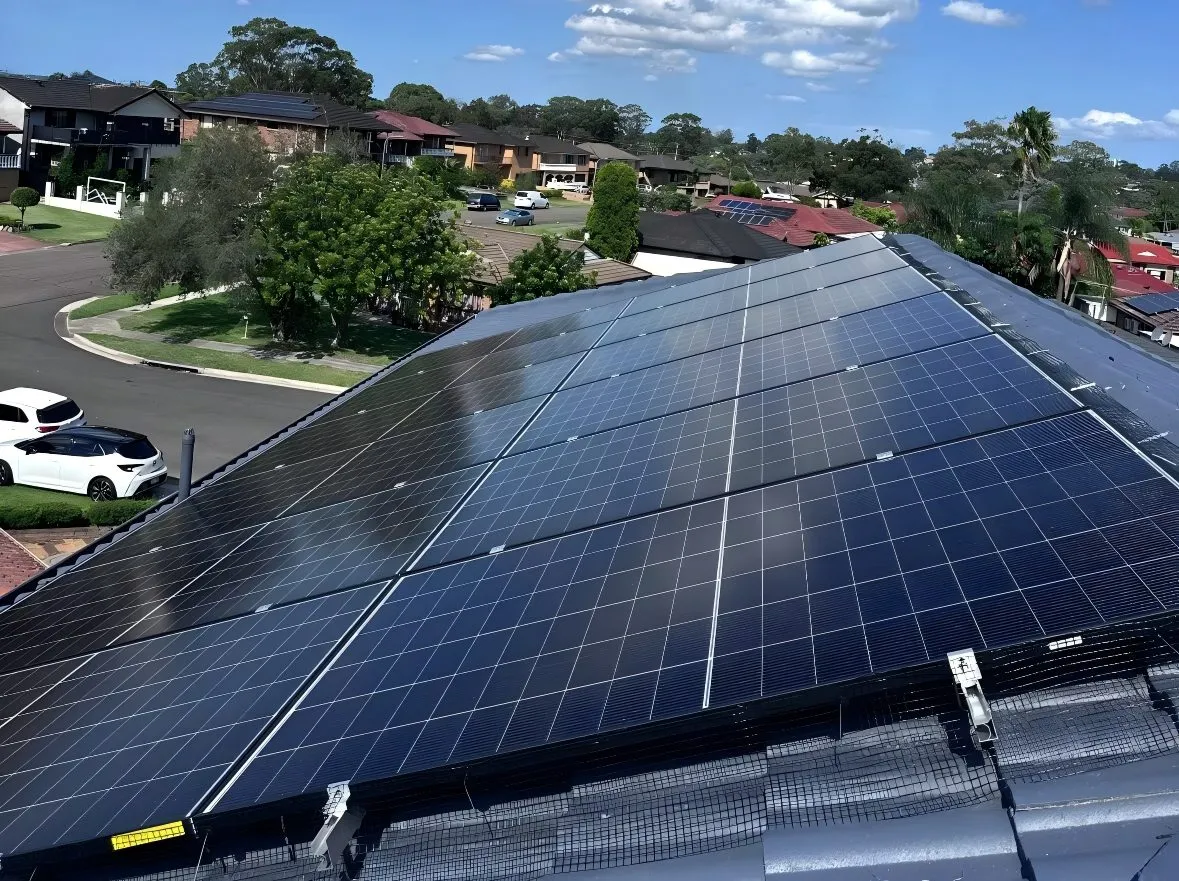
6.Application of photovoltaic projects of different scales
6.1 By Environment
Select materials based on salt spray levels, humidity, pollution, wind loads, snow loads, and temperature. Always prioritize safety and durability.
6.2 By Project Scale
Small (≤100kW): Light profiles with medium zinc layer. Cost-efficient and easy to install.
Medium (100kW–1MW): Carbon or low-alloy steel with medium-thick zinc. Requires higher strength for more panels.
Large (≥1MW): High-strength alloy steel with thick zinc. Use galvanized pipes for vertical supports.
6.3 By Budget
Limited Budget: Carbon steel with thin–medium zinc (suitable for mild environments).
Balanced Budget: Carbon or low-alloy steel with medium zinc (best value for most projects).
High Budget: High-strength alloy or Zn-Al-Mg galvanized steel (for long life in extreme sites).
7. Installation & Maintenance Best Practices
7.1 Pre-Installation
Site Survey: Check terrain, soil conditions, wind speed, snow load, salt spray, and pollution levels.
Material Inspection: Verify zinc thickness, surface quality, and dimensional accuracy.
Tool Preparation: Ensure drills, wrenches, levels, and safety gear are in good condition.
Weather: Choose dry, calm days. Avoid installation in rain, snow, or high winds.
7.2 During Installation
Protect Zinc Layer: Use gloves and avoid scratching the coating. Repair scratches immediately with cold galvanized paint.
Ensure Stability: Bury pipes at least 1.5 meters deep in coastal or windy areas. Seal rooftop penetrations. Keep brackets level and at the correct tilt angle for maximum sunlight absorption.
7.3 Post-Installation Maintenance
Regular Inspections (6–12 months): Tighten loose bolts and replace damaged parts.
Cleaning: Gently clean surfaces with water or a soft brush to remove debris.
Corrosion Repair: Apply cold galvanized paint to damaged areas. Replace severely corroded components.
Full Maintenance (3–5 years): Conduct a comprehensive check of zinc thickness, structural integrity, and fasteners. Keep detailed maintenance records.

8. Final Thoughts
we're more convinced than ever that corrosion-resistant galvanized steel is the best material for solar mounting systems. It's strong, durable, cost-effective, and 100% recyclable-perfect for supporting the global transition to renewable energy.
If you're working on a solar project and need help choosing the right galvanized steel, or if you have any questions about our products, please don't hesitate to contact us. We'd be happy to share our expertise and help you build a solar mounting system that will stand the test of time.


