The governing document remains NEN 3859, the Dutch national standard for commercial horticultural greenhouses. First issued in earlier form and still the everyday calculation basis used by local fabricators (many of whom run TNO/CASTA software calibrated to it), NEN 3859 defines service-life assumptions, tight deformation limits that keep glass panes from cracking, and the combination of permanent, wind, snow and crop loads that characterise the Dutch climate. European harmonisation has not displaced it; EN 13031-1:2019 now sits alongside it, classifying production greenhouses into stiffness classes and requiring the same attention to durability. In practice, Dutch builders still open with NEN 3859 and then check conformity with the Eurocodes (especially EN 1993 for steel) and the CE-marking rules of EN 1090-1.

What matters methodologically is the iterative calibration between national load tables and fine-grained local meteorological data. A greenhouse sited near the Maasvlakte experiences different design pressures from one inland near Venlo itself. Engineers feed those site-specific values into models refined over decades, then verify that residual deformations stay inside the glass-tolerance envelope. The result is a structure that looks almost delicate yet has proven durable across successive generations of Westland clusters-where roughly a quarter of the Netherlands' total greenhouse area is concentrated and average firm size has risen steadily toward 3–4 hectares.

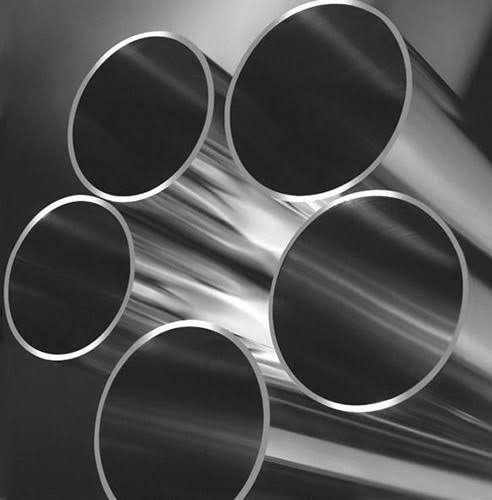
The coastal polder setting adds a second layer of demand. High humidity, occasional saline air, and the intense, nearly continuous light regime of commercial glasshouse production create a persistently aggressive micro-climate for structural steel. Almost every primary member is therefore hot-dip galvanized to NEN-EN ISO 1461. Cold-formed hollow sections to EN 10219 in grades S235, S275 or S355 dominate columns and trusses; the thin walls keep weight low while a properly specified zinc coating survives the humid, occasionally saline air. HortiQ's BRL 8000 assessment guideline, administered through independent certification bodies such as Kiwa, has become the de-facto quality filter for larger cluster projects, auditing both design process and finished structure.
These same performance requirements travel when Dutch firms export turnkey clusters. The structural language remains efficient only if local wind, snow and corrosion data are re-inserted into the original calculation logic. For projects that need bulk quantities of consistent, climate-tuned galvanized greenhouse steel, the combination of low material intensity, proven durability and traceable mill-to-site documentation continues to set the benchmark.
If you are specifying or supplying steel for high-humidity, high-light greenhouse clusters-whether in the Westland tradition or its international adaptations-contact Sino-Galvanized for technical data sheets, coating recommendations matched to coastal or inland conditions, and bulk supply options that meet the same rigorous service-life expectations.
Sources: NEN 3859 (Dutch Standards Institute); EN 13031-1:2019 (CEN); ZinkInfo Benelux technical notes on galvanized greenhouse steel intensity (3–12.5 kg/m²); HortiQ BRL 8000 documentation (Kiwa/HortiQ); manufacturer engineering statements referencing TNO/CASTA calculations; Westland greenhouse area figures from municipal and sector reports (approx. 2 300–2 500 ha, roughly one-quarter of the national total).