


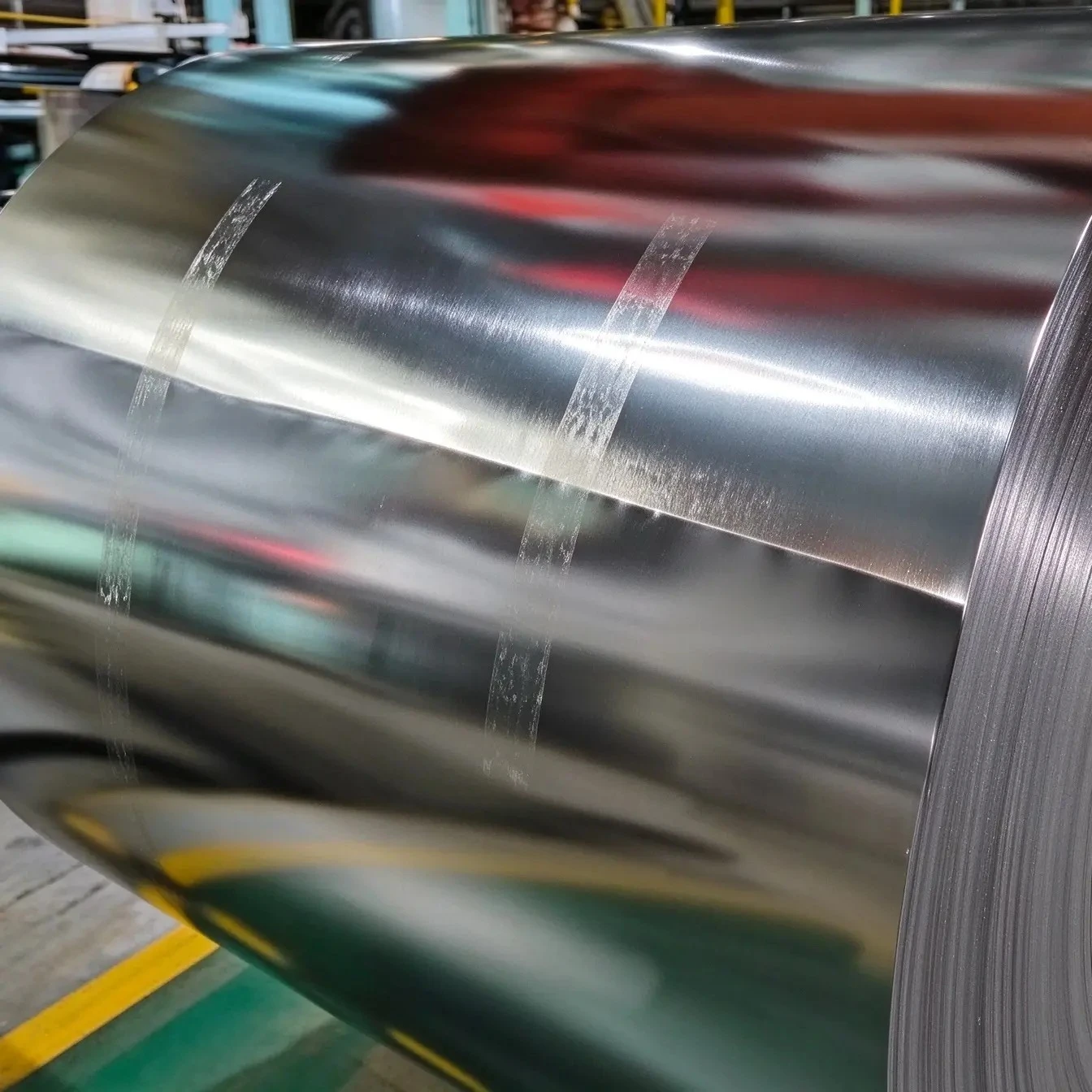
Every week, someone asks us the same question: "Can you do 201 stainless? It's half the price of 304."
We can. We stock it, we sell it - and sometimes we talk customers out of it. Because the question buyers really mean isn't "is 201 food grade?" It's "is 201 right for my product?" Those are different questions, and the answer matters long before the container ships.
What "food grade" actually means
Most buyers are surprised to hear this: food grade isn't a type of steel. It's a test result. When stainless touches food, tiny amounts of alloy elements - nickel, chromium, manganese - can migrate into the product. Food-safety standards put a ceiling on those amounts. Stay under the ceiling and your material is food-contact compliant. Go over it, and it doesn't matter what the brochure says.
You'll meet these standards on real orders: FDA rules in the US, NSF/ANSI 51 and 3-A for finished food equipment in North America, EU Regulation 1935/2004 in Europe, and GB 4806.9 if you're buying from China - which covers most of our Southeast Asian and Middle East customers. GB 4806.9, for example, caps manganese migration at 2.0 mg/kg. Remember that number; it comes back in a minute.
And here's the part that confuses people: in theory, any stainless family - 200, 300, 400 series - can pass these tests. In practice, some pass easily and some barely stand a chance.
Why 201 is cheap, and why it's a gamble

201 is austenitic, same family as 304, but it replaces most of the nickel with manganese. Nickel is what makes stainless steel expensive. Manganese isn't. So 201 undercuts 304 by a serious margin - which is exactly why it keeps turning up inside cheap "304" quotes.
The catch: with 5.5–7.5% manganese in the steel, 201 has a real chance of blowing past that 2.0 mg/kg migration limit in food simulants, especially acidic ones. Its corrosion resistance also sits a step below 304. In brine, pickled products, sauces, or the chlorinated cleaning cycles most food plants run, 201 will pit and stain sooner. Once corrosion starts, metal release accelerates - the one thing food-contact rules exist to prevent.
So, straight answer: for direct, repeated contact with hot, acidic, or salty food, we don't recommend 201. We'd rather turn down the order than ship a coil that gets someone's product recalled.
That said, 201 has a fair place: outer shells, brackets, trim, dry storage racks - anywhere food never touches the steel. There, buying 304 is paying for corrosion resistance you won't use. We tell customers this all the time. It's why they trust us with the orders that matter.
Where 430/2B and 410/2B fit
Two more grades show up in food-adjacent orders: 430 and 410.
430 is ferritic - roughly 16–18% chromium, almost no nickel, magnetic, inexpensive. It's fine in mild, dry service: appliance panels, equipment cladding, dry-area tables. It is not a 304 substitute on surfaces that stay wet or salty for long. The "2B" in 430/2B is the finish: cold-rolled, annealed, pickled, then skin-passed to a smooth, bright surface that's easy to clean. For food equipment sheet, 2B is the default for good reason.
410 is the odd one - martensitic, hardenable by heat treatment. That's why it's the standard for knife blades, slicer blades, and cutlery. China's older food-contact standard, GB 9684-2011, explicitly allowed martensitic steel for cutlery and food machinery cutting tools. One rule of thumb for 410 blades: they're made to cut, not to soak. Wash and dry them, and they'll last for years.
How to check what your supplier actually shipped
Mislabeled 304 - usually 201 underneath - is common enough that we check every coil, and you should too.
Skip the chemical test drops. Media tests showed they can't reliably tell 201 from 304. Instead: ask for the mill test certificate and read the composition against the grade you ordered. Look for a proper stamp - "304" or "SUS304" with a standard reference like ASTM A240. And listen to your price gut: when a quote sits far below the going rate for 304, there's usually a reason, and it isn't generosity.
For critical lots, spend the money on independent lab analysis. It's cheap next to a recall.
The short version
|
Grade |
Where it fits |
Our verdict |
|
201 |
Non-contact parts, trim, dry storage |
Fine there; not for direct food contact |
|
304 |
Tanks, tables, pipes, general food contact |
The baseline |
|
316 |
Salt, acid, chloride environments |
Worth the premium when media is aggressive |
|
430/2B |
Panels, cladding, mild dry service |
Good value where corrosion demand is low |
|
410/2B |
Knife blades, cutlery |
Great for cutting, not for soaking |

We're Shandong Pin Jie New Material, a steel coil manufacturer and exporter based in Shandong, China. We supply 304, 316, 201, 430/2B, and 410/2B coils and sheets with full mill test certificates, and we ship regularly across Southeast Asia and the Middle East. Tell us what you're processing - dairy, seafood, brewing, cutlery - and we'll help you pick the grade rather than just sell you one. Samples and MTCs are ready to send.


