Buyers specifying galvalume (55% Al-Zn) coils for household appliances or European projects routinely weigh chromated against chromium-free passivation. The thin conversion film applied after coating influences how the coil behaves during overseas transit, warehouse stacking, and subsequent fabrication, while also determining whether the accompanying documentation will satisfy customer or regulatory checklists.
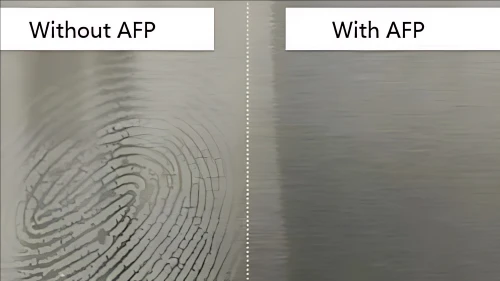
Surface treatments serve three practical functions on these coils. The first is temporary suppression of white rust-the powdery zinc corrosion products that form when moisture becomes trapped between tightly wound laps during humid storage or ocean shipment. Traditional chromate films and modern alternatives both raise the time to visible staining under wet-stack or condensing-humidity conditions; independent evaluations, including a 2007 comparative study published in Surface & Coatings Technology, found that commercially available chromium-free films delivered protection close to, though not always identical with, hexavalent chromate references in stack and humidity-cabinet tests. The second function is reduced susceptibility to fingerprint marking. Oils and salts from handling can otherwise create localized corrosion or visible spots; a well-applied passivation layer lowers this risk without leaving a heavy residue. The third is improved paint or powder-coat adhesion. Both chromated and chromium-free treatments leave a surface that accepts subsequent coatings, with laboratory paintability results (powder systems in particular) generally comparable across the two families, according to the same study and later industry notes from sources such as GalvInfo.


Regulatory context drives much of the current selection. Under the EU RoHS Directive (2011/65/EU, as amended), hexavalent chromium is limited to 0.1 % by weight in any homogeneous material of electrical and electronic equipment. Because a passivation film can be treated as its own homogeneous layer, intentional use of Cr(VI) chemistry risks exceeding the threshold and complicating declarations. REACH places chromium trioxide and related Cr(VI) substances under authorization; industry groups such as BEAMA reported that many galvanizing operations completed the transition away from chromium trioxide passivation by the September 2024 expiry of certain authorizations, adopting chromium-free or Cr(III) alternatives while stating that long-term coating performance remained unaffected. Appliance customers exporting to the EU therefore commonly request explicit statements that the surface treatment is free of restricted Cr(VI), together with supporting test reports or mill certificates.


In practice the performance gap on the three functions is modest. Chromated films have historically shown a slight edge in the most aggressive wet-stack or salt-spray windows for white-rust delay, yet chromium-free systems now routinely meet the storage and transit expectations of coil producers. Fingerprint resistance is regarded as good for both; paint adhesion is essentially equivalent for typical appliance pretreatments. Compliance documentation, however, is simpler with chromium-free chemistry, which is why it has become the default for galvalume destined for EU-bound appliances and related export programs. Major producers in Asia and North America have shifted capacity accordingly, offering RoHS-oriented chromium-free options (for example, formulations evaluated under ASTM D4585 condensing humidity or in-house wet-stack protocols) as standard rather than special.
| Purpose | Chromated performance | Chromium-free performance | Compliance note |
|---|---|---|---|
| White-rust delay | Stronger in some accelerated tests | Good for normal storage/transit | Chromium-free preferred |
| Fingerprint resistance | Good | Good | Chromium-free preferred |
| Paint adhesion | Good | Good | Comparable |

Appliance manufacturers and contractors supplying the European market can therefore treat chromium-free passivation as the baseline for preliminary specification on galvalume coils, confirming only that the specific film weight and test data meet their internal storage and coating lines. Chromated material remains available for non-regulated end uses, but the documentation burden and market preference have moved decisively toward the chromium-free route.
For coils produced to these requirements, see the galvalume steel coil range and the dedicated appliance solutions section. Contact us for specific technical data or sample requests.