Home appliance manufacturers and EU-bound buyers regularly face a practical choice when specifying galvalume (55% Al-Zn) coils: traditional chromated passivation or chromium-free alternatives. The treatment affects short-term surface stability during handling and storage, and it also determines whether the accompanying compliance package will meet typical customer documentation requirements.
The Three Core Purposes of Surface Treatment
Surface treatments on galvalume coils primarily serve three interrelated functions during the period between mill exit and final fabrication.
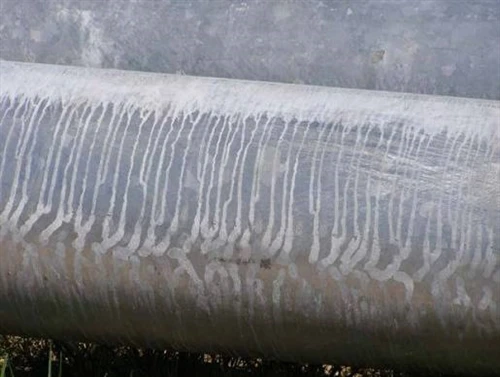
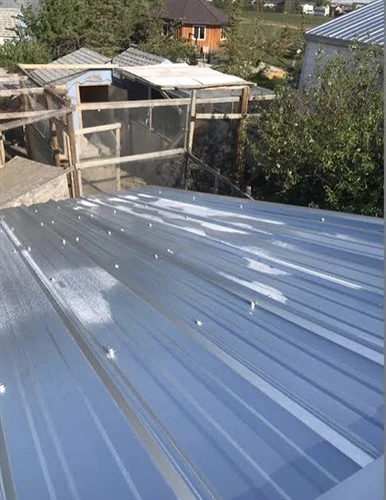
First, they inhibit white rust (storage stain). When moisture is trapped between coil laps or stacked sheets with limited air circulation, zinc and aluminum react to form white or grey corrosion products. A thin conversion layer slows this reaction. Industry technical notes such as GalvInfoNote 2.10 describe passivation as a practical means of delaying stain formation under normal transit and warehouse conditions; prolonged wet storage still consumes coating regardless of treatment type.


Second, treatments improve fingerprint resistance. Residual salts and skin oils can leave visible marks or initiate localized corrosion. Chromated films have historically provided strong resistance to such marks because of their thin, self-healing character. Chromium-free systems achieve comparable results through controlled film thickness and chemistry, though application parameters (coating weight, drying) are typically more critical.


Third, they improve coating adhesion for subsequent painting or powder coating. The passivation layer creates a receptive surface for pretreatment and paint. Comparative evaluations of painted panels (including studies examining trivalent and fully chromium-free systems versus traditional chromate) have shown that powder coatings perform well across the treatments, while solvent-borne systems can show modest differences depending on the specific chemistry. Overall, modern chromium-free formulations deliver adhesion performance that is operationally equivalent for most appliance applications.
Regulatory Background and Customer Documentation Expectations
Hexavalent chromium (Cr(VI)) is restricted under the EU RoHS Directive 2011/65/EU (as amended). The limit is 0.1% by weight in each homogeneous material. Passivation films are commonly assessed under methods such as IEC 62321-7-1, which reports results in µg/cm² and helps determine whether intentional Cr(VI) is present.


Under REACH, chromium trioxide and related Cr(VI) compounds have faced progressive restrictions and authorisation requirements. Industry statements from associations such as BEAMA note that the use of chromium trioxide in galvanizing passivation processes was effectively phased out in the UK and EU by September 2024, with manufacturers shifting to alternative chemistries while stating that long-term coating performance remains unaffected. Home-appliance customers routinely request declarations of conformity, mill test certificates confirming the passivation type, and, where applicable, third-party test reports confirming Cr(VI) levels below RoHS thresholds. These documents form part of the technical file needed for CE marking of the finished appliance.
Performance Comparison
| Treatment Purpose | Chromated Performance | Chromium-Free Performance | Compliance Friendliness |
|---|---|---|---|
| Inhibit white rust | Better | Good | Chromium-free superior |
| Fingerprint resistance | Better | Good | Chromium-free superior |
| Coating adhesion | Good | Good | Comparable |
Chromated treatments generally retain a modest edge in white-rust and fingerprint resistance under laboratory salt-spray or humidity conditions, consistent with findings in comparative corrosion studies of conversion coatings on hot-dip coated steel. Chromium-free systems close most of this gap for typical storage and transit times and eliminate the need to manage Cr(VI) in the compliance file. Adhesion results are broadly comparable once the paint system is optimized.
Current Practice in Export and Appliance Markets
Chromium-free passivation has become the default specification for galvalume coils destined for EU markets and major appliance OEMs. Producers in Europe, North America, and Asia have commercialized chromium-free options (including systems free of both Cr(VI) and, in some cases, all chromium) that meet temporary-protection and paintability requirements while simplifying REACH and RoHS documentation. Buyers specify chromium-free material at the inquiry stage to avoid later requests for substitution or additional testing.
Appliance manufacturers and project teams exporting to the EU can use the comparison above for initial material selection. Final confirmation should include review of the supplier's passivation certificate and any required corrosion or adhesion data for the intended paint system.
For technical data sheets, available passivation options, and appliance-grade galvalume coils, visit the galvalume steel coil product page and the home-appliance solutions section on the Sino-Galvanized website. Contact us for specific compliance support.