Tests That Reflect Stretching and Rapid Deformation for Appliance Deep Drawing
Deep-drawn parts such as refrigerator panels, washing-machine cabinets or oven bodies experience high elongation and sudden shape change. Cupping (Erichsen-type) and reverse-impact tests capture these conditions more closely than pure bend tests.
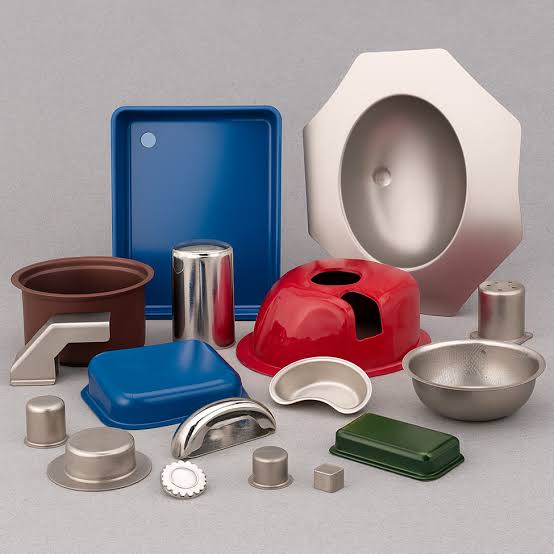
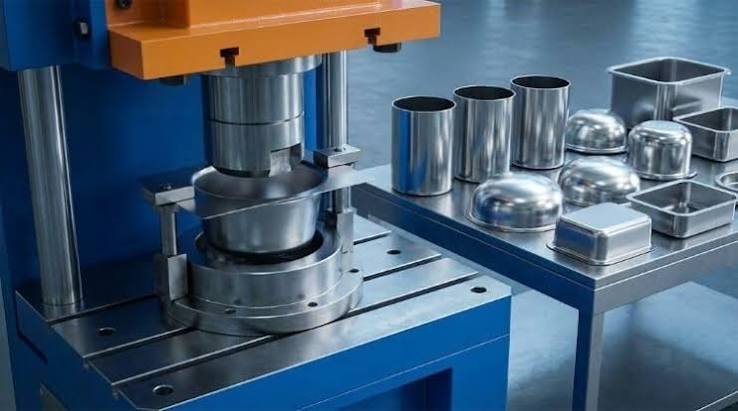
Cupping follows the principle in ISO 1520 (and equivalent national methods). A 20 mm hemispherical punch advances at a controlled rate (typically 0.1–0.3 mm/s) into the reverse side of a clamped panel, forming a dome with the coating on the tension face. The coating is examined for cracking or detachment at a specified depth or until first failure. This slow, progressive biaxial stretch approximates the strain distribution of press forming.
Reverse impact follows ASTM D2794. A falling weight strikes an indenter on the uncoated reverse side, rapidly extruding a dome on the coated face. The coating experiences both compression near the center and tension at the perimeter; failure is assessed by visual inspection and optional tape pull-off. Because the deformation is fast, the test is more severe than slow bending and is routinely used on coil-coating lines supplying appliance grades. Chinese practice for prepainted sheet (GB/T 13448) likewise includes reverse-impact and cupping among the forming-related adhesion checks.
T-Bend Alignment with Roofing Folding and Profiling
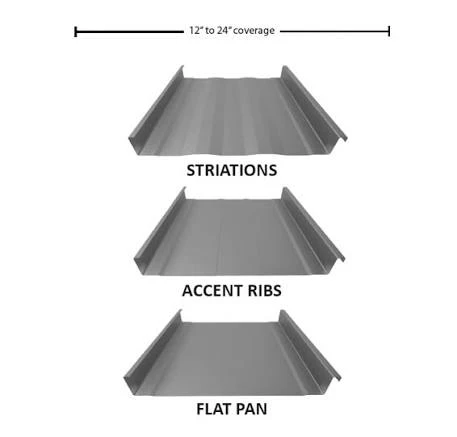
Roofing and cladding sheets are shaped mainly by roll-forming or press-brake folding. The T-bend test (ASTM D4145 / EN 13523-7) directly reproduces this geometry. The coated sheet is bent 180° around itself or successive multiples of its own thickness (0T = bent on itself, 1T = one thickness as spacer, etc.). After each bend the tension side is examined for cracking and for pick-off after tape application. Results are reported as the tightest T rating that remains intact. Architectural and roofing coil coatings are commonly specified to pass 1T or 2T without cracking or adhesion loss, matching the radii used in trapezoidal or standing-seam profiles. The method is widely referenced in European coil-coating technical delivery conditions and in North American architectural specifications.
Cross-Cut as the Common Baseline
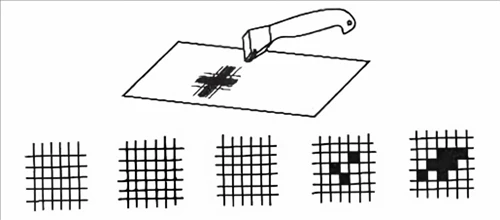
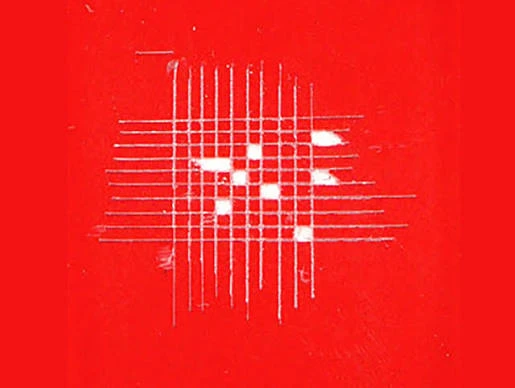
Cross-cut (ISO 2409 or ASTM D3359 Method B) remains the simplest adhesion screen for both product families. Parallel cuts through the coating to the substrate form a lattice; adhesive tape is applied and removed; the amount of coating removed is graded (ISO 0–5 scale or ASTM 5B–0B). Because it requires no specialized forming equipment, it is suitable for incoming inspection and for verifying inter-coat and coating-to-metal adhesion before more demanding deformation tests are applied. Most supply contracts therefore retain it for both appliance and roofing grades.
Recommended Test Combinations
| Product type | Priority tests | Secondary test | Rationale |
|---|---|---|---|
| Appliance deep-drawing parts | Cupping (ISO 1520), reverse impact (ASTM D2794) | Cross-cut | Closer to tensile stretch and rapid deformation |
| Roofing bending parts | T-bend (ASTM D4145 / EN 13523-7) | Cross-cut | Directly matches roll-forming and folding radii |
| General prepainted coil | Cross-cut + T-bend | As required | Covers basic adhesion and moderate bending |
Quality managers drafting technical agreements should state the exact method, acceptance criterion (for example, no cracking or pick-off at a defined T rating, cupping depth or impact energy) and sampling frequency. Aligning the specified tests with the forming route reduces the risk that material passes laboratory checks yet fails in production.