T-Bend Test: Adhesion and Cracking Resistance After Controlled Bending
The T-bend procedure (ASTM D4145, also referenced in EN 13523-7) folds the coated sheet 180° around itself or a die, using successive thicknesses of the metal as spacers. A 0T bend places the sheet against itself; a 2T bend introduces two sheet thicknesses. After each bend the outer (tension) surface is examined visually or at low magnification for cracks, then pressure-sensitive tape is applied and pulled to check for coating pick-off.
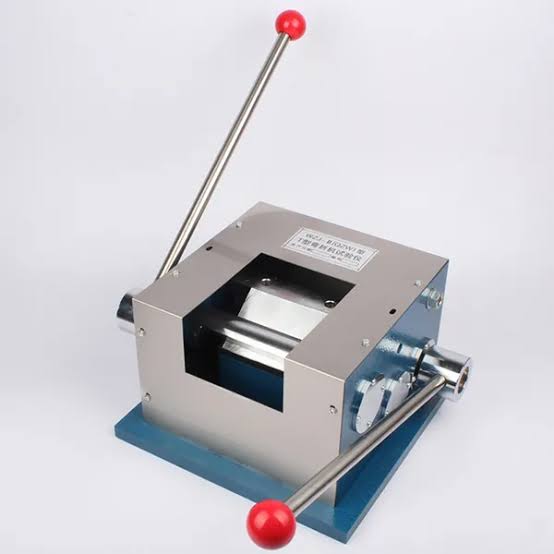
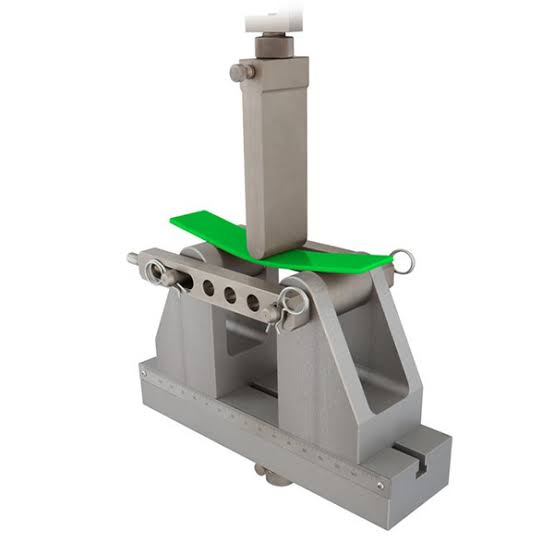
Because the deformation is slow and uniaxial, the test closely simulates roll-forming and press-brake operations used on architectural and roofing coils produced in East Asian and European coil-coating lines. Results are expressed as the minimum T-value that remains crack-free and free of pick-off. Architectural polyester and PVDF systems are frequently specified at 1T–2T no-pick-off.
Reverse Impact Test: Adhesion Under Rapid Deformation
ASTM D2794 drops a weighted hemispherical indenter (commonly 15.9 mm diameter) onto the reverse side of the panel, producing a rapid dimple. The coated face experiences a complex stress state-compression at the center and tension at the edges-within a fraction of a second. Tape pull-off is again used to assess any loss of adhesion.
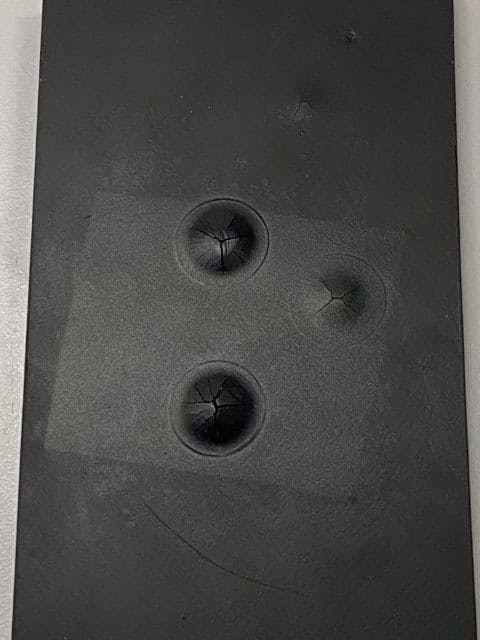
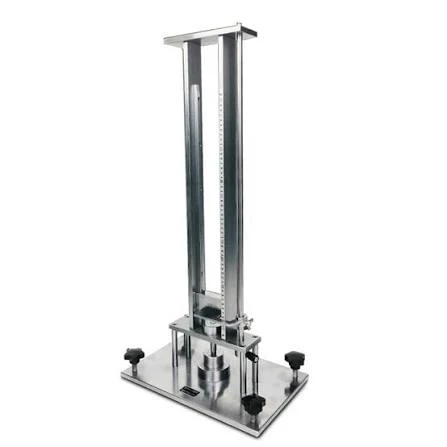
Coil-coating laboratories in China, Japan and North America run this test routinely on production samples because it reproduces the sudden deformation that occurs in high-speed stamping of appliance housings. Numerical energy values (inch-pounds or joules) show limited inter-laboratory reproducibility; ranking or pass/fail against an agreed energy level is therefore preferred. Reverse impact is generally more severe than direct impact for thin organic coatings.
Cross-Cut Test: Basic Interfacial Adhesion
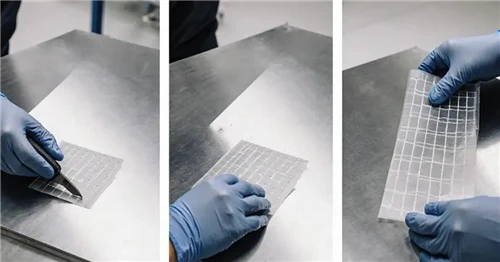
ISO 2409 (and the closely related ASTM D3359 Method B) cuts a right-angle lattice through the coating to the substrate, applies tape, and rates the amount of detachment on a 0–5 scale. The method evaluates resistance to separation at the coating–substrate or inter-coat interface under essentially zero macroscopic strain.
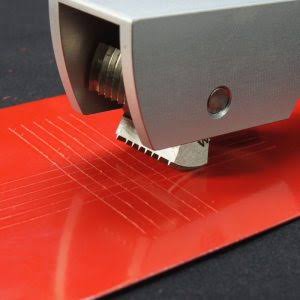
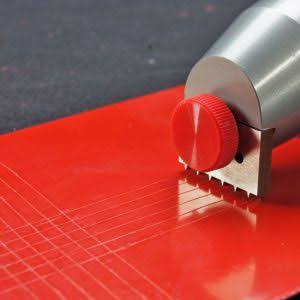
Because no forming is involved, the cross-cut test is the preferred first-line check for incoming coil inspection and for verifying pretreatment and primer quality before any downstream fabrication. It is widely specified in both Chinese GB/T 9286 and European appliance contracts. The standard itself notes that the procedure is empirical and does not measure absolute adhesion strength (ISO 4624 pull-off is required for that).
Cupping Test: Adhesion and Extensibility Under Biaxial Stretching
In the Erichsen-type cupping test (ISO 1520 / ISO 20482 for the metal; ASTM D7093 for thin-film organic coatings on steel), a spherical punch draws a dome in the clamped sheet until the coating cracks or loses adhesion. The depth at failure (or a fixed depth followed by tape pull) quantifies the coating's ability to follow large biaxial strains.
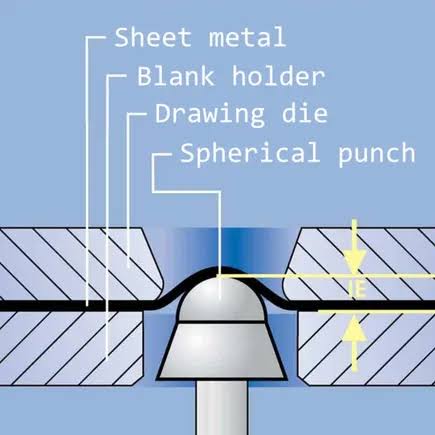
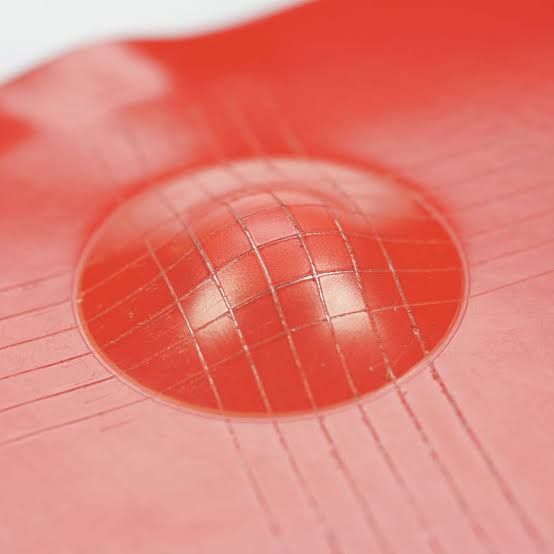
Typical surface strains reach approximately 30–40 % at cupping depths of 7–9 mm on 0.5–0.6 mm hot-dip galvanized substrate. The method is therefore the relevant check for deep-drawn refrigerator doors, washing-machine cabinets and other parts that undergo multi-axial stretch in East Asian white-goods plants. ASTM D7093 specifically addresses the thin (2.5–10 µm) films common in coil coating and links results to stamping performance.
Side-by-Side Comparison
| Test method | Primary property evaluated | Deformation mode | Common reference standards |
|---|---|---|---|
| T-bend | Post-bend adhesion and cracking resistance | Slow uniaxial bending | ASTM D4145, EN 13523-7 |
| Reverse impact | Adhesion after rapid deformation | High-strain-rate impact | ASTM D2794 |
| Cross-cut | Basic interfacial adhesion | Cutting (no bulk strain) | ISO 2409, ASTM D3359, GB/T 9286 |
| Cupping | Adhesion and extensibility under stretch | Biaxial stretching | ISO 1520, ASTM D7093 |
When Each Test Is Typically Applied
- T-bend is specified for roofing, cladding and any product that will be roll-formed or brake-bent.
- Reverse impact is written into appliance and automotive contracts where high-speed stamping occurs.
- Cross-cut remains the baseline adhesion screen for all prepainted steel, independent of later forming.
- Cupping is added when the part geometry involves significant deep drawing or stretch forming.
Choosing the matching combination of coating adhesion test on prepainted steel, rather than a generic "adhesion" clause, gives the contract enforceable technical meaning. For detailed product data sheets and laboratory protocols covering T-bend versus cross-cut test results or cupping test painted steel performance, visit the color-coated product pages and technical resource section.