A coil fails on your line because the coating cracks at the bend. Our inspection certificate reports a pass on the same test. Both can be correct. The contract named ASTM D4145 or ISO 2409 but never fixed the bend radius you accept, the number of coils to sample, or the point in the coil the specimen is cut from. Adhesion disputes rarely turn on whether the laboratory ran the test. They turn on sentences that were left unfinished.
We produce and supply prepainted coil, so we sit on both sides of that conversation: our coating line issues the certificate, and our customers form the strip into panels. The notes below describe how we write the sampling and acceptance section of a technical annex.
The gap sits between the method and the order
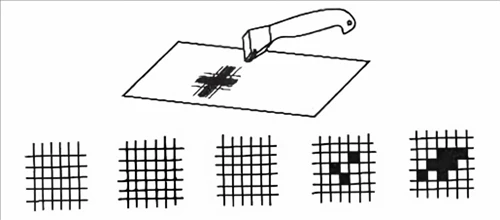
ISO 2409 tells a laboratory how to cut a lattice: blade spacing, tape, and six classes from 0 to 5. ASTM D4145 tells it how to bend a panel and how to read the bend afterwards. Neither standard knows what your product needs. A Class 2 cross-cut is a valid ISO result and a rejected coil at the same time, and only your purchase order can decide which applies.
The common shortcut is a line reading tested in accordance with ISO 2409, sometimes with grade 1 or better appended. That reads exact and settles very little: grade 1 at 1 mm spacing is not the same surface as grade 1 at 3 mm spacing, and the standard permits both.
Decide the number you will accept first. Then decide how that number is produced.
A lot is a production fact, not a shipping unit
Buyers and mills often mean different things by batch. For sampling to carry any weight, the lot has to be defined on the line: one continuous run, the same substrate grade, the same pretreatment, the same paint system, the same nominal film thickness, inside a stated window. Film thickness needs a band rather than a single figure. A lot that spans 18 to 25 micrometres of topcoat averages away the variation the clause was written to catch.
Three bases are in use, and the choice follows the cost of a bad coil more than the size of the order.
Per coil. Each coil is tested and identified by number, so the result stays with the material that carries it. It fits heavy films, appliance and automotive work, and lines where one failed coil stops production.
Per lot or coating run. One set of specimens stands for a defined lot, and the coil numbers it covers are listed on the certificate. This is the usual basis for repeat orders of one specification.
Per tonnage. One set per 10 t or 20 t, or whatever figure both sides agree. Commodity grades and large shipments, where testing every coil adds paperwork rather than information.
Write the frequency as a number, because regularly and as required cannot be audited. Name what starts a new lot as well: a fresh paint batch, a maintenance stop, a gauge change, a break in production longer than the agreed interval. That sentence closes the most common loophole in adhesion annexes, where a March certificate is presented as evidence for June coils.
Cut the specimen where the coil actually performs
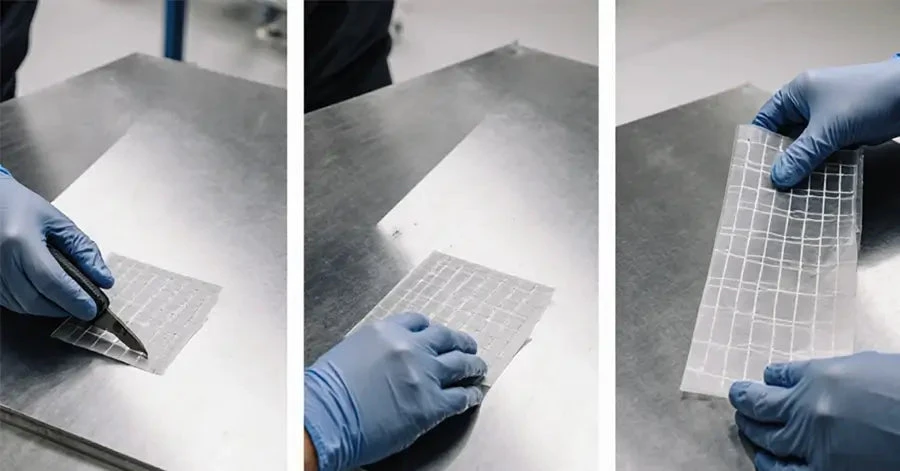
Position matters more than most annexes admit. Adhesion at the outer wrap is not adhesion at mid-coil, and the strip edge is not the centre, where the film is usually thickest. Our default wording:
One metre in from the head and one from the tail, so the sample represents the body of the coil and not the handling zone.
Full strip width where the method allows it. On roofing and facade material, two positions instead: one at mid-width, one within 50 mm of the edge.
Three specimens per test per set. A single T-bend reading is a data point, not a distribution.
No wiping, no degreasing and no polishing of the coated face. Flat panel, conditioned at 23 ± 2 °C and 50 ± 5 % relative humidity as ISO 3270 describes.
The number you accept, test by test
The table below converts a method reference into a limit that a laboratory can apply and a third party can audit.
Table 1. Sampling basis and acceptance wording for four adhesion tests
|
Test item |
Suggested sampling |
Common acceptance reference |
Contract wording |
|
T-bend (ASTM D4145) |
Per coil, or one set per lot |
Specified T grade, no cracking, no coating removed by tape |
"No cracking and no tape removal at 2T or tighter" |
|
Cross-cut (ISO 2409) |
Per coil, or one set per lot |
Class 0 to 1 for exterior exposure |
"Class 1 or better; Class 0 where specified" |
|
Reverse impact (ASTM D2794 / ISO 6272) |
Per lot, per coil for critical parts |
No cracking or detachment at the stated energy |
"20 J reverse impact, no cracking, no tape removal" |
|
Cupping (ISO 1520) |
On request, or per lot for formed parts |
Minimum cup depth before cracking |
"6.0 mm without cracking" |
A T-bend clause needs two failure definitions: cracking at the bend, and coating lifted by the tape. An annex that names only the first passes a surface that fails on tape pull. State the orientation too, with the coating on the outside of the bend, name the tape product, and test at delivery gauge, since the grade moves with substrate thickness.
For cross-cut, put the grid spacing next to the class. ISO 2409 uses 1 mm up to 60 micrometres of coating, 2 mm from 60 to 120 and 3 mm above 120, so a clause without a spacing can return two grades from one panel. The method also loses reliability on embossed and stippled finishes and on films above roughly 250 micrometres; specify pull-off adhesion to ISO 4624 there, with a minimum bond strength in MPa and the failure mode recorded.
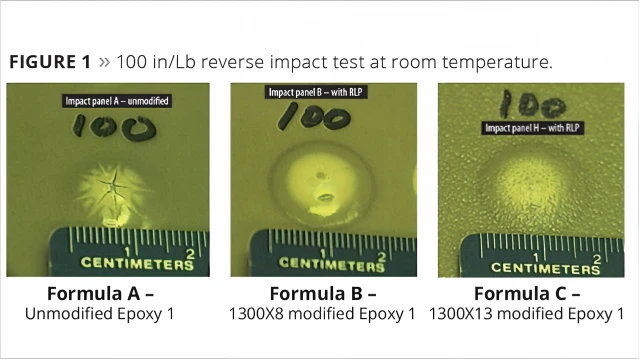
Reverse impact needs three items in one sentence: energy, indenter diameter and criterion. No cracking alone misses the detachment that often surrounds an indentation without a visible film crack, so add a tape pull.
Under ISO 1520, cupping is reported as the depth at first crack. Write it as a minimum depth achieved without cracking, not as a pass label.
What happens after a failure
A grade with no disposition rule leaves a failed coil in dispute at the worst moment, which is after it has shipped and cut.
Fix conformity at lot level: the lot conforms when every set taken from it meets every limit in the annex. Decide whether a retest exists. On commodity grades we accept double sampling, two further sets from the same lot, both of which must pass. On structural and appliance grades we test per coil and allow no retest, because a second specimen cannot make a cracked film sound. Then write the outcome: return, replacement or a price adjustment, who pays the freight, and which laboratory settles a disagreement. Name the arbitration laboratory in advance and keep sealed specimens for an agreed period.
Paper that survives an audit
Ask for a certificate carrying the coil number, the paint batch, the measured topcoat thickness, the pretreatment, the methods used, each result and the date. A certificate that reads adhesion: pass can be neither audited nor defended in a claim. We issue certificates at that detail per shipment and keep the tested panels; in practice the record settles more arguments than the steel does.
Where the clause belongs in the contract
Put the sampling rules and acceptance criteria in the technical annex, reference them from the quality clause of the main agreement, and keep the coating system, the thickness range and the substrate grade in the same place. Consistency matters more than length. An annex demanding Class 0 cross-cut, against a main agreement that says standard commercial quality, will be decided by whoever reads the main agreement.
If you are revising a prepainted steel contract specification, start from the sampling basis and the pass limits, then work back to the methods. Our technical resources page carries clause examples for T-bend, cross-cut, impact and cupping, with the specimen handling notes we apply in our own laboratory. Send the annex you use now, and we will mark where a class, a frequency or a disposition rule is still missing.