Downstream fabricators working with
hot-dip galvanized or
Galvalume sheet routinely face a practical choice between traditional
hexavalent chromate passivation and modern
chromium-free systems. The passivation layer influences weld quality, paint adhesion process windows, and surface condition during inventory, so the selection should reflect the actual sequence of operations rather than a single corrosion-resistance number.
Chromate films have long been known to affect resistance spot welding. GalvInfoNote 2.10 (International Zinc Association) notes that any chromium-based passivation can "poison" copper electrodes, softening tips and shortening tip life; many automotive and appliance lines therefore specify non-chemically treated sheet when high-volume automated spot welding is required.
Chromium-free treatments remove this electrode-contamination mechanism. Nippon Steel's Technical Report No. 129 (March 2023) documents a chromate-free "QC" film on hot-dip galvanized sheet that delivered an optimum welding-current range equal to or wider than the conventional chromate reference when tested on a single-phase AC welder with 4.5 mm tip electrodes (nugget-diameter criterion 4√t). thyssenkrupp Steel's published comparison of chromium-free versus Cr(III) passivation on galvanized flat steel likewise reports that standard welding parameters produce comparable results for both systems. In practice,
chromium-free coatings are therefore regarded as more welding-friendly, although electrode force, current, and tip maintenance still need confirmation for each substrate and thickness.


Both families of passivation normally support subsequent coating, yet the process latitude differs slightly. A 2007 comparative study published in
Surface and Coatings Technology evaluated commercial Cr-free, Cr(III) and hexavalent chromate films on hot-dip galvanized steel. Powder paint performed well on all three; solvent-borne paint preferred the trivalent chromium film; water-borne systems showed blistering on all under Cleveland humidity testing, with the hexavalent film marginally better. Nippon Steel's QC evaluation confirmed equivalent cross-cut tape adhesion for a melamine-alkyd topcoat. thyssenkrupp data indicate that powder-coating adhesion on chromium-free surfaces is at least as robust as on Cr(III) and less sensitive to residual moisture. The practical implication is that
chromium-free passivation is fully viable for appliance and construction painting lines, but pre-treatment chemistry, baking schedule and humidity control remain critical variables-especially when the coating system is water-borne.


Storage Performance: White Rust and Fingerprints
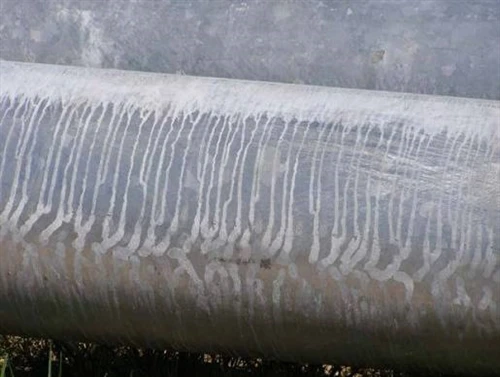
White-rust (storage-stain) resistance is the historical strength of chromate. The same 2007 study found that both chromium-free and Cr(III) films gave good but not fully equivalent protection compared with hexavalent chromate in accelerated corrosion tests. Nippon Steel's outdoor-exposure and cyclic-corrosion testing of pre-painted
Galvalume (Technical Report No. 108) showed that chromate-free panels were slightly more prone to white rust at tight bends in laboratory CCT, yet after five years of natural exposure the two systems were essentially equivalent in ordinary outdoor atmospheres. GalvInfo notes emphasise that environmental humidity and coil-wrapping practices dominate real-world storage outcomes for both chemistries; chromium-free films often require higher coating weights or complementary organic sealers to match the self-healing behaviour of hexavalent chromate. Fingerprint resistance is typically achieved by additional acrylic or organic top layers rather than by the passivation chemistry itself; modern
chromium-free fingerprint-resistant electro-galvanized products from major Asian mills have been shown to reach comparable ΔE values to earlier chromated grades.


Process-Oriented Recommendations
| Downstream Process |
Chromated Tendency |
Chromium-Free Tendency |
Key Caution |
| Welding |
Requires attention |
Relatively more friendly |
Parameters and tip life still need validation |
| Painting |
Good |
Good |
Pre-treatment and humidity control remain essential |
| Storage |
Strong white-rust control |
Good white-rust control |
Ambient humidity dominates both |
For lines that combine frequent spot welding with subsequent painting (typical of appliance and metal-furniture fabricators), chromium-free passivation offers a clearer processing advantage while meeting current REACH and RoHS constraints. Where inventory periods exceed several weeks in humid climates and no welding is involved, a well-formulated chromate or high-performance Cr(III) system may still be preferred for maximum storage-stain margin. In all cases the final choice should be confirmed with sample trials that replicate the actual welding parameters, paint system and storage conditions of the plant.
Selecting the surface treatment according to the dominant downstream sequence-rather than by historical corrosion ranking alone-reduces rework and improves first-pass yield. Process engineers are encouraged to request side-by-side welding-current-range and paint-adhesion data from their coil supplier for the specific grade and coating weight under consideration.