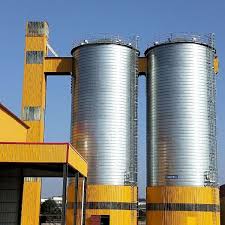
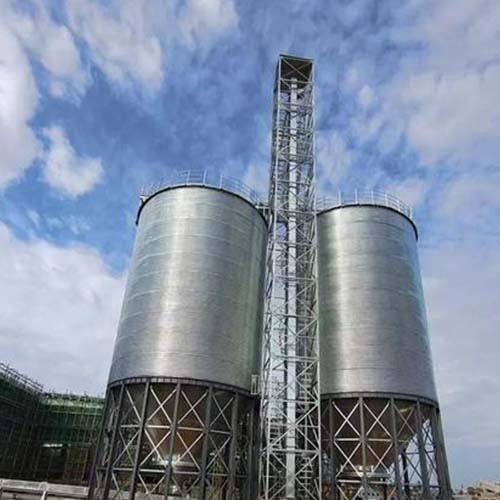
In Vietnam's Mekong Delta or Nigeria's coastal maize belts, relative humidity often stays above 80 percent for months, with monsoon rains and daily temperature swings that turn silo walls into condensation traps. Grain dust holds moisture against the steel, and any chloride from sea air multiplies the attack. Standard thin galvanizing that works inland in temperate zones can lose its protective layer in three to five years under these conditions. Field reports from East and Southern Africa note the same pattern: persistent wetting and condensation cut zinc life sharply unless the coating is specified for the climate.
Why humidity and heat accelerate zinc loss
Zinc protects steel by acting as a barrier and a sacrificial anode. In clean, dry air the coating forms stable zinc carbonate. In tropical air the film stays wet longer, so the zinc is consumed faster. One industry analysis of galvanized silos points out that a 100 µm coating lasting roughly 20 years in a clean marine setting may last only about half that time in polluted or continuously humid atmospheres. Condensation inside the headspace and at the roof–wall junction is especially aggressive because grain dust creates local wet pockets that keep the surface active.
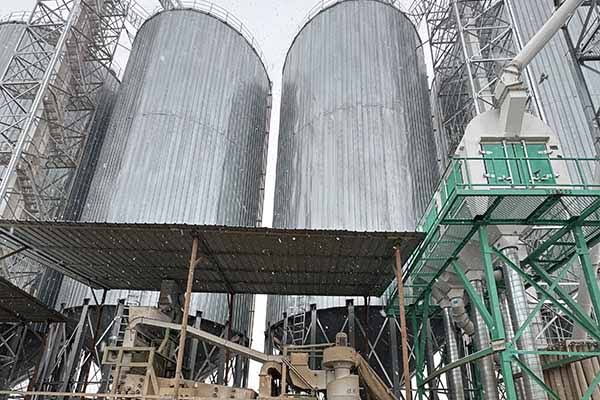
Coating weight that matches the location
Hot-dip galvanized sheet is still the practical choice for most tropical grain projects because it balances cost, strength and speed of erection. Manufacturer guidance calibrated to actual tropical sites recommends clear steps up in zinc mass:
- Inland tropical zones with heavy rain but limited salt: Z275 (275 g/m² total both sides, roughly 19 µm per side) is a minimum starting point.
- High-rainfall or consistently humid inland depots (much of Southeast Asia's rice and maize belt): Z450 (≈31.5 µm per side) supplies the extra reserve needed for daily wetting.
- Coastal terminals or sites within a few kilometres of the sea (parts of West Africa, northern Brazil, Indonesian and Philippine ports): Z600 (≈42 µm per side) or higher is commonly specified.
These figures come from comparative tables published by silo builders working across Southeast Asia and Africa; they treat the total coating mass on both sides of the sheet and assume proper detailing of seams, bolts and cut edges. Independent salt-spray and atmospheric exposure data confirm that corrosion resistance scales roughly with zinc thickness under the same environment, so under-coating is the most frequent reason early rust appears.
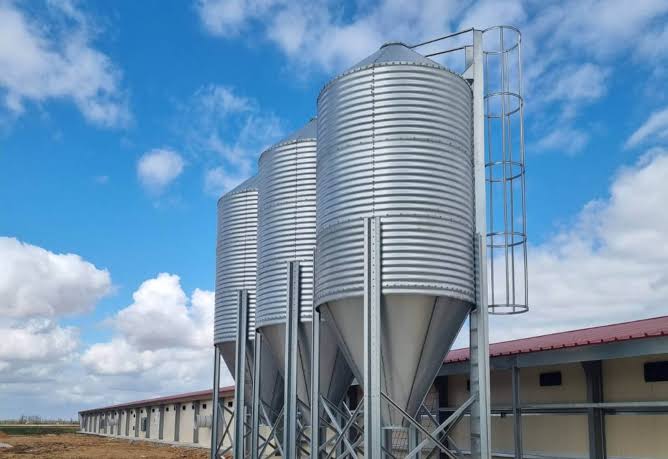
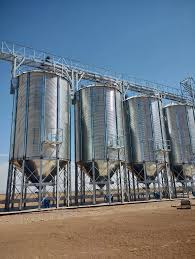
Beyond pure zinc: aluminium-zinc and zinc-aluminium-magnesium options
Where salt load or year-round humidity is extreme, many exporters now offer 55 % aluminium-zinc (Galvalume/Aluzinc) or zinc-aluminium-magnesium (ZAM / ProMag / ZM310-type) coatings. Laboratory and field comparisons show these alloys can deliver three to five times the corrosion resistance of conventional pure-zinc coatings of equal or greater thickness. The aluminium forms a dense barrier oxide; the magnesium helps seal cut edges and scratches through a self-healing reaction. Some silo manufacturers have switched entire product lines to these alloys precisely for tropical and coastal agricultural duty, reporting longer intervals between maintenance and better edge protection after field cutting and bolting.
Practical detailing still matters
Even a heavy coating fails if water sits against the steel. Proper roof pitch, continuous eave ventilation, and drainage at the foundation reduce time of wetness. Bolted joints should use compatible fasteners and sealing to avoid galvanic cells. Regular inspection for mechanical damage after grain loading is cheap insurance; small bare spots can be touched up before red rust spreads.
For buyers in Southeast Asia, West and East Africa, or the humid zones of South America, the decision is straightforward: match the zinc mass (or alloy coating) to the actual micro-climate rather than to a generic "galvanized" label. A Z450 or Z600 hot-dip sheet, or an equivalent ZAM coating, typically costs more at the outset but avoids the far higher expense of early plate replacement or lost grain. Project records from Nigeria, Ethiopia, Vietnam and the Philippines show that correctly specified galvanized or alloy-coated silos routinely reach 25-plus years of service when ventilation and detailing are also designed for the tropics.
For project-specific coating recommendations or samples, request a quote.