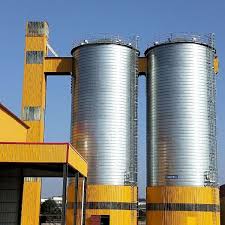
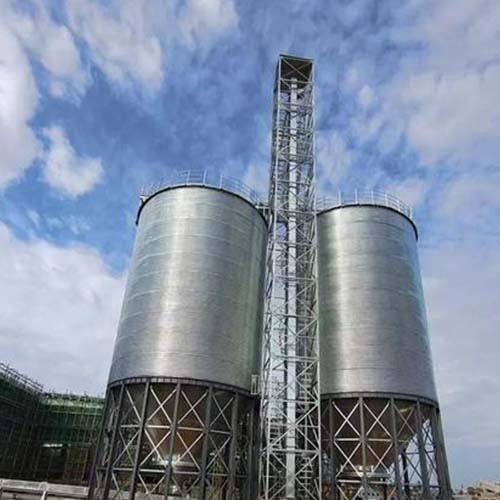
A commercial maize silo in southern Vietnam or a wheat depot near Lagos looks solid on delivery day. Five or eight years later the owner discovers that the real cost is not the purchase price but the cumulative expense of inspections, local repairs, and occasional plate replacement driven by humidity and condensation. In tropical and coastal zones across Southeast Asia, West Africa and parts of South America, those recurring costs often exceed the original material premium when the zinc coating was underspecified.
Where the money actually goes
Manufacturer comparisons for a typical 1,000-ton galvanized silo show annual maintenance near zero for the first 15–20 years when the coating is matched to the site (Coban Machinery lifecycle tables). By contrast, concrete silos of similar capacity require crack sealing and anti-seepage work once or twice a year, adding roughly $1,200–2,300 annually. Over a 20-year horizon the difference exceeds 300,000 yuan in direct maintenance alone. Painted steel structures present a different pattern: surface preparation and recoating every five to seven years can total $16–24 per square metre across 25 years, while hot-dip galvanizing at $5–7 per square metre needs no scheduled recoating in the same period (Manxing Group cost model for a 500-ton unit).
Coating weight and climate decide the schedule
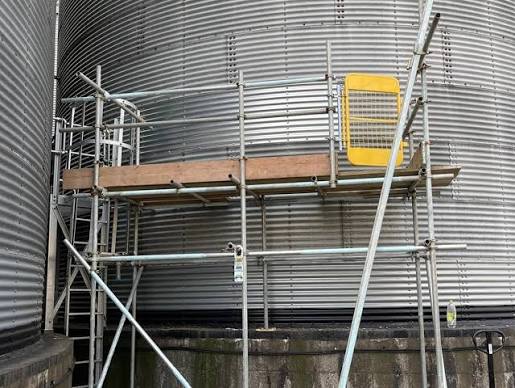
In inland tropical zones a Z275 coating commonly delivers 15–20 years before significant intervention. In high-rainfall or coastal belts-Mekong Delta, Nigerian coast, northern Brazilian ports-Z450 or Z600 is required to keep the first major maintenance beyond 20–25 years. Field guidance from silo builders working in these markets notes that a Z275 silo in continuous high humidity can show red rust in three to five years, forcing early plate work and downtime. Remote sites amplify the penalty: transporting replacement sheets and lifting equipment to inland African or Amazonian locations multiplies labour and logistics costs far beyond the original zinc premium.
Inspection rhythm that keeps costs low
Quarterly visual checks of seals, roof junctions and bolt lines, plus an annual internal clean when the silo is empty, catch most problems while they are still local. Touch-up with zinc-rich paint on damaged spots restores sacrificial protection without scaffolding an entire wall. Operators who follow this schedule report that the galvanized surface itself rarely needs full-scale intervention within the design life.
When aluminium-zinc or zinc-aluminium-magnesium changes the arithmetic
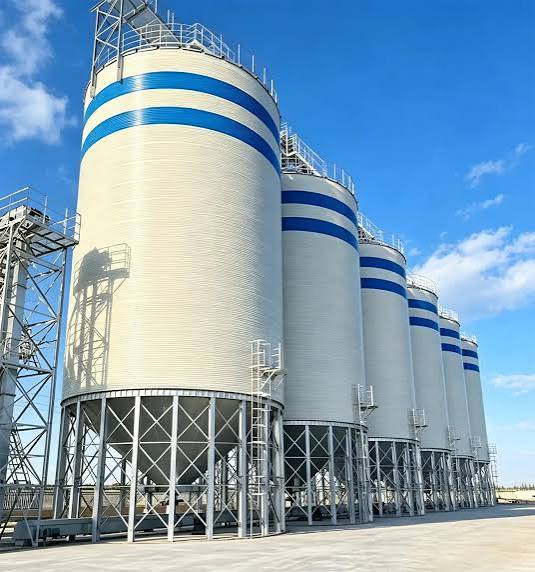
In persistently humid or salt-laden micro-climates, 55 % aluminium-zinc (Galvalume) or zinc-aluminium-magnesium (ZAM-type) coatings push the maintenance-free window further. Laboratory and field data indicate these alloys can deliver three to five times the corrosion resistance of pure-zinc coatings of comparable thickness, reducing or eliminating the recoating cycles that pure zinc eventually requires. Twenty-year total-cost models comparing conventional Z275 with ZAM coatings show the alloy option cutting overall ownership cost by more than 60 % once replacement and downtime are included, even though the initial material price is higher.
Putting the numbers together
For buyers in Southeast Asia, Africa and South America the decisive figure is not the quoted silo price but the sum of purchase cost, foundation, installation, scheduled inspections, and any mid-life plate or coating work. A correctly specified hot-dip galvanized or alloy-coated silo routinely reaches 25-plus years with minimal outlay after the first decade. Underspecifying the coating to save a few percent at the start almost always reverses that advantage once humidity and logistics enter the equation.
For project-specific coating recommendations matched to your site conditions, request a quote.