Selecting wall-plate thickness and zinc coating weight for a corrugated steel grain silo is not a single-number decision. Capacity determines the structural demand; climate determines how long the zinc layer will last. Getting either parameter wrong shortens service life or inflates cost without benefit. The guidance below draws on capacity-to-thickness tables published by Coban Machinery and coating recommendations used across tropical projects in Southeast Asia, West Africa and South America.
Thickness follows capacity and load location
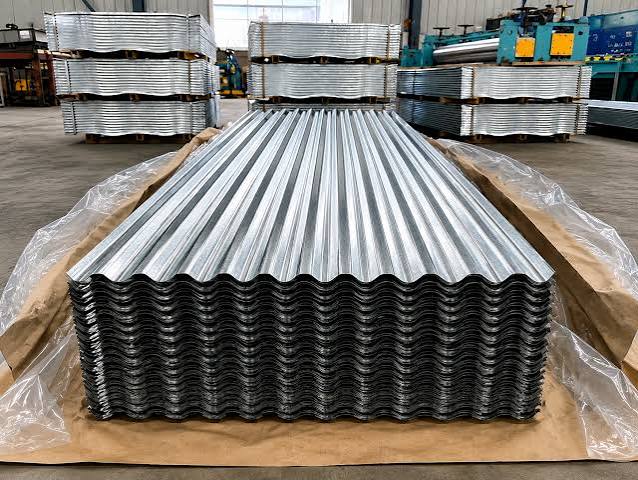
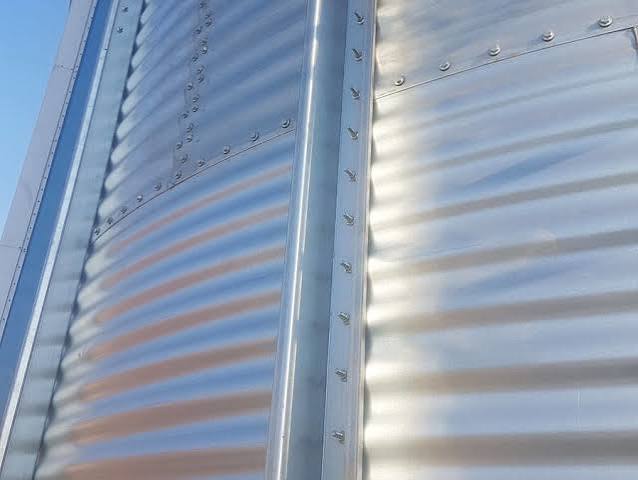
For common prefabricated corrugated silos the wall plates normally range from 1.0 mm to 4.0 mm. Lateral pressure from stored grain is highest at the bottom, so thickness increases downward. Coban Machinery's preliminary reference ranges (not a substitute for project-specific calculation) are:
- 100-ton silo: 1.0–2.0 mm overall
- 500-ton silo: 1.5–2.5 mm
- 1,000-ton silo: 1.5–3.0 mm (middle and lower walls often 1.5–3.0 mm)
- 2,000-ton silo: 2.0–3.5 mm
- 5,000-ton and larger: 2.0–4.0 mm, sometimes with extra external stiffeners
Upper rings can stay thinner because hoop stress is lower; the lower three to five rings carry the peak load and receive the thicker plates. In high-wind or typhoon zones (common along Southeast Asian coasts) designers frequently add 10–20 % extra thickness or denser bolting.
Zinc coating is governed by climate, not capacity
Zinc mass is measured as total coating on both sides. Approximate thicknesses are 19.3 µm per side for Z275, 31.5 µm for Z450 and 42 µm for Z600 (zinc density ≈ 7.14 g/cm³). Independent exposure data linked to ISO 14713 show average zinc loss of roughly 0.5 µm per year in clean rural air; the rate rises sharply with humidity and salt.
Practical coating selection used by silo builders:
- Dry inland farms: Z275 is normally sufficient and delivers 20–30 years.
- Humid tropical inland zones (Mekong Delta, southern Nigeria, northern Brazil rainy belts): Z450 is the usual minimum; many commercial projects specify Z450–Z600.
- Coastal terminals or sites with relative humidity regularly above 75 % and salt spray: Z600 is preferred and can extend service life to 25–40 years or more.
A Z275 coating that performs well on an inland farm can show red rust within three to five years on a coastal or continuously wet site. Conversely, specifying Z600 on a dry inland farm adds cost without proportional life gain.
Putting the two parameters together
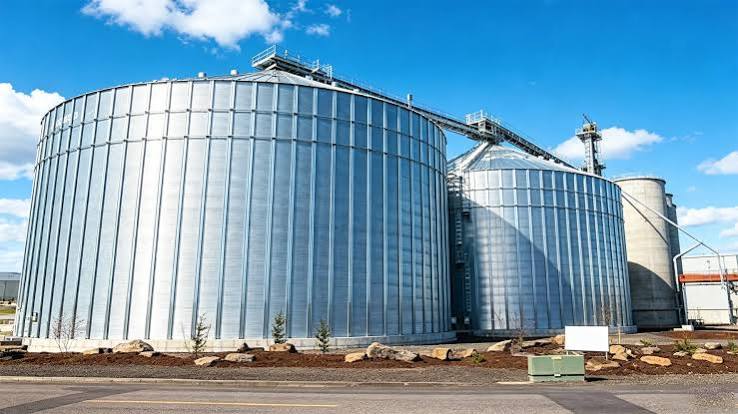
A 1,000-ton maize silo in inland Vietnam or Ghana would typically use 1.5–3.0 mm plates with Z450 coating. The same capacity silo at a coastal Nigerian or Vietnamese port would keep the same plate thicknesses but move to Z600. A 5,000-ton commercial depot in a high-rainfall tropical zone commonly combines 2.0–4.0 mm lower plates with Z450 or Z600. Always confirm that the quotation states both base-metal thickness and zinc coating grade separately; the two numbers serve different purposes and cannot be substituted for each other.
When thickness is matched to capacity and zinc weight is matched to local humidity and salt exposure, a corrugated galvanized silo routinely reaches 25-plus years of low-maintenance service. Underspecifying either parameter almost always reverses the economics once repair, downtime and grain quality losses are counted.
For project-specific thickness and coating recommendations, request a quote.