"Which storage system should I build?" This is one of the first questions we hear when a buyer starts planning a new grain facility. The answer is rarely a one-liner. Vertical grain silos and flat storage warehouses do the same basic job: they keep bulk grain dry, safe, and saleable. Beyond that, the two behave very differently. We manufacture galvanized steel coils and supply bolted steel grain silos built from those coils, so our view comes from the supply side. What follows is a comparison based on the points that actually decide your cost and your daily work. We have tried to keep it fair.
Let's start with what each system actually is
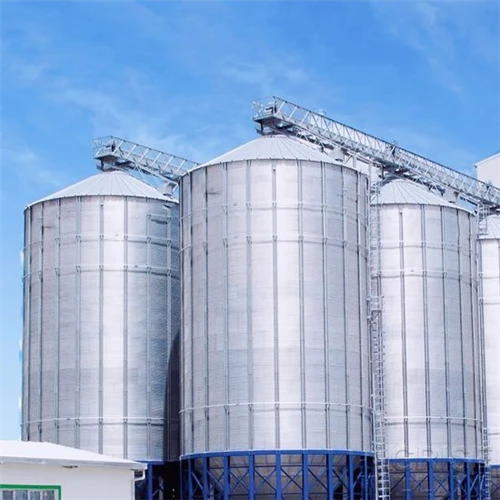
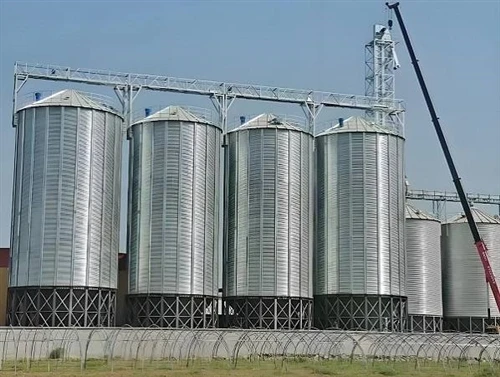
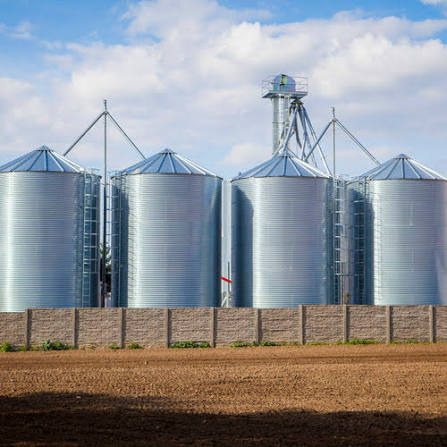
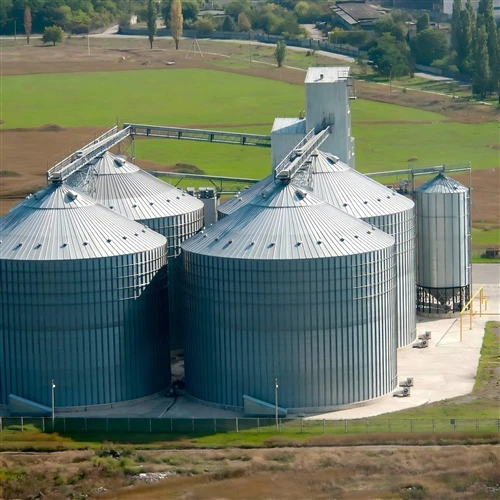
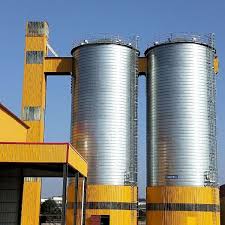
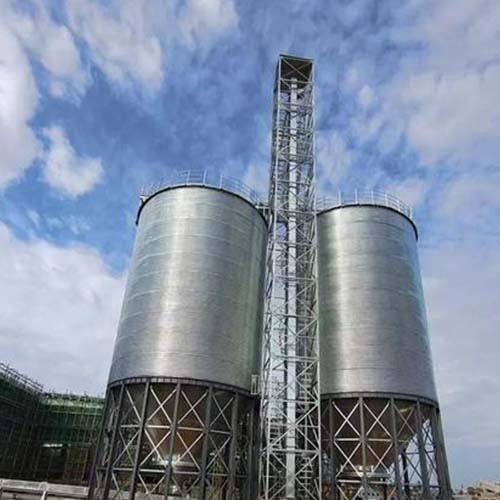
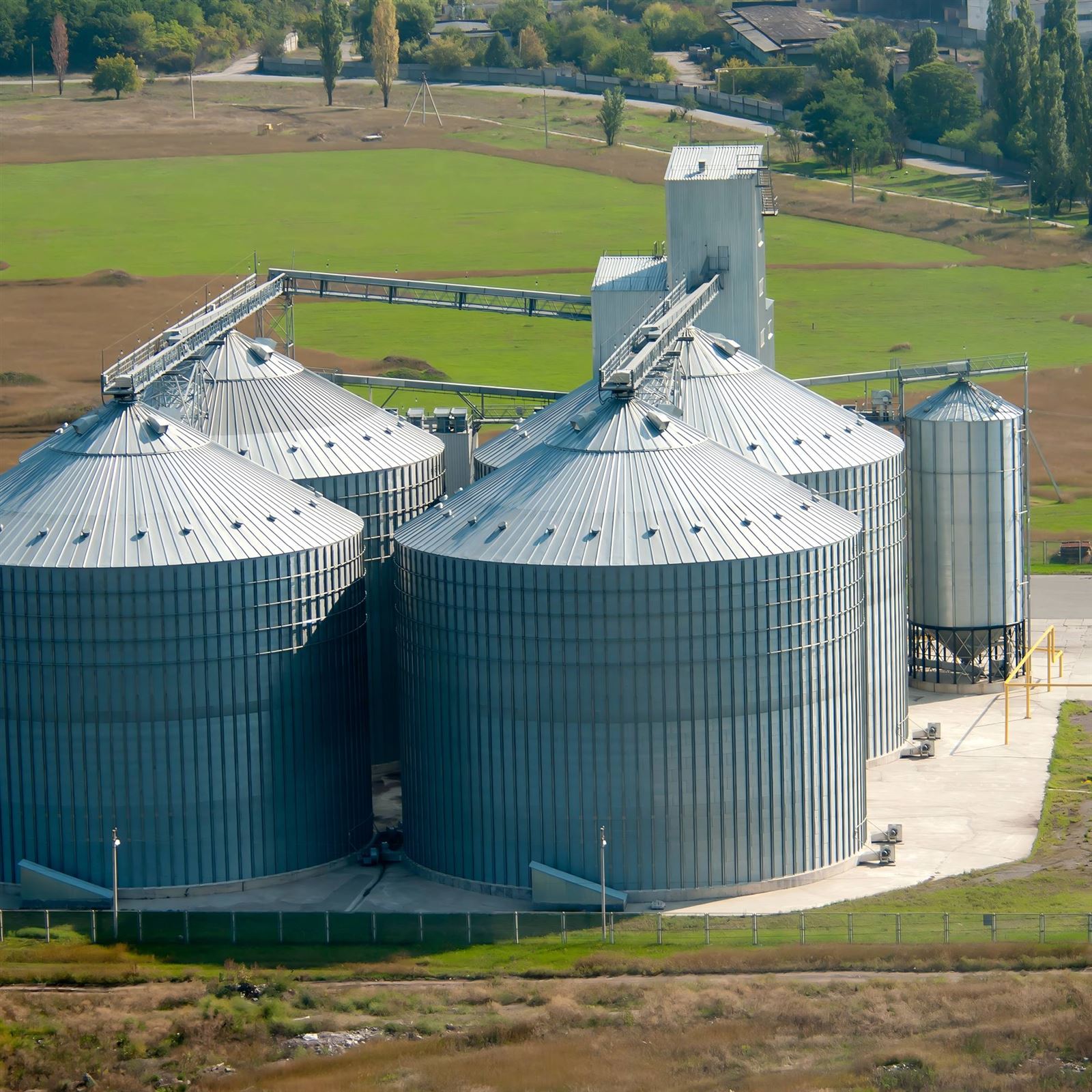
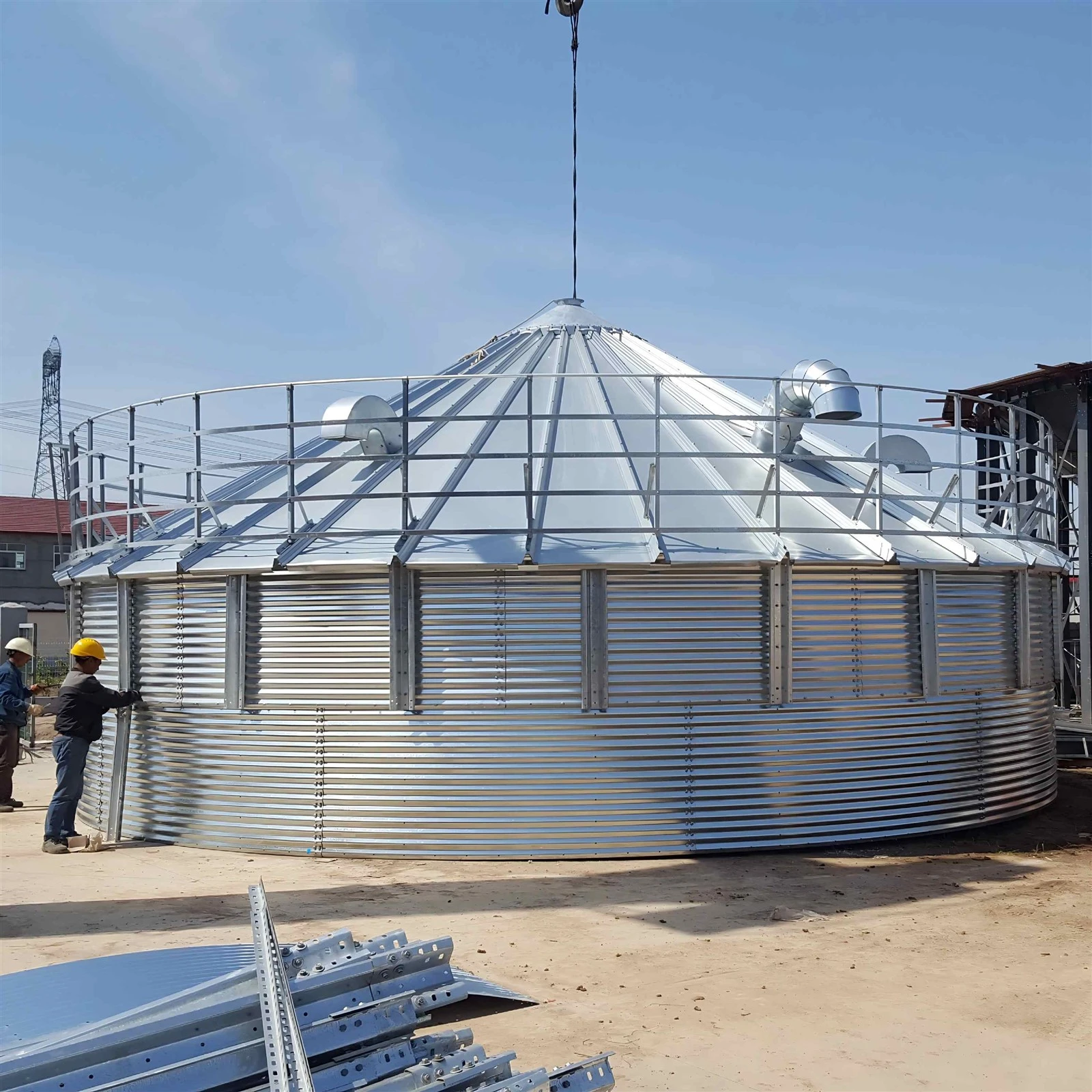
A vertical grain silo is a cylindrical steel tank on a concrete foundation. The units we supply are bolted together from hot-dip galvanized corrugated sheets, so they go up quickly and can be dismantled if the project changes later. Grain is loaded through the top and discharged by gravity at the bottom. A single silo commonly holds a few hundred tons; large terminals run units of several thousand tons.
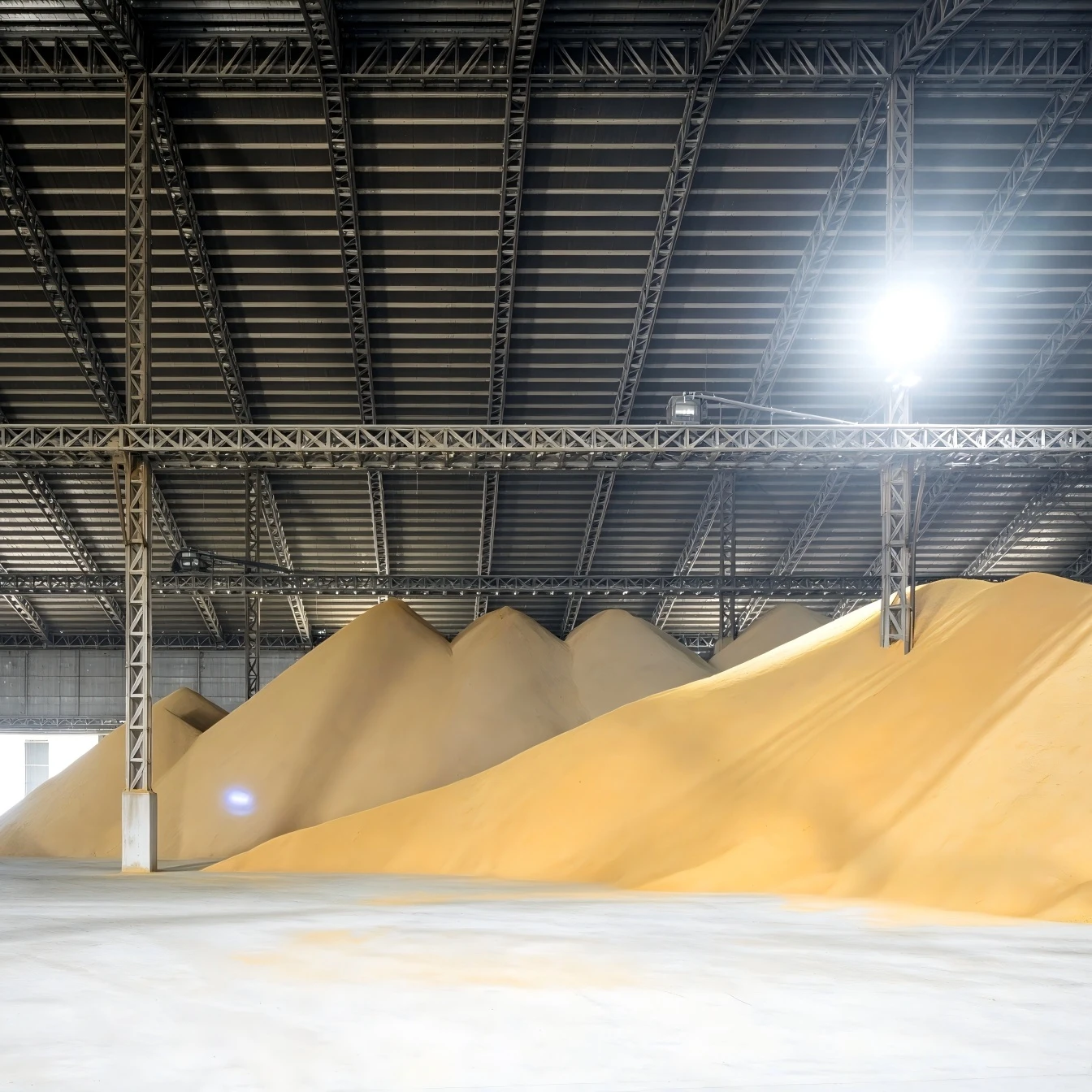
Flat storage is a single-storey warehouse where grain sits in bulk on the floor, usually against retaining walls. Loading is done through roof openings or conveyor lines. Unloading relies on mechanical equipment, most often front-end loaders. The structure is simpler, and that simplicity shows in the numbers. So do its limits.
How much land do you really need?
The first point where the two systems part ways is land. A silo group stacks grain upward, so the footprint per ton of capacity stays small. Silo rows can be placed close together, with only enough room for access and conveying equipment. The same tonnage in a flat warehouse spreads over a much larger area. Where land is limited or expensive, this single fact often settles the argument. If your site is already paid for and roomy, it matters far less.
The price difference is not as simple as it looks
On paper, a flat warehouse costs less per ton to build, especially at very large capacity. A bolted steel silo carries a higher initial cost: the shell, the foundation, and the conveying equipment add up. The fair comparison, though, covers land, civil works, and operation over the life of the facility. We have seen projects where the cheaper warehouse ended up costing more once land and labor were counted. Judge on total cost, not on the first quote.
Where a silo earns its keep: grain quality
Grain quality is where a sealed silo earns its keep. The steel shell limits moisture ingress and keeps rain and groundwater out. Aeration ducts hold grain temperature down, and temperature cables let you monitor a silo remotely. Fumigation works well in a sealed volume, because the gas stays where it should. A flat warehouse has a much larger exposed surface. Condensation near the roof and higher pest and rodent pressure demand stricter day-to-day management. In humid and tropical climates, large parts of Africa included, the sealed silo usually protects grain better. Post-harvest losses tend to be lower in silo systems when the equipment is operated correctly.
Daily operations: filling, emptying, and the team you need
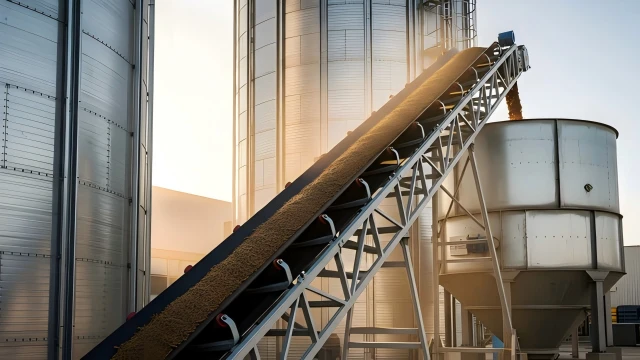
Daily work also differs. A silo group loads and empties with bucket elevators and belt conveyors. The rates are high, and the sequence can be automated. A 500-ton group can turn within hours, depending on the conveying line. Discharge is by gravity, so the flow follows a first-in, first-out pattern when loading and emptying are planned well, and dead grain is kept to a minimum. Flat storage handles grain at lower rates. Loaders move inside the building, and trucks and people add time to every cycle. Old and new lots can mix at the edges, and corners tend to keep some grain behind. If you receive the harvest in a short season, throughput decides how many shifts you run.
Can you move it later?
Bolted steel silos are modular. You can add units as capacity grows, and the bolted construction can be dismantled, moved, and re-erected on another site. This matters where land tenure is short, which is not rare in several African markets. A flat warehouse is a permanent building. Expanding it means new land and new construction.
Safety, briefly
Neither system is free of hazards. Grain dust can form explosive atmospheres during loading and discharge, so dust control and housekeeping matter in both. Work inside a silo is confined space work: entry needs a strict procedure, and bridging or crusting of grain can create an entrapment risk. In a warehouse, the main concerns are dust accumulation and loader traffic. Operator training and regular maintenance are not optional in either case.
So which one fits your project?
Ask yourself five questions before you decide. How much land do you have, and what is it worth? What is your budget ceiling? Which grains will you store, and how sensitive are they? How often will the stock turn over? What is the local climate like? The answers usually point one way.
Choose silos when land is limited or expensive, or when you need sealed, low-loss storage for high-value grain. Frequent turnover and fast loading also favor silos.
Choose flat storage when capacity is very large and land is cheap, when you hold strategic reserves with low turnover, or when your priority is the lowest construction cost.
Table 1. Vertical grain silo vs flat storage at a glance
|
Criterion |
Vertical grain silo |
Flat storage |
|
Space utilization |
High; small footprint per ton |
Low; large footprint per ton |
|
Initial cost per ton |
Higher |
Lower at very large scale |
|
Land requirement |
Small |
Large |
|
Grain preservation |
Sealed; low losses; effective fumigation |
Higher exposure; stricter management |
|
Turnover and FIFO |
Gravity discharge; low dead grain |
Mechanical removal; mixing risk |
|
Loading and unloading |
High rate; automatable |
Lower rate; loader dependent |
|
Labor requirement |
Small team; remote monitoring |
More labor |
|
Modularity and relocation |
Modular; relocatable |
Permanent building |
|
Climate adaptability |
Strong in humid climates |
Needs careful roof and ventilation design |
A hybrid setup works well in practice. Many buyers run silos for milling-grade maize and wheat, where quality and turnover matter most, and keep a warehouse for buffer stock and long-term reserves. The right balance depends on your business model.
The honest summary
To be direct: the vertical grain silo and flat storage are not competitors. They are different tools for different project conditions. The silo wins on footprint, grain quality, turnover, and automation. The warehouse wins on unit construction cost and simplicity at very large scale. Work out your capacity, site, climate, and turnover first, and the choice becomes much clearer.
As a company that makes galvanized steel coils, we supply bolted steel grain silos fabricated from our own sheets. Material quality is controlled from the coil to the site, which is something we can answer for. If you are planning a storage project, send us your capacity, site conditions, and grain type. We will come back with a technical proposal and a cost estimate.