Last spring a contractor sent us three photographs. The first showed a brand-new charcoal building on a chicken farm in Zambia, finished and proud. The second was taken from the doorway at noon, with three fans all running and the birds still panting. The third was a close-up of the ridge, where the finish had already softened around the fasteners. The order that followed was for off-white, 0.5 mm, SMP topcoat. This is the article I wish we had sent him before the first roof went on.
That job is the reason this page exists. Roof color is the cheapest variable on a livestock building, and the one most often decided by habit. We get asked it every summer: why the white coil costs more than the charcoal one, and whether the premium is real. The short answer is that the premium is about the coating, not the color, and the cost of a hot shed is measured in feed conversion, not in the freight invoice.
What the Roof Does to the Air Under the Animals
Two things happen to a steel roof at noon, and roughly half the decision is made on the paint line. A white or off-white sheet sends most of the incoming light back where it came from. A charcoal one absorbs it, reradiates it as long-wave heat into the attic, and turns the ceiling into a warm plate. The pigs underneath cannot choose where to stand; they receive that radiation from above exactly the way they receive it from a hot wall. Both sheets cost about the same per tonne. One asks your ventilation to work harder. The other asks it to do less. What you are buying, in the end, is thermal reflective animal house cladding: a painted steel skin whose job is to keep solar gain out of air you already pay to cool.
Where the Numbers Actually Come From
Two sources are worth citing to your engineer rather than arguing about. Solar reflectance is rated through the Cool Roof Rating Council program: a CRRC-rated white PVDF roof typically carries an aged three-year solar reflectance near 0.70, while the same rating falls between 0.10 and 0.25 for dark colors. On the animal side, the Livestock Weather Safety Index used by USDA extension still sets the alert band at THI 74, danger at 79, and emergency at 84, and most current heat-stress papers build on those thresholds. Put the two together: a roof surface that runs 10 to 20 °C cooler at midday is a ceiling that stops adding radiant load during the hours when THI crosses 74. One footnote: paint also emits heat well, which helps the roof cool after sunset; bare zinc does not, which is part of why an old GI roof feels worse than its sheet values suggest.
Past the upper critical temperature, growing pigs shed feed away from gain at roughly 1.5 to 2 % per degree, and poultry begin panting in earnest near 79. That loss is permanent on the ledger. A roof that stops radiating heat at two in the afternoon is one fewer hour of that band. None of this replaces fans; it only changes how hard the fans have to work.
The Ammonia Problem No Color Solves
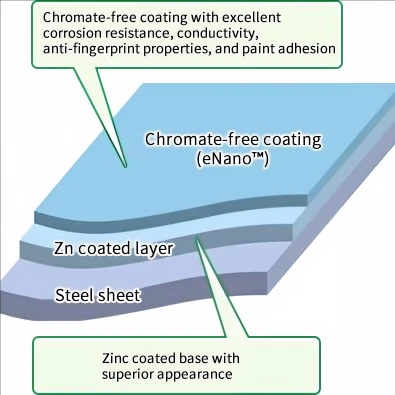
Color is a surface decision. Inside a pig house, what kills the coating first is rarely the sun. It is the ammonia condensate against the underside, the litter dust held on the ceiling, and the pressure washer between batches. A general-purpose 20 to 25 μm polyester on Z275 substrate handles most farm buildings. On a farrowing house or a dense broiler house, we usually move to 70 % PVDF and confirm the primer with the coater, because by year eight the customer who saved money on the topcoat is the one calling about bubbling.
There is a second argument that carries weight once the building is up. A washed-out roof with rust at the fastener heads makes the whole farm look neglected, and welfare auditors walk around the outside as well as inside. Light tones read cleaner between washdowns, which is why more integration sites now specify off-white or sand beige instead of the barn red of a decade ago.
What Leaves Our Line With a Coil
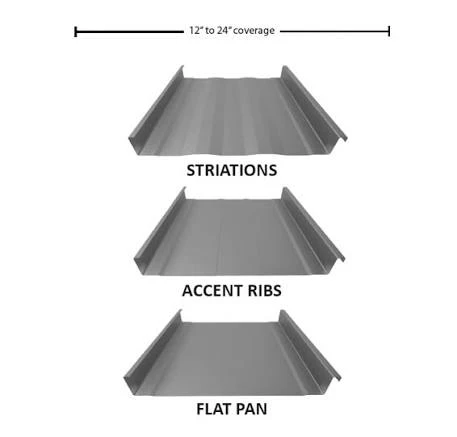
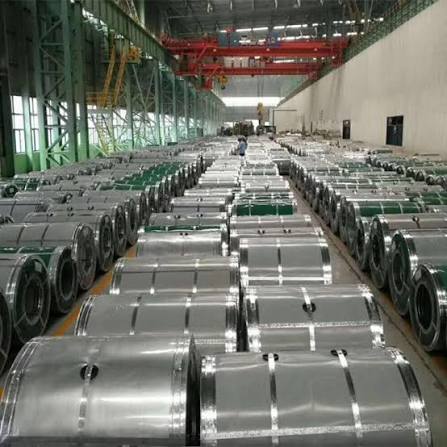
Every coil leaves the line with a record behind it. Before we quote a livestock project we ask six questions: site location, design summer temperature, roof pitch and purlin spacing, insulation, ventilation rate, and washdown routine. A modern poultry pig shed wall panel is a system, not a sheet, and five of those answers change what we quote. We send the actual batch test sheets, not a glossy spec: MEK rubs, T-bend adhesion, reverse impact, neutral salt spray, and 1,000 hours of QUV weathering with ΔE below 2. Two coils sprayed a month apart still have to read as one roof, so color tolerance between batches is held tight.
What we will not do is sign the structural or ventilation calculation. We supply the steel; the frame and the air change rate belong to your engineer. What we will do is hold the coil to the ordered thickness, coating build and RAL, and put the record behind it. Fixings and edge sealing are your side of the build; the mill-test certificate and coil labels travel with the truck.
What a Lighter Finish Cannot Fix
Be honest about what is not color. A shed with too little ventilation, a badly taped vapor barrier, or thermal bridging at every purlin will not be rescued by white paint. In a cold climate a reflective roof reaches dew point sooner, which is why the barrier and insulation have to come first. If your real problem is air movement, buy fans. If your ceiling sits at 60 °C, buy a lighter topcoat. Most buildings need both.
Three Quotes, Three Different Roofs
Three quotes for the same shed rarely describe the same product. This is the comparison we walk buyers through before anything is signed.
Table 1. Envelope finishes compared on rated reflectance, surface temperature and life
|
Finish |
Aged solar reflectance |
Peak summer surface |
Expected life |
Where it earns its cost |
|
Off-white / light grey PVDF |
0.70, CRRC-rated white |
10–20 °C below dark |
15–25 years |
New intensive pig and poultry housing |
|
0.50–0.55, lower with age |
Moderate |
5–10 years to dulling |
Shaded or budget builds |
|
|
0.10–0.25 |
Highest |
15–25 years |
Cooler climates, appearance-led projects |
|
|
Aged dark metal or fibre cement |
Low, dirt-dependent |
Highest |
Replacement due |
Re-roof candidates |
Send the Building, Not the Color Sample
For PPGI color coated livestock roofing orders, the six questions above come before any price. Send the site address, the panel profile and the RAL you want matched, and the reply comes back with a sample card, the batch test sheets and a coil price, usually within the same week. For a heat reduction PPGI farm building, the numbers settle at the drawing stage. The roof should not have to argue about them in August.