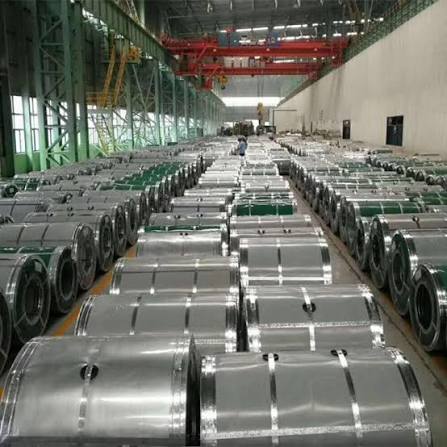
Corrugated galvanized steel panels have become a practical framing choice for raised growing areas because the ridged profile distributes lateral soil pressure while the zinc layer supplies sacrificial protection. Performance still depends on matching base-metal thickness and coating mass to the intended scale, local soil chemistry, and exposure conditions. University extension guidance (Minnesota, Virginia Tech-linked studies) and industrial standards such as ASTM A653 provide the reference points used below.
Base-metal thickness across different growing scales
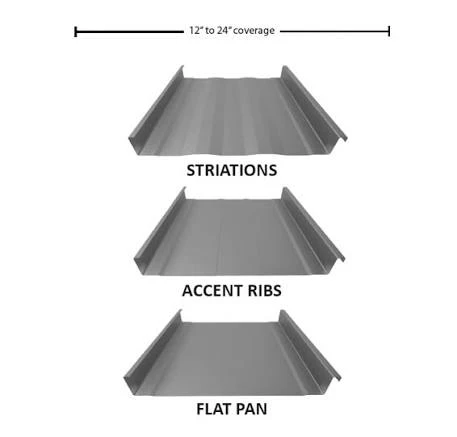
On a small balcony or compact urban plot the outward force of damp soil remains modest. Panels in the 0.6–0.8 mm range (roughly 24- to 22-gauge) normally hold their shape when supported at the corners and intermediate points. For a typical family vegetable garden of several square meters, stepping up to 0.8–1.0 mm improves resistance to bowing once the bed is filled and repeatedly watered. Commercial nurseries and large flower beds experience both greater soil volume and repeated mechanical handling; here 1.2 mm or heavier stock is commonly selected so that long runs stay straight without dense intermediate bracing. Thicker base metal also supports a more uniform metallurgical bond during hot-dip galvanizing, a relationship noted in ASTM A653 commentary. Corrugation itself adds stiffness, allowing somewhat lighter gauges than flat sheet would require for the same span, yet the underlying thickness still governs long-term resistance to denting and fatigue.


Zinc coating mass and regional corrosion behavior
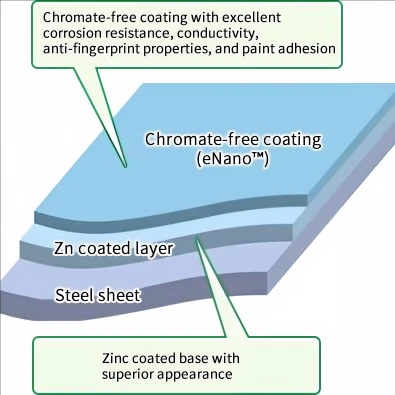
Coating is specified by weight rather than pure thickness because weight is more reliably measured. The widely referenced G90 designation under ASTM A653 corresponds to a minimum of 0.90 oz/ft² (approximately 275 g/m²) total on both sides, equating to roughly 19–21 µm of zinc on each face. In well-drained temperate inland soils the annual zinc loss is often cited in the range of 2–6 µm (Australian Galvanizing Association advisory notes and related soil-corrosion literature). Under those conditions a G90 layer can supply multi-decade service before the base steel is exposed. Coastal or high-chloride environments accelerate attack; many agricultural specifications therefore move to G115 (≈350 g/m²) or higher. Soil pH is equally decisive. Cooperative-extension publications (Nevada, Minnesota) state that zinc remains relatively stable between pH 6.0 and 7.5; below pH 6 the rate rises and any dissolved zinc functions as a plant micronutrient rather than a toxin at typical garden concentrations. Periodic soil testing and the avoidance of strongly acidic amendments therefore form part of ordinary maintenance rather than an optional extra.


Edges, liners, and moisture management
Cut edges and fastener holes are the first sites where coating continuity is interrupted. Rolled or hemmed top edges reduce both sharpness and the exposed steel area; on larger commercial units a simple capping strip or folded return further limits water entry. Full interior liners (food-grade plastic or geotextile) are seldom required in neutral soils, yet they become useful where pH regularly falls below 6 or where the grower prefers a physical barrier against any potential metal transfer. Drainage is equally important: standing water at the base raises local corrosion rates regardless of coating weight. Slight elevation of the bed or a free-draining fill mix addresses this more effectively than additional zinc alone.

Precision cutting as a durability factor
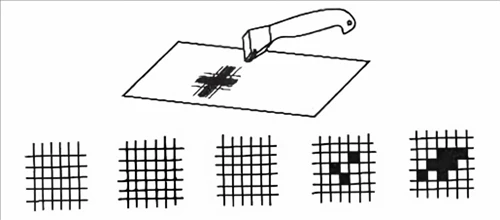
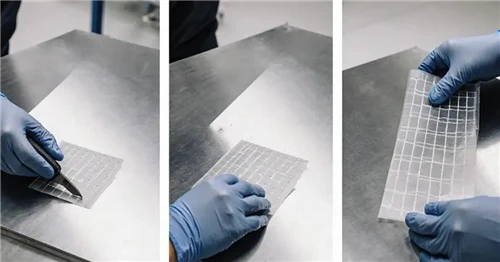
Factory or supplier cutting to exact lengths and heights minimizes the number of field joints. Each joint or on-site cut creates a new edge that must be protected; fewer joints therefore reduce the cumulative area of vulnerability. Custom lengths also allow balcony planters to fit irregular footprints and commercial layouts to follow irrigation or access paths without excessive waste or overlapping seams. When the same supplier controls both the galvanizing process and the final cut, coating integrity at the edges can be verified before shipment-an advantage that standard stock lengths cannot offer.
Selecting thickness, coating mass, and edge treatment according to scale and local conditions, while verifying values against ASTM A653 and extension-service recommendations, produces raised beds that remain serviceable for the multi-decade intervals reported in temperate and moderate climates. Custom-cut corrugated galvanized panels simply make that match more precise.