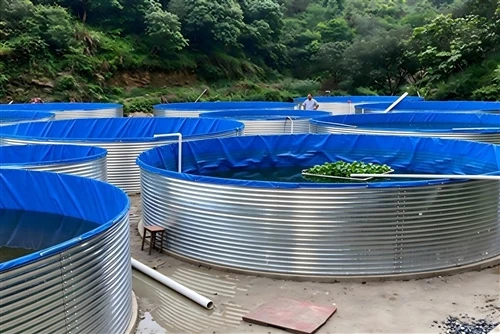
Farmers and plantation managers in Vietnam's Mekong Delta, Kenya's highland farms and Brazil's cerrado region face the same practical question when choosing irrigation storage: how large, how thick the zinc, and how long will it last before major work is needed. Corrugated galvanized steel tanks answer those questions with modular capacity, measurable corrosion protection and documented service life under outdoor farm conditions.
Start with daily demand and safety margin
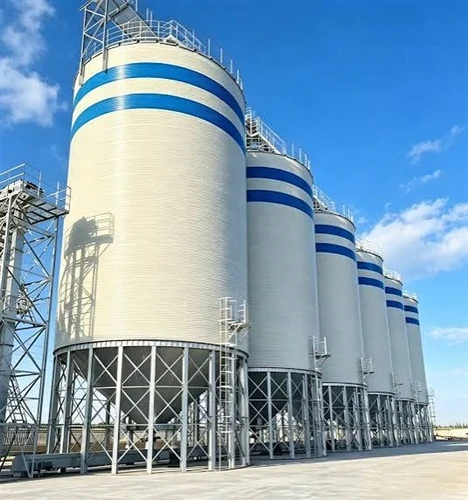
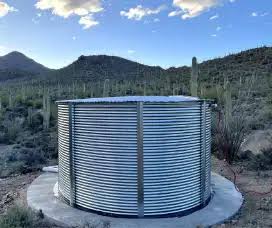
Daily irrigation need varies widely. Small vegetable or greenhouse plots may require 10–50 m³ per day; open-field grain or fruit orchards often need 50–200 m³; larger commercial plantations can exceed 500 m³. Industry guidance used by tank suppliers recommends adding a 20–50 percent reserve to cover dry-season peaks, pump downtime or fire-protection dual use. Capacities from 50 m³ to several thousand cubic metres are routinely supplied in modular rings, so the tank can be sized to current demand and expanded later by adding height or diameter.
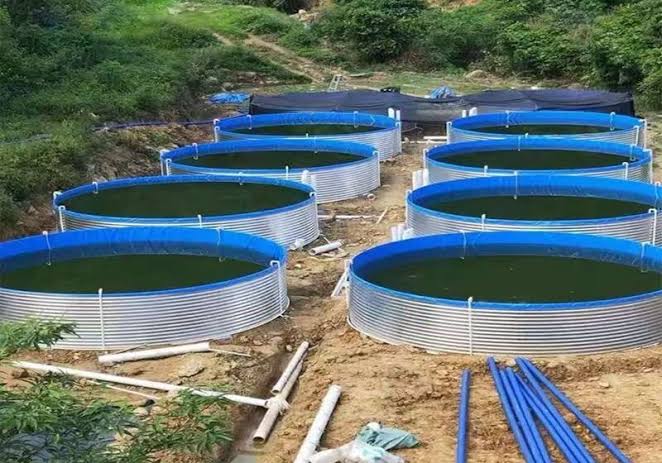
Match zinc coating to climate and water exposure
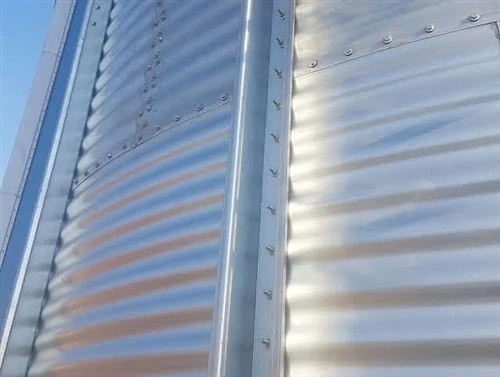
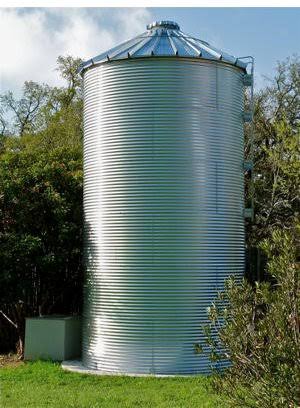
Hot-dip galvanizing remains the standard protection for outdoor agricultural tanks. Z275 (275 g/m² total) is widely used for inland dry or moderately humid farms and typically delivers 15–25 years of service when water quality is neutral. In continuous high-humidity or coastal zones-common across much of Southeast Asia, West Africa and northern Brazil-Z450 or Z600 is preferred. Heavier coatings supply the extra sacrificial zinc needed against salt spray and prolonged wetness, pushing expected life toward 20–30 years or more under good detailing. Manufacturers serving these markets report that underspecifying the coating is the most frequent cause of early surface corrosion on farm tanks.
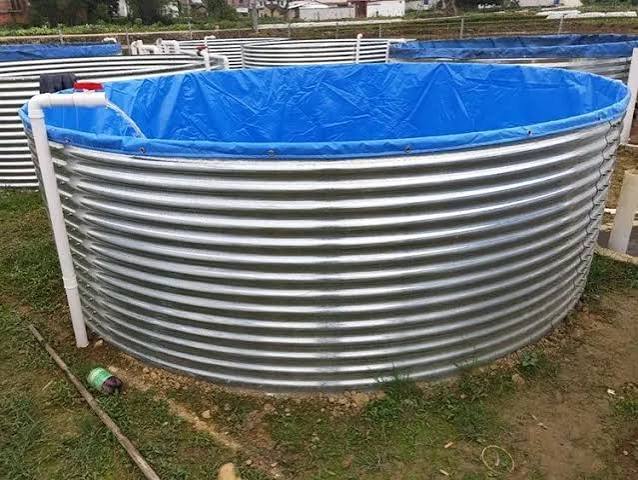
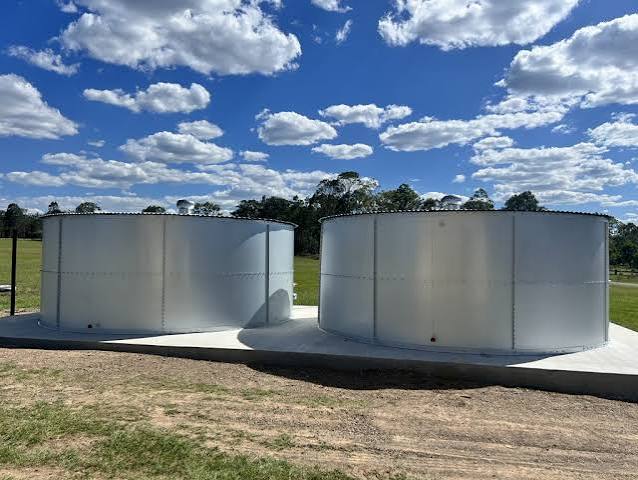
Plate thickness and corrugation for pressure
Hydrostatic pressure rises with water depth. Continuous corrugation increases hoop strength by roughly 20–35 percent compared with flat panels of the same gauge, allowing wall thicknesses of 1.0–2.5 mm (sometimes up to 4 mm at the base of larger tanks) to handle typical irrigation volumes without internal bracing. Thicker plates or additional stiffeners are reserved for taller tanks or high-wind sites. Always confirm that the quotation states both base-metal thickness and zinc grade separately; the two parameters serve different purposes.
Cost and installation realities on the farm
- Calculate peak daily demand plus 20–50 percent reserve.
- Specify Z275 for inland moderate climates; Z450/Z600 for humid tropical or coastal sites.
- Confirm plate thickness is adequate for the design water height.
- Require gasketed bolted joints and free-draining details.
- Ask for expected service life under local humidity and water chemistry.
When capacity, zinc weight and thickness are matched to the farm's actual climate and demand, galvanized corrugated steel tanks deliver reliable irrigation storage for two decades or longer with minimal structural maintenance-exactly the combination of cost efficiency and durability most agricultural buyers need.