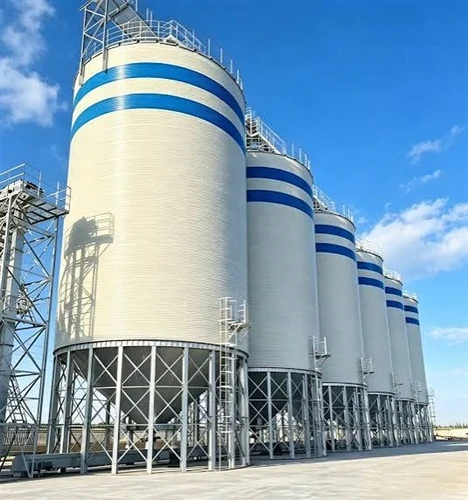
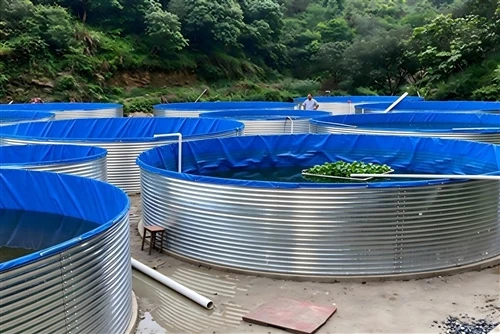
Most silo sheet inquiries we get start the same way. "We need galvanized panel for a wheat bin, send a price." It sounds like a simple quote. In practice, that email hides at least four choices that change the tonnage, the zinc mass, and how long the bin lasts in the field.
Over the years, we have supplied silo materials for rice storage projects in Southeast Asia and for maize elevators in Southern Africa. We supply both raw galvanized coil and finished corrugated sheet, so we hear the same questions from two very different customers: the larger fabricator with its own roll former, and the smaller workshop that needs ready-to-punch panels. This is what we have learned to ask before we quote.

The first question is not thickness, it is climate
A lot of buyers come in asking for the thinnest sheet that will work, because thinner means more square meters per ton. That logic is reasonable for a roof. It is the wrong first question for a wall.
We have seen fabricators specify Z275 for a wheat bin in Nebraska and get 30 years out of it. We have also seen the same Z275 panel on a coastal rice bin in southern China start rusting at the bolt holes inside four years. The difference was not the mill. It was that nobody told the purchasing side the bin sat 20 kilometers from the sea.
So the first thing we ask is not "how big is the silo." It is "where is it going to stand."
Inland, dry, low-humidity sites, such as the Great Plains, central Argentina or inland Australia, Z180 is usually enough. We do not recommend Z120 for wall panels even in dry places, because the first place a silo loses zinc is not the flat wall face. It is the bolt holes and the cut edges, and those corrode first.
Coastal, monsoon or high-rainfall locations: move to Z275. If the site sits within a few kilometers of salt water, or if it is a tropical rice belt, we suggest Z350. The price step between Z275 and Z350 is real, but it buys roughly double the maintenance interval, and it is cheaper than replacing panels ten years early.

Thickness follows the grain, not the price per ton
Thickness is where we see the most cost-cutting mistakes.
Grain pushes outward, and the pressure is not even. It builds near the bottom ring and drops toward the top. A 2,000-tonne flat-bottom bin in maize puts far more lateral load on the lower courses than on the upper ones. So we usually do not quote a single thickness for the whole bin. We talk about stepping: S550GD at 2.5 to 3.0 mm on the lower courses, dropping to S350GD at 2.0 mm midway, and roof sheet at 1.2 to 1.5 mm.
For hopper-bottom bins it is a different conversation. Those are mostly smaller, used for feed mills, seed plants and on-farm storage, and 1.5 to 2.0 mm S350GD is normally enough. The hopper cone itself is almost always pressed or folded by the fabricator as a separate piece.
One thing we will say plainly: we are not your structural engineer. The numbers above are what we see repeated in orders from experienced silo builders. The final thickness and grade should come from your own ring-compression calculation or from the bin designer you are working with. We supply material to that spec; we do not take responsibility for the math.


Coil or corrugated sheet, we supply both
A lot of buyers assume a steel mill can only ship a coil. We can, but we also run our own roll forming line. That means you have two ways to work with us, depending on how your shop is set up.
If you are a larger fabricator with your own roll former, cut-to-length line and punch press, you probably want galvanized coil or slit strip. You run it through your own tooling, keep control over panel width and hole spacing, and buy by the ton at the most competitive price. This is how most of our repeat customers work.
If you are a smaller workshop, a contractor, or a project that does not justify a roll former, we can ship finished corrugated sheet instead. We roll the corrugation to your profile, cut the sheets to length, and pack them ready for your punch press. You skip the slitting and roll forming step entirely.
The practical advantage of dealing with one supplier for both forms is consistency. A fabricator who starts by buying finished sheet from us and later adds a roll former of its own does not have to switch mills. The steel grade, zinc mass and dimensions stay the same whether the order goes out as a coil or as a panel.


The corrugation profile we roll to your drawing
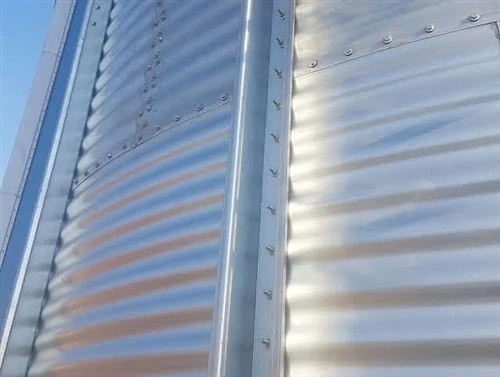
When you buy finished sheet from us, the corrugation is pressed on our line, not on yours. We run the three standard profiles used in bolted silos: 38 mm, 48 mm and 68 mm corrugation. Crest radius, pitch and sheet width follow your existing bolt-hole pattern, because the panels still have to stack and line up with the bins you have built before.
The point is simple: send us a sample panel, a profile drawing, or just the corrugation depth and crest spacing you use. We set the line to match. We once worked with a fabricator in Europe who sent us one used panel from an earlier bin. We measured the crest height, the pitch and the sheet width on our side, rolled a short trial batch, and sent photos back for approval before running the full order. When the container arrived, their punch press went straight into production with no rework.
If you are buying coil or slit strip instead, this does not apply. Your own roll former sets the profile, and we just supply material that feeds cleanly through it.
The grain matters more than you would think
We do not design storage, but we have shipped enough sheet to notice a pattern.
Wheat is the forgiving one. It stores at moderate moisture, produces dust, and does not punish the wall. Z180 to Z275, 2.0 mm on the wall, that combination repeats in order after order.
Maize is wetter. It comes in at harvest moisture higher than wheat, and in cool months the interior sweats. Even on an inland site we suggest Z275 minimum. The condensation at the top of the wall is real, and it shortens the life of a thinner zinc coat.
Paddy rice is the one we always warn about. Rice is stored warm and wet, mostly in tropical Asia, and the inside of the bin behaves like a greenhouse. Z275 is the floor. For long-term paddy storage, the kind that sits 12 months or more, we push Z350.
Soybean is a different issue. It is oily and sensitive to contamination. Plain galvanized sheet works. Pre-painted sheet on the interior surfaces is something we would avoid. The organic coating can scratch during bolt-up and flake into the grain.
What comes with the shipment
When you buy silo material from us, the shipment is more than a coil on a pallet.
Every order ships with a mill test certificate to EN 10204 3.1. It lists the heat number, steel grade, yield strength, actual coating mass measured rather than nominal, thickness and width. The heat number on the certificate matches the tag on the bundle. If your QA wants to cross-check, they can.
For customers who want an independent eye, we pre-arrange SGS, BV or Intertek inspection before the container closes. The inspector strips a sample, weighs it, strips the zinc, weighs again, and verifies the coating mass on the certificate. They also check thickness with calipers and look at the edge condition. It is a small fee, and it is worth it on a first order with a new supplier.
Sea freight is where a lot of silo sheet goes wrong. A coil that leaves the mill clean can arrive with white rust if the packing fails across a 35-day voyage through monsoon. We pack export coils in VCI film, steel-strapped, on pallets. Cut sheets go in waterproof polythene with desiccant. This is not optional packaging; it is how we expect material to survive a container that may sit on a dock in Singapore or Mombasa for a week before it moves.
What we do not sell
We get inquiries for complete silos at least once a week. We are not the right supplier for that.
We produce hot-dip galvanized coil. We slit it, cut it to length, and roll it into corrugated sheet on our own line. We test it and pack it for export. We do not erect silos on site, manufacture bolted bin kits as complete packages, or supply hoppers, ladders, vents, fans, gaskets, sealant and floor systems.
Those items belong to a finished silo and are usually sourced locally by the fabricator or the bin designer. We would rather tell you that up front than quote a half-order and leave you to find the rest somewhere else. If you are looking for an erected bin, we will be honest: we are not that company. If you are looking for a steady coil and sheet supplier for the bins you already build, that is what we do.

Getting a quote
If you have a silo project coming up, send us the basics: bin diameter and height, grain, site location, the corrugation profile you run, and whether you want coil, slit strip or finished corrugated sheet. We will come back with a recommended thickness, grade and coating, plus a tonnage number and lead time. Most repeat orders move in 7 to 15 working days after confirmation.
You can reach us through the inquiry page. We will ask you two or three questions before we quote. That is not bureaucracy. It is how we avoid sending you the wrong coil.