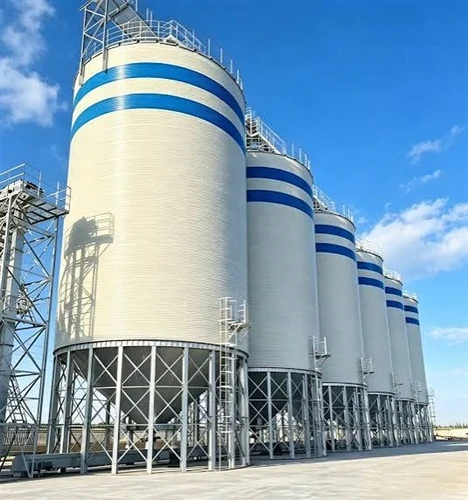
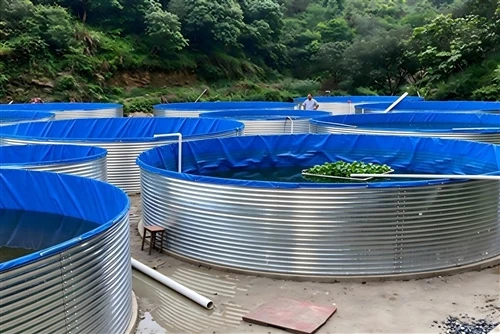
In the rice deltas of Vietnam, the maize belts of southern Nigeria and the soybean zones of northern Brazil, relative humidity frequently exceeds 75 percent for months at a time. Salt-laden air near coastal terminals and daily condensation cycles accelerate zinc consumption far beyond the rates measured in dry inland farms. Under these conditions, standard thin coatings fail early, while correctly specified thick-zinc corrugated panels deliver the service life operators need.
Why ordinary coatings fall short
Industry exposure data linked to ISO 14713 and American Galvanizers Association tests show that zinc loss averages roughly 0.5 µm per year in clean rural atmospheres. In continuous high humidity or coastal salt spray the rate multiplies. A Z275 coating (approximately 19 µm per side) that lasts 20–30 years inland can show red rust within three to five years on a Mekong Delta or West African coastal site. Once the zinc is depleted, the base steel corrodes rapidly, compromising both structural integrity and grain hygiene.


Thick zinc layers change the arithmetic
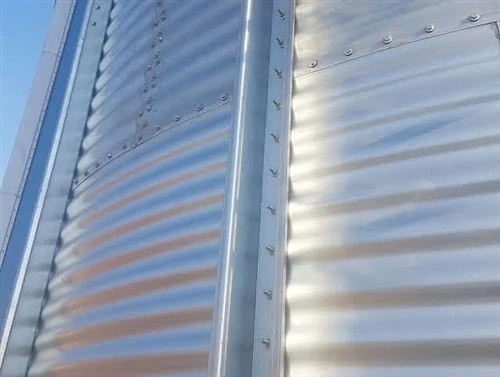
Hot-dip galvanizing with 450 g/m² or 600 g/m² total coating mass (roughly 31.5 µm and 42 µm per side) supplies the extra sacrificial reserve required. Coban Machinery and other silo fabricators working across Southeast Asia and Africa routinely specify Z450 as the minimum for humid tropical inland locations and Z600 for coastal terminals or sites with persistent salt exposure. Field records from projects in these markets indicate that the heavier coatings routinely push first major maintenance beyond 20–25 years and, under good detailing, support 25–40 years of service.


Corrugation and detailing reinforce protection
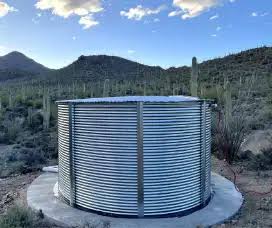
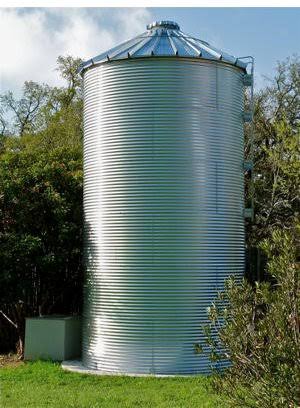
The corrugated profile itself does not stop corrosion, but it improves drainage and reduces flat surfaces where water can pond. Combined with proper roof slopes (typically 3–5 percent or steeper), sealed joints and free-draining base details, the heavier zinc layer faces less prolonged wetness. Zinc continues to provide sacrificial protection even if the surface is scratched during installation or handling-an important practical advantage in remote African or Amazonian sites where repair logistics are costly.
Matching specification to location
- Humid tropical inland farms and commercial depots (most of the Mekong region, inland West Africa, Brazilian cerrado rainy zones): Z450 is the common working minimum.
- Coastal terminals and sites within a few kilometres of open sea: Z600 is preferred.
- Dry inland pockets within otherwise tropical countries: Z275 may still be adequate, but many buyers standardise on Z450 for fleet uniformity.
Quotation documents should list base-metal thickness and zinc coating grade separately. Thickness governs structural capacity; zinc mass governs corrosion life. Confusing the two numbers is a frequent source of premature failure.

For operators exporting to or operating inside Southeast Asia, Africa and South America, the decisive factor is not the lowest initial plate price but the coating weight matched to local humidity and salt load. When that match is correct, galvanized corrugated steel delivers decades of low-intervention service and protects both the structure and the grain it stores.
For project-specific coating recommendations matched to your site, request a quote.