Post-harvest loss is one of the most underestimated costs in grain production. In Sub-Saharan Africa, estimates commonly place grain losses between 15 and 30 percent of the harvest. That share never reaches the market. It lowers farm income, raises food prices, and weakens food security. This article explains where the losses occur, why conventional storage fails, and how a galvanized steel silo addresses each cause. It is written for farm managers, cooperative directors, millers, and project engineers who plan grain storage under African conditions.
The Scale of the Problem


Maize, wheat, rice, and sorghum are the main staples stored across the continent. Losses occur at every stage after harvest: reaping, shelling, transport, and storage. In smallholder systems, storage is usually the largest single source of loss. Grain kept in jute bags or polypropylene bags remains exposed to the environment. Insects enter through bag seams. Moisture moves in and out freely. Rodents consume grain directly and contaminate what remains. Field surveys in East and West Africa consistently identify insects and mold as the dominant causes. Beyond quantity, quality falls as well. Damaged grain carries a price penalty at sale, and mold can produce aflatoxins, a health risk for consumers.
Why Grain Deteriorates in Conventional Storage
The mechanisms are well documented. Moisture content above 13 to 14 percent permits mold growth. Warmth accelerates insect reproduction. In tropical climates, both conditions persist for most of the year. Bags offer no barrier to either. Traditional cribs expose grain to rain and rodents. The result is measurable loss within weeks, not years. The principle of modern storage is equally simple: exclude oxygen, control moisture, and keep pests out. This is the hermetic principle. When a sealed container is closed, grain respiration consumes the oxygen inside. Carbon dioxide concentration rises. Insects cannot complete their life cycle, and mold cannot grow at controlled moisture levels.
How a Steel Silo Changes the Outcome
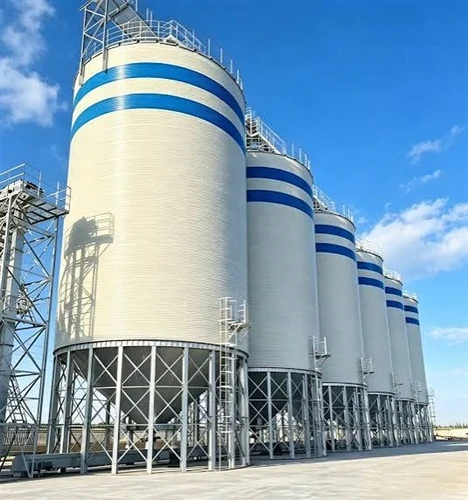
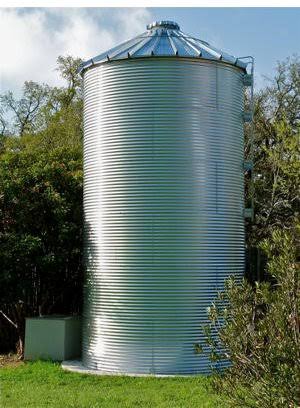
A bolted steel silo is a sealed steel shell built on this principle. Once closed, the silo maintains a low-oxygen environment. The hermetic effect controls insects without chemicals. The steel shell excludes rodents and birds completely. Several additional properties matter under African conditions. Hot-dip galvanized steel resists corrosion in humid climates. Bolted construction ships as flat panels and erects quickly on site. The structure can be dismantled and relocated if the project moves. Capacity is modular, from 50 to more than 1,000 tons per unit. Additional units can be added as throughput grows. Interior surfaces are smooth, which simplifies cleaning and inspection. Aeration ducting, temperature sensors, and level indicators can be fitted for routine monitoring. For operations that handle multiple crops, separate silos allow clean segregation by grain type and quality.
Galvanized Steel: The Material Standard

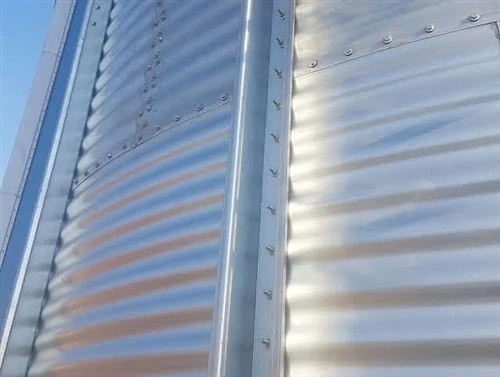
Corrosion is the first failure mode of steel storage structures in tropical environments. Hot-dip galvanizing is the standard answer. The zinc coating protects the base steel in service, including cut edges and bolt holes. International specifications for hot-dip galvanized sheet include ASTM A653, EN 10346, and ISO 3575. Coating mass is commonly expressed in grams per square meter, for example Z275. A higher coating mass extends service life in aggressive climates. As a producer and trader of steel coils, we control this material chain directly. Base steel, zinc coating weight, panel forming, fabrication, and site erection are managed from the coil stage onward. Quality control at the source reduces the variability that can appear in subcontracted supply chains. The silo you receive begins with the coil we supply.
Designing the System for Your Conditions
Start with the crop you store and the volume you handle. Capacity should cover the peak harvest, with margin for delayed sales. Site selection comes next. Choose flat, well-drained ground away from standing water and heavy vegetation. The silo requires a reinforced concrete foundation sized to the structure and the local soil. Loading is typically handled by a bucket elevator or a grain auger. Discharge depends on the bottom configuration. A cone bottom or hopper bottom directs grain to a slide gate and speeds unloading. A flat bottom suits larger capacity at lower cost, with a sweep auger or manual cleanup. Aeration systems cool the grain and equalize temperature after loading. Temperature sensors and level indicators support monitoring. Ladders, platforms, and access hatches are required for safe inspection. Gaskets and food-grade sealants maintain the airtight condition. For most buyers, a turnkey scope is the practical choice: supply, erection, commissioning, and operator training from a single contractor. This reduces interface risk between suppliers.
Operating a Steel Silo Correctly
The silo is a tool. Correct operation determines the result. Dry grain before loading. Long-term storage requires moisture at or below 13 to 14 percent for maize and wheat. Clean the grain first. Fines and foreign material create hotspots and block airflow. Load evenly to avoid segregation. Run aeration after loading to equalize grain temperature. Inspect the silo monthly. Record temperature readings and compare them over time. Do not mix new grain with old stock. Apply integrated pest management around the site. Keep the area clean and treat the structure as required. These steps are simple. They are the difference between protected grain and repeated loss.
The Economic Case

The calculation is direct. Retained tonnage equals the reduction in loss rate multiplied by annual throughput. A well-managed steel silo typically holds storage losses below two percent. If current losses run from 15 to 20 percent, the difference is income retained in every season. For many operations, the investment is recovered within the first one or two storage seasons. Delayed sales add further value. Grain stored safely can be sold when prices are higher, instead of being forced onto the market immediately after harvest. The same logic applies whether you store maize for a cooperative, wheat for a mill, or sorghum for seed supply. The margin you protect is the margin you keep.
How to Select a Supplier
Select the supplier before selecting the details. Verify five points.
First, the material source. Confirm the origin of the galvanized coil and the coating specification.
Second, the engineering. Request structural calculations, drawings, and the design basis for wind and seismic loads.
Third, the track record. Ask for completed projects in African markets, for example Nigeria, Kenya, Tanzania, or Ethiopia.
Fourth, the scope of supply. Confirm whether erection supervision, commissioning, and operator training are included.
Fifth, after-sales support. Check the availability of spare parts, operating documentation, and warranty terms.
A supplier who can document every link in the material chain reduces your project risk from inquiry to first season.
Conclusion
Post-harvest loss is a technical problem with a technical solution. You do not need complex equipment to protect your grain. You need a sealed, corrosion-resistant, and correctly operated silo. Start with the crop you store and the capacity you need. Then choose a supplier who can document the material chain and the engineering behind it. The result is simple to measure: more grain reaches the market, and more income stays in your operation.