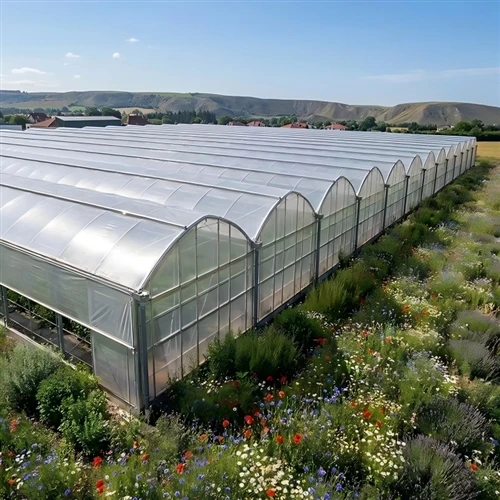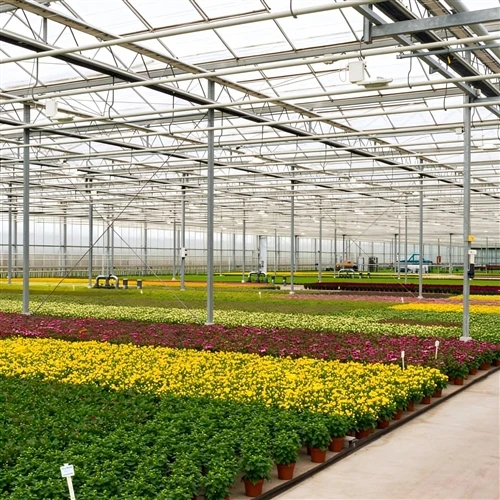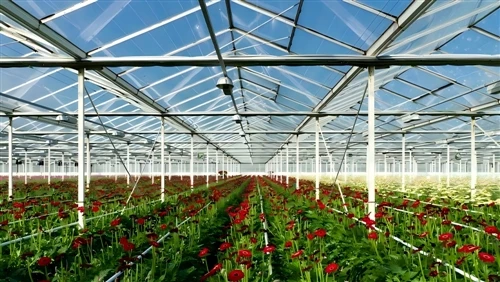
If you are planning a greenhouse, this is usually the first question you ask us: how long will the frame last? The honest answer is that it depends - on where the greenhouse stands, how much zinc is on the steel, and how well the structure is maintained. In a normal inland climate, a well-galvanized frame will typically serve you for 40 to 50 years. Move the same frame to the coast or to a hot, humid tropical region, and plan for 15 to 25 years. The spread is wide, and it comes down to specification. We supply galvanized coils to greenhouse fabricators across Africa, Southeast Asia and Central Asia - we hear this question every week.
Why a greenhouse is harder on steel than the outdoors
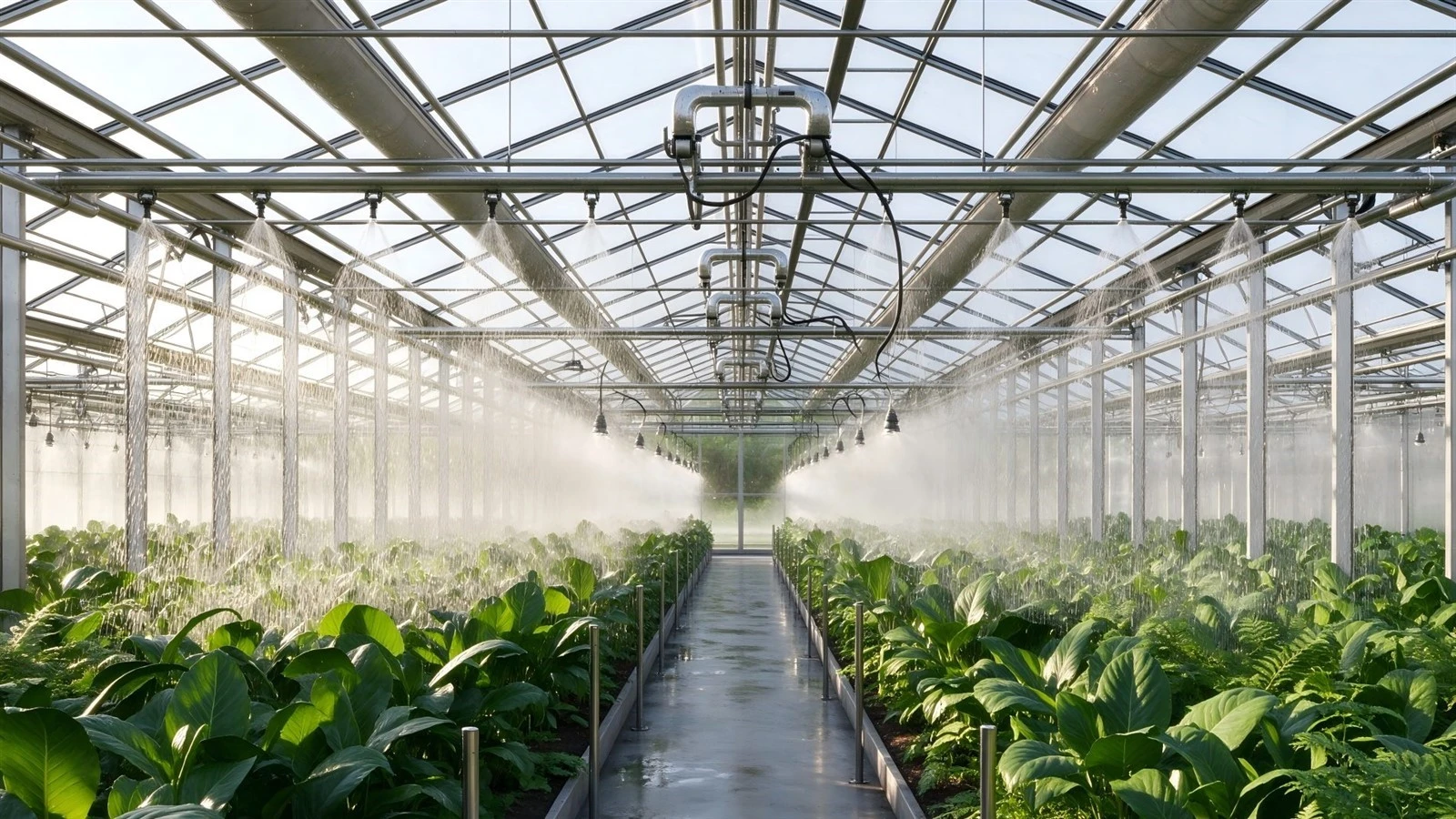
Most people assume a greenhouse frame has an easy life. In reality, it sits in one of the most corrosive environments steel can face. Irrigation keeps the structure wet for hours every day. Fertilizer and pesticide treatments release ammonia, chlorides and sulfur compounds that stay in the air. At night, warm humid air meets the cooler metal and condenses on it. None of it looks dramatic, but together these conditions form a thin, mildly acidic film on the steel - and that film drives corrosion far faster than ordinary outdoor exposure.
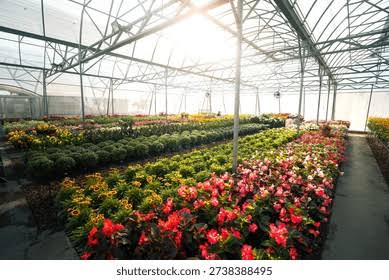
Flower greenhouses are the worst case we see in practice. Misting runs daily, fertilizer dosing is heavy, and the wet-dry cycle never stops. In that kind of building, a thin zinc coating can start to fail at joints and contact points within five to eight years. The steel is usually still fine - it is the coating that gives out first.
How hot-dip galvanizing protects steel
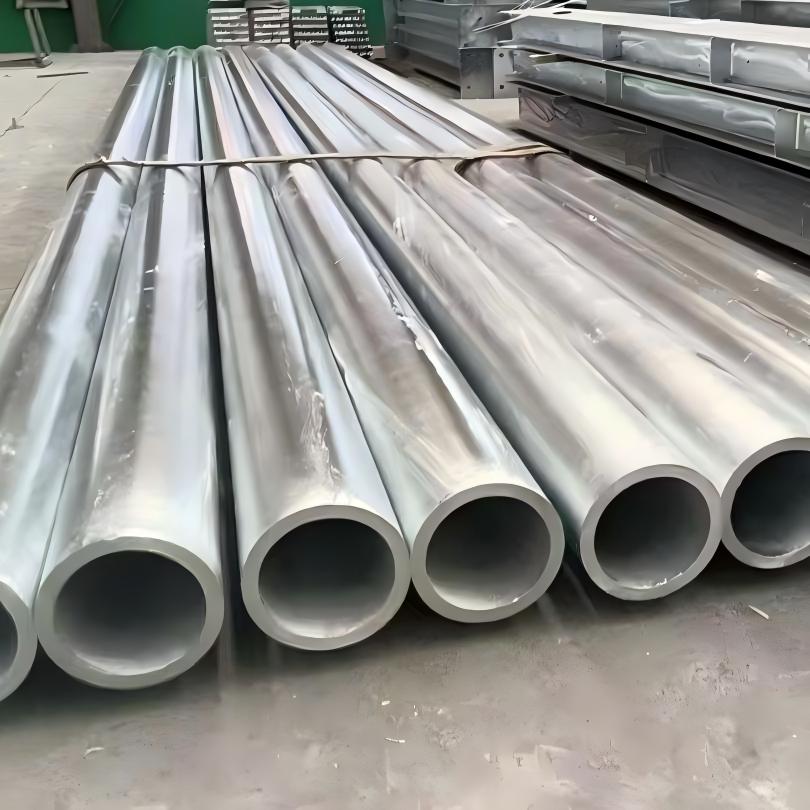
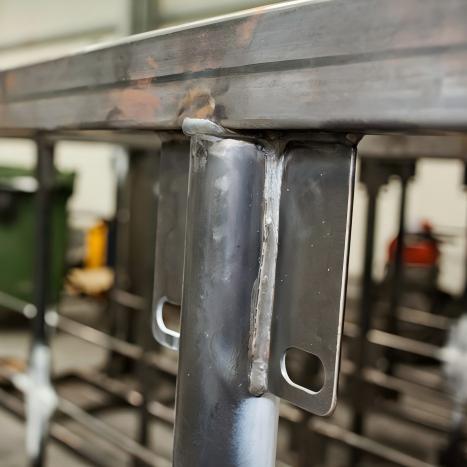
Hot-dip galvanizing does two jobs at once. The steel is dipped into molten zinc at around 450 °C, producing a metallurgically bonded layer of zinc and zinc-iron alloys - not a coating sitting on top, but a layer bonded into the steel. The second job matters just as much: zinc sits below steel in the galvanic series, so where the coating is scratched or cut, the zinc corrodes first and the steel stays intact. That sacrificial action is the real reason hot-dip galvanized steel greenhouse frames keep working at edges and drilled holes, where paint would fail within a season.
When you read a coating specification, the number that matters is the coating weight in grams per square meter (g/m²). A 275 g/m² coating - Z275 for short - is roughly 19 to 20 µm of zinc per side and the most common specification for greenhouse tube. For tougher sites we usually suggest 350 g/m² or more.
The relevant standard depends on how the frame is made. For frames galvanized after fabrication, ISO 1461:2022 sets minimum average coating thicknesses of 45 to 85 µm depending on steel section. For continuous hot-dip coated sheet and tube, EN 10346:2015 and ASTM A653/A653M define designations such as Z275.
What lifespan to expect, by environment
Service life tracks atmospheric corrosivity closely. ISO 9223:2012 sorts environments into classes from C1 (very low) to C5 (very high), and your site's class does most of the work in predicting frame life. The table below shows typical ranges for a Z275 frame under normal maintenance.
Table 1. Typical service life of a galvanized greenhouse frame (Z275, standard maintenance)
|
Environment |
Typical lifespan (years) |
|
Inland rural or urban area (C2–C3) |
40–50+ |
|
Coastal area within 5–10 km of the shore (C4–C5) |
15–25 |
|
Tropical high-humidity area with agrochemicals (C4) |
10–20 |
|
Coastal or tropical area with Z350+ or a duplex coating |
25–40 |
These are indicative ranges, not guarantees. Actual life depends on coating weight, design and maintenance - usually in that order.
The weak points, and what to do about them
Cut ends and drilled holes. No galvanizer can protect a surface that does not exist yet. When tube is cut or drilled on site, the fresh steel edge is bare, and that's where rust starts. Coat every cut end and hole with zinc-rich paint or cold-galvanizing spray before the frame goes up. It takes minutes and prevents years of trouble.
Welds. Welding burns the zinc away around the joint. Grind the weld clean, then repair the area with a two-coat zinc-rich system. If you can, buy frames galvanized after fabrication to ISO 1461, so even the welds are protected.
Buried sections. Soil and concrete are the most aggressive contacts steel can meet. Never set bare galvanized posts straight into concrete or the ground. Wrap buried sections in bituminous tape or a protective sleeve, and make sure the base drains instead of standing in water.
Concrete contact. Concrete is alkaline and holds moisture against the steel. Separate the two with a waterproof membrane or a heavy bitumen coating. This single detail often decides whether a post lasts ten years or thirty.
A maintenance plan you can actually follow
Rust prevention on a greenhouse is mostly routine, not big interventions. Inspect the frame twice a year, before and after the wet season. Look at cut edges, welds, joints and anywhere water collects under gutters. Wash off soil, fertilizer dust and bird droppings with fresh water - a hose is enough, and high-pressure washing can damage the coating. Where rust appears, brush off the loose material, apply a zinc-rich primer with at least 90% zinc dust in the dry film, then a topcoat.
One more thing that most growers forget: galvanized steel must not sit in direct contact with copper or bare aluminum. Dissimilar metals set up galvanic corrosion that eats the zinc layer. Use plastic washers or separators at every junction.
When it is worth paying for an upgrade
Standard Z275 is a sensible default, but it's not always the right answer. Galvalume - a 55% aluminum-zinc coating defined by ASTM A792/A792M - handles cut edges well and reflects heat, a real benefit in hot climates. Powder coating over galvanizing makes a duplex system: the organic layer protects the zinc, and the zinc protects the steel. Duplex systems typically last 1.5 to 2 times the combined life of either coating alone, and coastal projects are specifying them more and more.
The most cost-effective upgrade is usually the simplest one: ask for a heavier coating. Moving from Z275 to Z350 adds little to the material cost but extends service life significantly. Spend the extra money when your site is coastal, when the project must last beyond 15 years, or when replacing the frame later would be difficult.
How to check galvanizing quality before you buy
Coating weight is the one figure you should never take on trust. Ask the supplier for a mill test certificate stating the coating weight in g/m² and the standard used. Ask for the batch reports too, and check both average and minimum values - a coating can pass on average and still be thin in places. Look at cut edges with your own eyes: the coating should be a uniform grey, with no bare steel, blisters or flaking.
We see both sides of this transaction - we are the mill on the other end of the order. Every coil we ship leaves with a mill certificate and coating weight data, and we still tell every buyer the same thing: put the coating weight in your order in writing. The certificate protects you, and it protects the supplier who delivers exactly what he promised.
Conclusion
Your frame's lifespan is decided at the specification stage, not discovered after installation. Match the coating weight to your environment, verify the paperwork, and follow the maintenance routine. Between an eight-year frame and a forty-year frame, the steel is often identical. The zinc is what makes the difference.