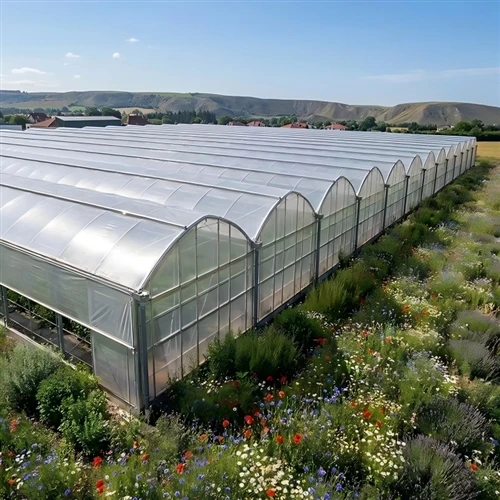
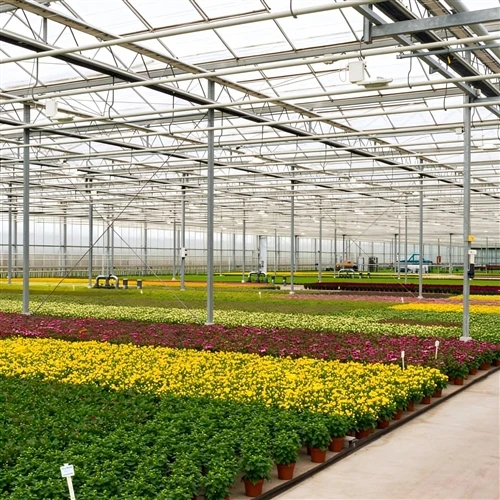
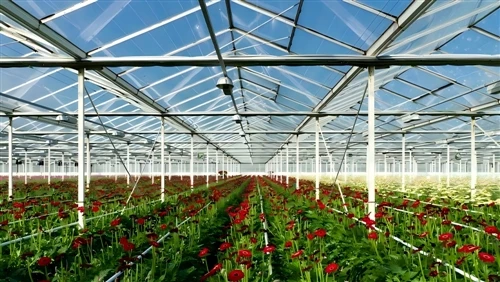
In Shouguang, Shandong-one of China's largest flower-producing hubs-a commercial greenhouse cluster built in 2017 with hot-dip galvanized corrugated panels still shows largely intact zinc coatings after more than seven years of continuous high humidity, fertilizer spray and daily condensation. Random sampling confirmed no widespread red rust. Similar outcomes appear in Kenyan highland nurseries and Malaysian flower farms, where operators report sharply lower maintenance once they switched from painted or thinly coated frames.
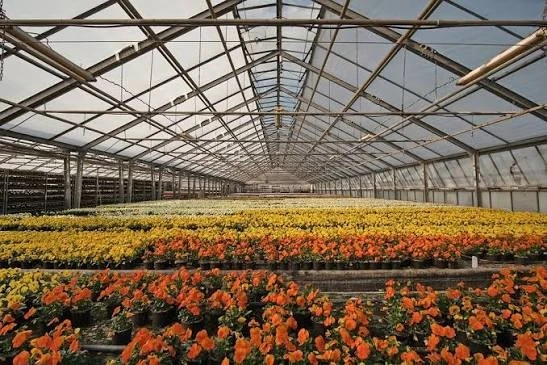
Greenhouses create a uniquely aggressive micro-climate. Internal relative humidity routinely exceeds 80 percent to support plant growth, while irrigation, pesticides and fertilizer residues add chemical attack. External rain, UV and temperature swings complete the cycle. Ordinary mild steel or electro-galvanized sheet begins to rust within a few seasons under these conditions. Industry exposure data tied to ISO 14713 and American Galvanizers Association tests indicate zinc loss of roughly 0.5 µm per year in clean rural air; inside a humid greenhouse the rate can reach 1–2 µm per year or higher once condensation and agrochemicals are present.
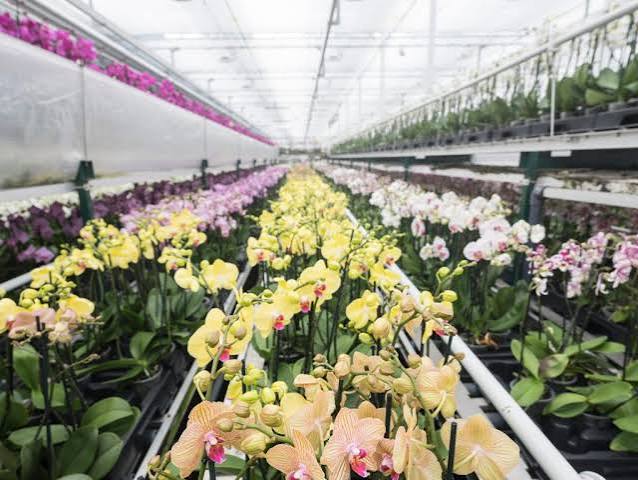
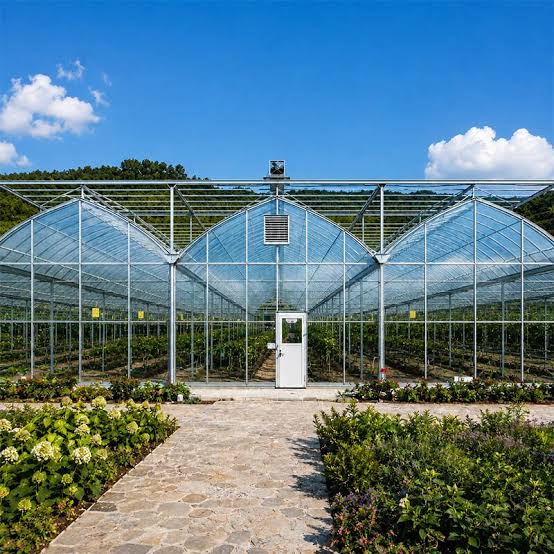
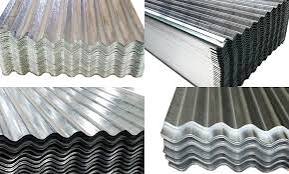
Hot-dip galvanized corrugated sheet answers this environment with a metallurgically bonded zinc layer. Coatings in the Z200–Z275 range (approximately 14–19 µm per side) typically deliver 15–20 years of service in inland flower gardens. For coastal or heavy-chemical sites, fabricators move to Z350 or Z450, extending first major maintenance beyond 25 years. Field records from Southeast Asian and East African projects show that correctly specified panels keep structural integrity while painted alternatives require recoating every 3–5 years.
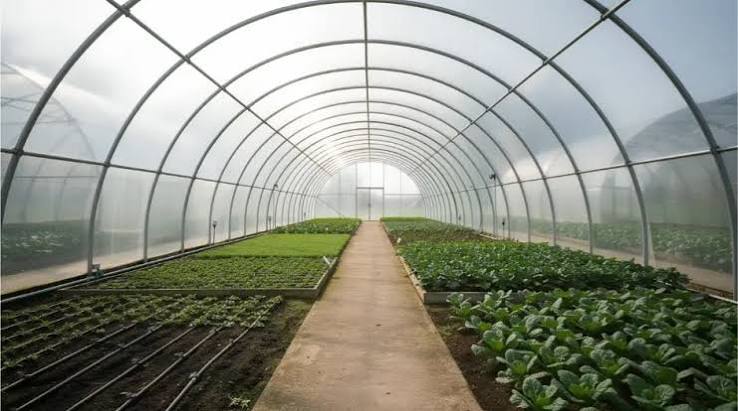
The corrugated profile itself contributes practical advantages. Its stiffness-to-weight ratio allows thinner gauges-often 0.4–0.8 mm for side walls and roofing-without sacrificing wind or snow resistance. Light weight speeds installation: a small crew can clad a multi-span flower house in days rather than weeks required for heavier alternatives. When combined with a galvanized steel frame, the panels serve as continuous wall cladding, roof covering or lower side-wall protection, leaving upper sections free for polycarbonate or film. Drainage is improved by the corrugations, reducing standing water that accelerates corrosion at fasteners and joints.
Lifecycle cost follows directly from these properties. A Malaysian commercial flower grower recorded a 70 percent drop in frame-related maintenance over five years after adopting 275 g/m² hot-dip corrugated sheet. In temperate inland settings the same material routinely outlasts timber or painted steel by a decade while eliminating annual rust treatment. For export-oriented flower operations in humid tropics or high-input horticultural zones, matching zinc mass to local humidity and chemical exposure turns an initial material premium into measurable savings in repair downtime and crop-protection continuity.
When detailing is correct-sealed cut edges, compatible fasteners and free-draining base details-galvanized corrugated steel becomes a low-intervention envelope that lets growers focus on flowers rather than structural upkeep.
 English
- English
- 简体中文
- Français
- Deutsch
- 日本語
- Italiano
- Español
- Português
- русский
- bosanski
- magyar
- Català
- Čeština
- íslenska
- România limbi
- slovenčina
- Svenska
- فارسی
- Български
- Lietuvių
- Việt Nam
- Indonesia
- українська
- Gaeilgenah Éireann
- 한국어
- dansk
- Srbija jezik (latinica)
- ไทย
- Cymraeg
- O'zbek
- Melayu
- عربي
- বাংলা
- Malti
- Türkçe
- اردو
- slovenščina
- Ελληνικά
- עברית
- Polski
- हिंदी
- Nederlands
- hrvatski
- Kreyòl Ayisyen
- suomi
- Eesti
- Norsk
- Latviešu
- Bai Miaowen