Across North American suburbs, European urban courtyards, and dense city plots in Asia, modular metal raised beds have moved from niche interest to mainstream practice between 2025 and 2026. Gardeners and landscape designers increasingly favor them because ordinary softwood frames commonly deteriorate within 5–10 years under continuous soil contact and moisture, while galvanized steel offers multi-decade service with far less intervention. Color-coated versions (pre-painted galvanized iron, or PPGI) add a finished appearance that integrates with contemporary hardscaping without the ongoing staining and sealing required by wood.

Longevity, Maintenance, and Structural Performance
Hot-dip galvanized corrugated panels typically deliver 15–30 years of usable life in garden soils, depending on coating mass, thickness, and local conditions. This range is consistent with manufacturer data and with soil-exposure guidance published by the American Galvanizers Association, which draws on field studies of corrugated steel in varying chloride, moisture, and pH environments. In contrast, University of Maryland Extension material summaries place untreated pine or spruce beds at roughly 4–8 years and even western red cedar at 12–15 years before structural softening appears at the soil line.
Corrugation itself supplies the engineering advantage: the continuous waves increase section modulus so that relatively thin sheet (commonly 0.5–1.2 mm) resists lateral soil pressure without heavy internal bracing. Heights of 30–60 cm (12–24 in) suit both vegetable root zones and ornamental plantings while remaining accessible. Because the zinc layer and optional organic topcoat eliminate rot, insect damage, and warping, seasonal maintenance drops to occasional rinsing and fastener checks rather than board replacement.
Safety for Edible Crops

Multiple U.S. Cooperative Extension services treat modern galvanized steel as acceptable for vegetable production under ordinary conditions. The University of Maryland Home and Garden Information Center has stated that the small quantity of zinc that may enter soil is not a concern for plants or people and functions as a micronutrient; they specifically caution only against strongly acidic media required by blueberries. Similar guidance appears from other land-grant programs: zinc mobility rises primarily when soil pH falls below approximately 6.0. Most vegetable garden mixes are maintained between 6.0 and 7.5, the range also recommended by USDA Natural Resources Conservation Service soil-pH charts for crop suitability. In the uncommon case of persistently acidic soil, a food-grade liner provides a simple barrier. Older reclaimed roofing panels are a separate issue because historical coatings sometimes contained additional metals; new, certified galvanized or PPGI sheet avoids that legacy.
Material Comparison and Practical Selection
| Material | Typical lifespan | Maintenance | Aesthetic options | Primary safety note |
|---|---|---|---|---|
| Corrugated galvanized / PPGI | 15–30 years | Very low | High (color, texture) | Safe at pH 6.0–7.5 |
| Ordinary softwood | 5–10 years | High | Natural, limited | Pressure-treated variants raise chemical concerns |
| Rigid plastic | 8–15 years | Moderate | Moderate | UV degradation over time |
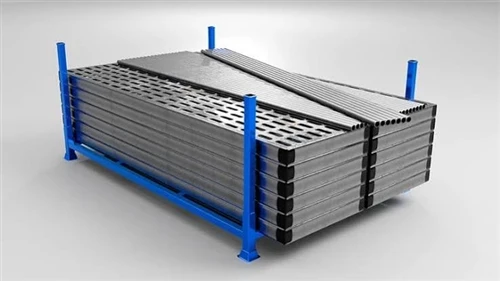
Standard practice favors 0.6–1.0 mm substrate with either plain galvanizing or a polyester or PVDF topcoat matched to RAL colors. Coastal or high-humidity sites benefit from heavier zinc mass or aluminum-zinc alloy substrates before painting. Modular panels allow rectangular, curved, L-shaped, or U-shaped layouts without custom fabrication on site.
Application Contexts

Home vegetable and flower gardens remain the largest volume use. Commercial nurseries and cut-flower operations adopt the same panels for consistent bed dimensions and rapid reconfiguration. Urban balcony and community-garden projects value the light weight relative to masonry and the clean edges that meet municipal design guidelines. Landscape architects specify color-coated corrugated sheet when a project requires both industrial texture and precise color matching to architecture.
Supply and Specification Options
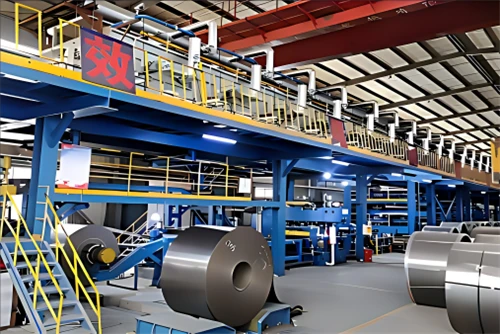
Producers of agricultural and architectural galvanized steel supply both continuous coils and pre-formed corrugated panels in custom thickness, width, and height. Color coatings follow the RAL system, and wood-grain or other decorative finishes are available on request. Specifiers and end users can request material certificates covering zinc coating mass and paint system performance. For project quotations covering coil-to-panel conversion, coating selection, or modular bed kits, contact manufacturers experienced in both agricultural and landscape-grade sheet.