Photovoltaic brackets (steel structures) serve as the "skeleton" of photovoltaic power stations, supporting the entire photovoltaic array, directly affecting the safety, power generation efficiency, and long-term operational stability of the power station. Their design service life usually needs to match the overall life of the photovoltaic power station (more than 25 years). In complex outdoor environments, they need to withstand challenges such as wind loads, snow loads, corrosion and others. This guide systematically sorts out the core standards, environmental adaptability, and mainstream material solutions of photovoltaic steel structures, helping project developers, EPC companies, and owners to scientifically select types.
I. Industry Core Standards and Design Requirements


The design and acceptance of photovoltaic brackets must strictly follow relevant national and industry standards to ensure structural safety and long-term durability:
JG/T 490-2016 "General Technical Requirements for Solar Photovoltaic System Brackets": This is a product standard in the construction industry, clearly stipulating that brackets must have sufficient strength, stiffness, and good anti-corrosion and anti-rust capabilities. Material selection must meet anti-corrosion requirements. Wind load and gravity load calculations and acceptance must comply with GB 50205-2020 "Steel Structure Engineering Construction Quality Acceptance Specification".
Design service life: Ground photovoltaic power station tracking brackets generally have a design service life of 25 years; Building Integrated Photovoltaics (BIPV) projects need to be consistent with the main building structure life. Structural safety level is usually level three.
Anti-corrosion and foundation requirements: Brackets need to use anti-corrosion and anti-rust materials, bolt connections must be reliable (high-strength bolts comply with JGJ 82 standard), and foundations should use concrete above C25. Project acceptance focuses on examining wind resistance and seismic resistance capabilities.
Power warranty matching: Photovoltaic modules usually provide 25-year linear power guarantee (first year attenuation 2-3%, then 0.5-0.65% per year, power not less than 80-81.4% after 25 years). High-quality steel structure brackets, through hot-dip galvanizing or zinc-aluminum-magnesium and other anti-corrosion treatments, can achieve 25-30 years or even longer service life.
Current industry trends emphasize the application of environmentally friendly materials, such as replacing some traditional hot-dip galvanizing with zinc-aluminum-magnesium coatings to better meet carbon neutrality goals and long-term stable operation needs.
II. Failure Modes and Challenges in Different Climate Environments
Photovoltaic steel structures are long-term exposed outdoors, susceptible to corrosion, wind and sand, freeze-thaw and other factors. Failure modes vary significantly in different regions:
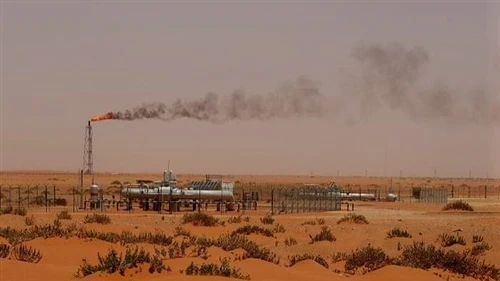
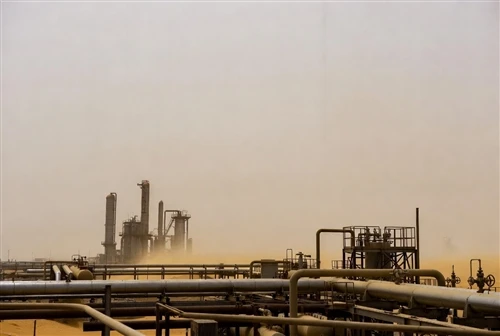
Desert/arid areas (such as northwest Gobi, deserts): Mainly face wind and sand abrasion and dust accumulation problems. Wind and sand flow will cause dust accumulation on component surfaces, erosion and abrasion, and structural damage, reducing power generation efficiency; surface erosion and accumulation further exacerbate wind erosion. Steel structure coatings are prone to accelerated wear due to sand particle impacts. It is worth noting that photovoltaic arrays can reduce near-ground wind speed by 20-60%, playing a certain role in wind prevention and sand fixation ecology, but land compaction during construction will temporarily increase soil wind erosion risk.
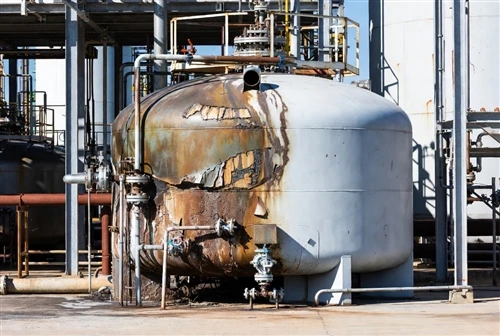
Coastal/high salt fog areas: Salt fog corrosion is the biggest threat. High humidity and high salt environments will accelerate metal corrosion. Ordinary carbon steel or hot-dip galvanized layers are prone to rapid failure, leading to reduced bracket strength and affecting structural safety.
Plateau/cold areas: Freeze-thaw cycles easily cause material embrittlement, coating cracking, and backsheet peeling. Large temperature differences will also exacerbate coating stress.
Other extreme climates: High humidity tropical areas are mainly wet heat corrosion; hail, heavy snow, typhoon areas need to focus on high-strength impact resistance design.
Overall, traditional hot-dip galvanizing has insufficient durability in harsh environments, while new materials such as zinc aluminum magnesium have corrosion resistance up to 6-15 times that of it (usually about 10 times), significantly extending bracket life.
III. Mainstream Steel Structure Material Solutions
Currently, photovoltaic brackets mainly use carbon steel substrates, achieving anti-corrosion through surface treatment, mainly applied in ground power stations and industrial and commercial roof projects. The following is a comparison of mainstream categories:
Hot-dip galvanized steel (Q235/Q355, etc.)
Specifications: Thickness 1.5-8mm (pile foundations thicker).
Advantages: High strength, lower cost, good toughness, excellent seismic performance.
Disadvantages: After processing, hot-dip galvanizing is required, logistics costs are high; cut surfaces easily form corrosion starting points; durability is average in harsh environments such as coastal and desert.
Applicable scenarios: General inland areas, fixed bracket systems.
Life: About 25 years.
Zinc-aluminum-magnesium (Zn-Al-Mg) coated steel (emerging mainstream)
Coating characteristics: Contains Zn + Al (1.5-11%) + Mg (1.5-3%).
Core advantages: Corrosion resistance is 6-15 times that of traditional hot-dip galvanizing, with cut edge self-healing (self-repair) ability, strong wear resistance, environmentally friendly and low pollution; can be cold-formed, easy processing.
Disadvantages: Not suitable for high-temperature welding (will affect local strength), initial price slightly higher.
Specifications: Thickness 1.5-5mm, commonly used S350GD, S420GD high-strength steel.
Applicable scenarios: Large ground power stations, deserts, tidal flats, coastal and other harsh environment projects.
Life: Up to 30-35 years, a trend product replacing hot-dip galvanizing.
Stainless steel
High corrosion resistance, suitable for extremely corrosive environments (such as strong salt fog areas). Good strength, but highest cost, belongs to non-mainstream economic choice, narrow application range.
Other materials
Aluminum alloy brackets: Lightweight, strong corrosion resistance, but strength and cost characteristics are different, suitable for weight-sensitive roof projects.
Weathering steel: Performs well in atmospheric environments, but still needs additional protective coatings in high salt or polluted areas.
Selection suggestions: Targeted material selection + coating thickening + regular maintenance is the core strategy. In general atmospheric environments, weathering steel performs well; in high salt fog or strong wind and sand areas, prioritize zinc-aluminum-magnesium coated steel and appropriately increase coating thickness.
IV. Conclusion and Future Outlook
Photovoltaic steel structures are key infrastructure to ensure long-term reliable power generation of power stations. With the advancement of dual carbon goals and the increase of large base projects, the requirements for bracket materials' long life, high corrosion resistance, and low-carbon environmental protection are increasingly elevated. New coated steels such as zinc-aluminum-magnesium are rapidly replacing traditional hot-dip galvanizing and becoming the industry mainstream direction. In project decision-making, it is recommended to combine specific climate conditions and project life cycle costs (LCOE) for comprehensive assessment, select matching steel structure solutions, and strictly follow standards for design, construction, and operation and maintenance to achieve stable operation of more than 25-30 years.