Road departure crashes account for a significant portion of highway fatalities worldwide each year. Steel guardrails remain the most widely deployed passive safety measure to mitigate these events. However, not all guardrail steel performs equally when a vehicle strikes at 100 km/h. The difference between controlled redirection and catastrophic penetration often hinges on three material properties-and on the buyer's understanding of how they interact in real-world collisions.
Why Strength Alone Is Not Enough
Procurement specifications typically list yield strength and tensile strength as primary acceptance criteria. For instance, AASHTO M180 Grade A requires 345 MPa yield and 483 MPa tensile; GB/T 31439.1 mandates 235 MPa yield and 375 MPa tensile for Q235. These figures are necessary but not sufficient. A high-strength beam that lacks adequate elongation will fracture at the bending apex during impact, rather than deforming progressively.
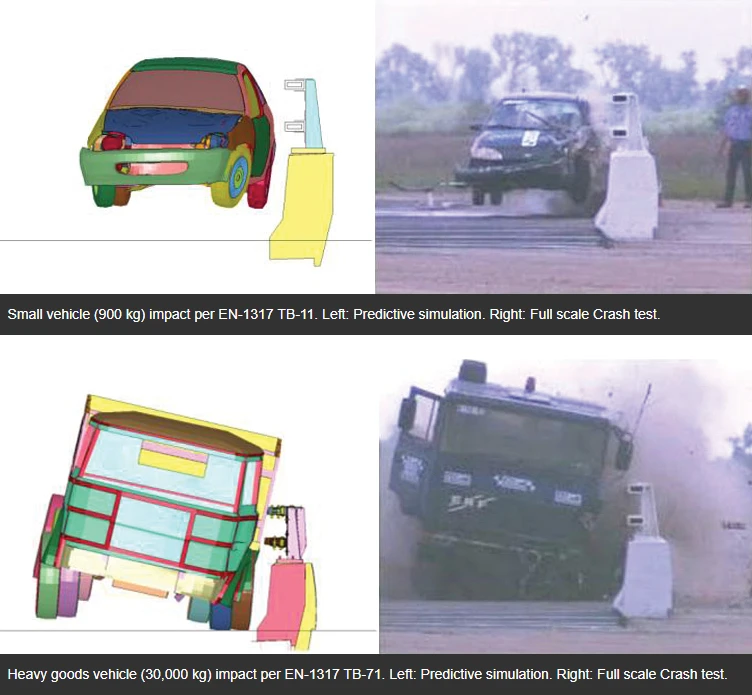
Full-scale crash tests from the Midwest Road Safety Facility have repeatedly demonstrated that beams with elongation below 12% (in 50 mm gauge) tend to rupture prematurely near splice connections, allowing the vehicle to override or underride the barrier.
Elongation directly measures ductility-the material's ability to absorb energy before breaking. It is the most reliable indicator of impact toughness in cold environments, where steel becomes inherently more brittle. This is why European standard EN 1317 places special emphasis on Charpy V-notch impact values at −20°C, requiring minimum absorbed energy of 27 J for most applications.
The Hidden Cost of Marginal Compliance
A steel coil that just meets the minimum specification may pass laboratory testing yet fail in the field. Consider thickness tolerances. If a 2.67 mm nominal beam rolls at the lower limit (2.54 mm), it loses roughly 5% of its section modulus-and with it, a proportional reduction in bending resistance. Similarly, variations in galvanized coating thickness can accelerate pitting corrosion, which reduces the effective cross-section over time and promotes stress concentration.
These marginal deviations often go undetected in random sampling, but they accumulate to produce a statistically significant increase in failure risk over the project's lifetime.
Less frequently discussed is the strain rate sensitivity of guardrail steel. Under high-velocity impact, the effective yield strength rises, but uniform elongation tends to drop. If the base material already sits at the lower bound of elongation (say, 12% under AASHTO), the dynamic elongation at strain rates of 10 s⁻¹ may fall below 8%-a regime where brittle fracture becomes probable. This phenomenon is well documented in automotive steel research, yet few procurement guidelines address it. For buyers, this means that specifying a material with a comfortable margin-for example, 16–18% elongation in ASTM E8 testing-provides a genuine safety buffer that no static load calculation can replace.
| Steel Grade | Yield Strength | Tensile Strength | Recommended Elongation | Charpy Impact (-20℃) |
|---|---|---|---|---|
| Q235 | ≥235 MPa | 375 MPa | ≥16% | ≥35 J |
| Q355 | ≥345 MPa | 483 MPa | ≥16% | ≥35 J |
| S350GD+Z | ≥350 MPa | 450–560 MPa | ≥18% | ≥38 J |
Making a Technically Defensible Choice
For a sound procurement decision, we recommend that buyers evaluating guardrail steel suppliers look beyond the grade designation and request three specific documents:
Actual mill test certificates showing yield, tensile, and elongation values, along with sample numbers and test direction.
Charpy impact data at both 0°C and −20°C, ideally with an average of at least 35 J, to ensure adequate fracture toughness in colder climates.
Thickness tolerance records from the rolling schedule, confirming that the material meets nominal section properties with minimal deviation.
Coating selection also matters. Z160 galvanizing (160 g/m²) works for most environments, but coastal regions or areas with heavy winter salting benefit from Z275 or even Z450 to extend service life without sacrificing formability. The zinc-iron alloy layer must remain thin enough to permit proper bending during roll-forming-a detail often overlooked until cracking appears at the flanges.
A Partner Who Understands These Nuances
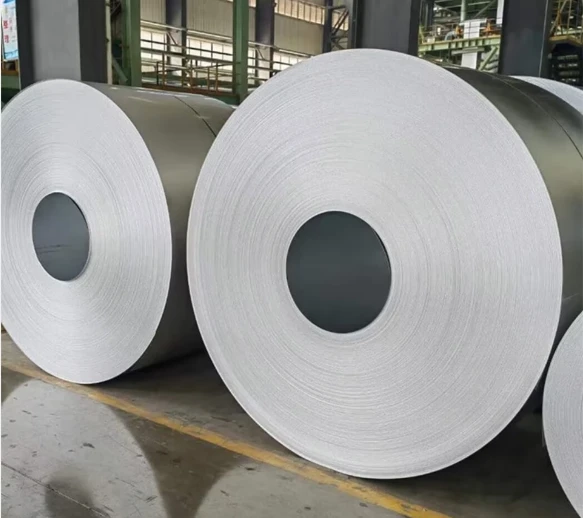
We serve as a technical partner, not merely a steel coil trader. Our team has worked with highway agencies, contractors, and engineering firms across multiple continents. We supply Q235B, Q355, and S350GD+Z160 grades, all produced with tight gauge control and Charpy values consistently exceeding minimums. Every coil comes with a traceable mill report, and we can arrange independent third-party testing upon request.
For your next project, if you require guardrail steel that performs reliably under actual impact conditions, please share your technical specifications with us. Our metallurgical engineers can review your requirements, suggest cost-effective alternatives, and provide full test data for your approval. When safety is on the line, the choice of steel should never be left to chance.

Need Custom Guardrail Steel Technical Solution?
Send your project parameters, we offer full mill test reports & third-party inspection support