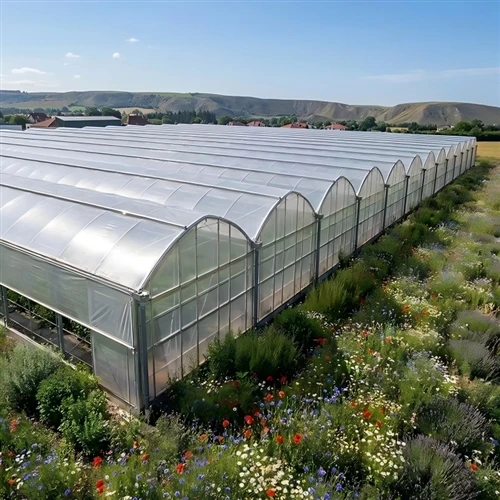
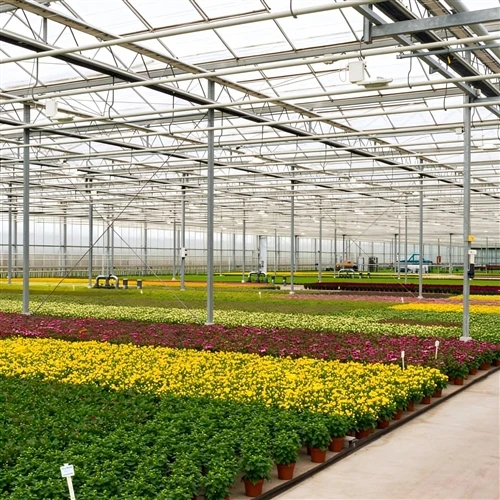
We sell the steel that becomes greenhouse frames, so we watch the same numbers you do. Every week, someone sends us a rough sketch of the greenhouse they want to build, and the first question is almost always the same: what will the frame cost? There is an honest answer, and it starts with a short list of choices you control - the steel spec, the structure, the freight, the duties. This article walks you through that list, gives you ballpark price ranges to budget with, and closes with a simple way to check whether a steel frame makes financial sense for flower production.
What actually moves the price of a steel greenhouse frame?
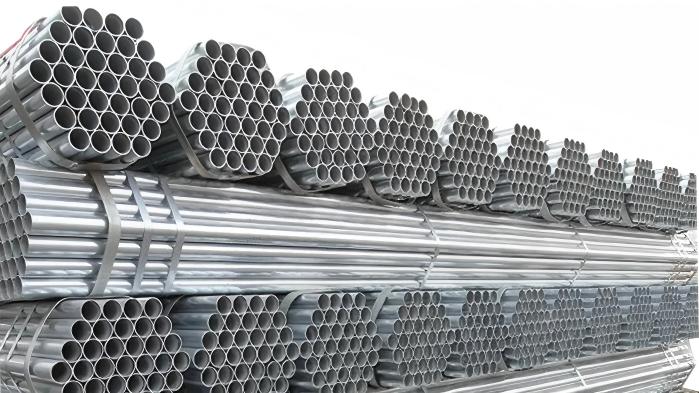
The frame price starts with the steel itself. Three numbers on the spec sheet do most of the work: tube diameter, wall thickness, and zinc coating weight. A lightweight tunnel might get away with 25 mm tube and a 1.5 mm wall. A multi-span house for commercial cut flowers needs far more steel - think 48 mm or 60 mm columns with walls of 1.8 to 2.5 mm. Wall thickness is not a preference; it is the load calculation. The zinc coating, applied by hot-dip galvanizing at anywhere from 80 to 275 g/m², decides how long the frame survives before rust finds it. In humid coastal climates, the thicker coating usually pays for itself within a few years.
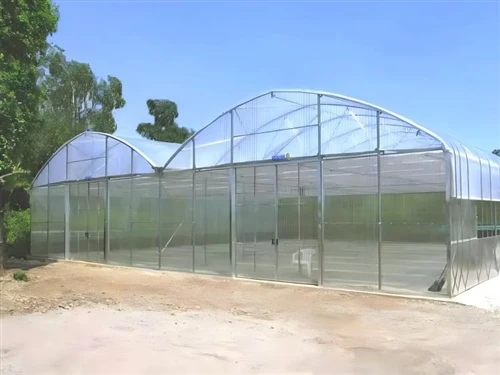
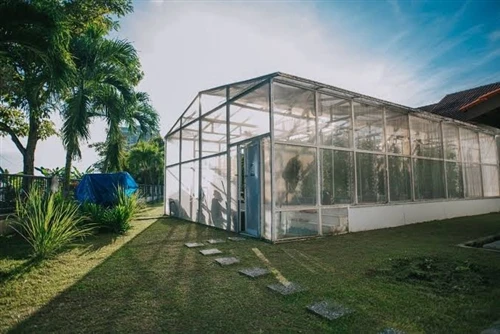
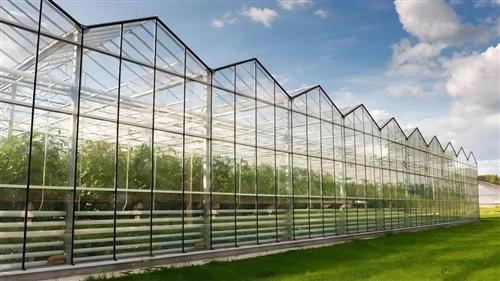
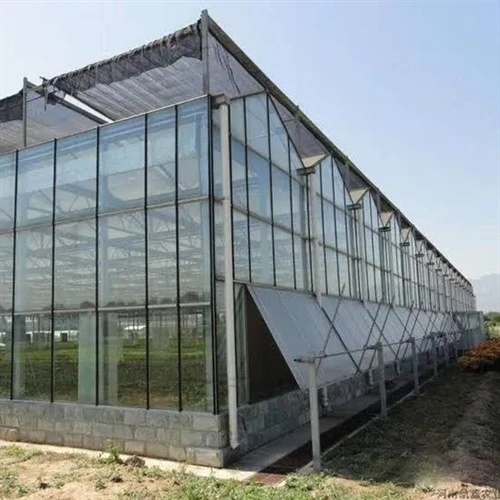
Span and height change the tonnage more than most buyers expect. A wider span means fewer posts inside, but the rafters and purlins have to grow to carry the load. Eave height works the same way: taller is nicer to work in and better for airflow, but you buy more steel per square meter. Then there is the roof. An arched single-span roof is the cheapest form we build. Gothic or truss profiles shed snow better and let in more light, yet they cost more to fabricate. For most flower growers, an arched single-span or a straightforward multi-span layout is the sensible middle ground.
Accessories sit on top of the frame price, and they add up faster than buyers expect. Doors, roof and side ventilation, gutters, film clips - usually 10 to 20 percent on top of the steel. Film itself is a separate line; do not let a supplier fold it into the frame quote without telling you. Order volume helps too: moving from one house to several bays typically cuts the unit price by 5 to 15 percent, because setup and shipping spread across more steel.
Freight and duties often decide which supplier is actually cheapest, and this is where Central Asia and Africa diverge hard. For sites in Kazakhstan or Uzbekistan, your frame travels mostly by rail or truck through border points like Khorgos or Alashankou, and the inland leg after the border can be the single biggest variable in the whole deal. African buyers more often take containerized sea freight to Mombasa, Lagos, or Dar es Salaam - cheaper per ton, but port handling, customs clearance, and last-mile trucking eat into that saving. So ask for a CIF or DDP price, not FOB, and make the supplier show duties separately. Installation is the last line: bolted frames go up with your own crew, while welded structures need professional welders, and that difference alone can move your budget more than the steel spec does.
Greenhouse price per square meter: what the numbers mean
With all that in mind, here are ballpark figures from current supplier quotes for galvanized steel frames. Treat them as a starting point, not a contract.
Table 1. Budget ranges for galvanized steel greenhouse frames
|
Structure type |
Typical frame price (USD/m²) |
|
Light tunnel frame (25–32 mm tube, thin wall) |
3–6 |
|
Single-span frame (40–48 mm columns) |
6–12 |
|
Multi-span commercial frame (48–60 mm columns, 1.8–2.5 mm wall) |
10–20 |
|
Complete structure with film, doors, and ventilation |
12–25 |
Now the uncomfortable part of comparing quotes: the cheapest number on paper is rarely the cheapest over time. Table 2 puts steel, aluminum, and PVC side by side, looking past the first invoice.
Table 2. Lifecycle comparison: galvanized steel versus aluminum versus PVC
|
Criterion |
Galvanized steel |
Aluminum |
PVC frame |
|
Frame price (USD/m²) |
6–12 |
20–35 |
2–5 |
|
Typical service life (years) |
15–20 |
20–30 |
3–6 |
|
Wind and snow resistance |
High |
High |
Low |
|
Maintenance requirement |
Low |
Very low |
High |
|
15-year lifecycle cost |
Low |
High |
Highest |
A PVC frame can look irresistible at 2 to 5 dollars per square meter, until you remember it may need replacing two or three times inside fifteen years. Aluminum is beautiful and nearly maintenance-free, but you pay roughly double the steel price on day one. Galvanized steel lands in between, and with a proper zinc coating it will still be holding your crops after fifteen years. For most flower operations, that is the lifecycle math that decides it.
Does the frame pay for itself? A quick ROI check for flower production
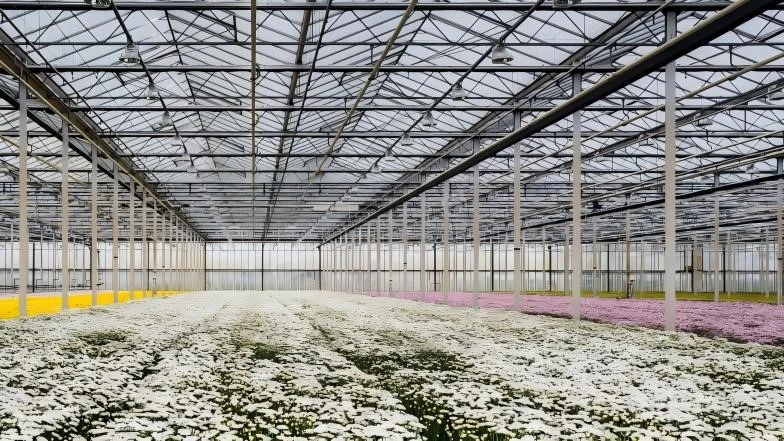
Budgeting answers "how much?" ROI answers "why bother?" A greenhouse changes flower economics three ways: it stretches the season, it raises yield per square meter, and it cuts losses from rain, wind, frost, and pests. Here is a deliberately simple annual model. Plug in your own numbers.
ROI (%) = (Additional income + Losses avoided − Annual ownership cost) ÷ Total initial investment × 100
Payback period (years) = Total initial investment ÷ Net annual benefit
Annual ownership cost = Depreciation + Maintenance (depreciation = initial investment ÷ expected life)
Let's run it on a 667 m² house - about one mu - growing cut flowers.
Initial investment: frame USD 5,000; film and accessories USD 1,500; freight and installation USD 1,300. Total USD 7,800.
Additional income: two extra crop cycles per year, worth USD 2,400.
Losses avoided: weather and pest losses fall from about 30 percent to 5 percent, saving USD 1,600 per year.
Annual ownership cost: depreciation over 15 years is USD 520; maintenance adds USD 200. Total USD 720.
Net annual benefit: 2,400 + 1,600 − 720 = USD 3,280.
ROI: 3,280 ÷ 7,800 × 100, about 42 percent per year.
Payback period: 7,800 ÷ 3,280, about 2.4 years.
Those figures are examples, not promises. Your crop, your local prices, and your labor cost will shift every line. Run the model twice: once with your best guess, once with a 20 percent worse case. The second answer is the one to build a budget on.
Why the cheapest frame is rarely the cheapest
A low price gets attention. It can also get you a collapsed roof. The failures we see most often are structural, corrosion, and schedule. Under-spec the steel for your local snow load or wind speed and the frame can fail in its first winter. Short-change the zinc coating and rust shows up within two or three years - faster near the coast, faster still inside a humid greenhouse. And when a frame arrives with undersized connectors, misaligned holes, or half the accessories missing, it cannot go up on schedule. The planting season you lose is worth more than the money you saved on the invoice.
If a supplier cannot put the steel grade, wall thickness, and zinc coating weight in writing, that quote deserves suspicion rather than a signature.
Send a better inquiry, get a better quote
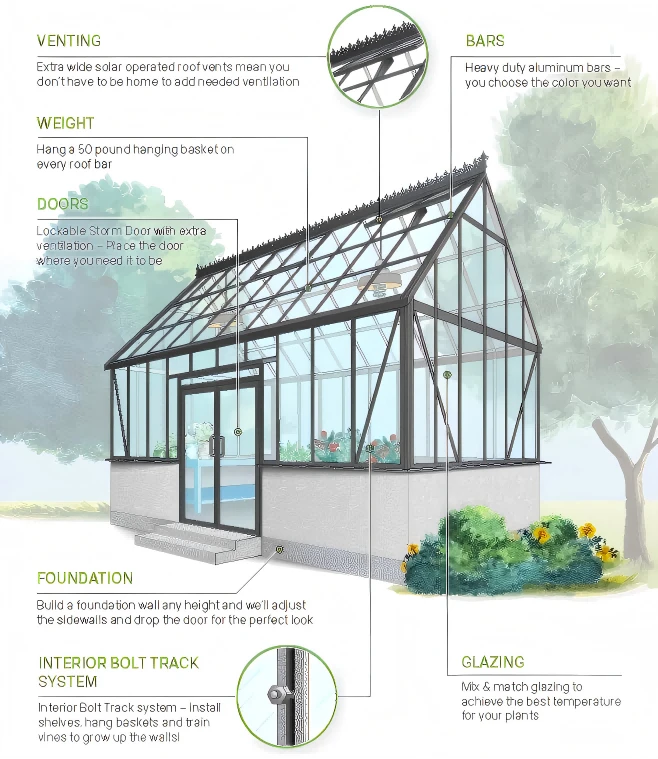
The fastest way to raise the quality of every quote you receive is to raise the quality of the inquiry you send. A complete spec does two jobs: it makes quotes comparable, and it forces the supplier to commit to a specification in writing. This is the list we ask buyers to include.
Table 3. Specification checklist for greenhouse frame inquiries
|
Item |
What to specify |
|
1. Project location and climate |
Snow load (kN/m²), wind speed, humidity |
|
2. Dimensions |
Span, eave height, ridge height, total area, number of bays |
|
3. Steel specification |
Tube diameter, wall thickness, steel grade, zinc coating weight (g/m²) |
|
4. Structure type |
Single-span or multi-span; arched, gothic, or truss |
|
5. Film |
Type (PE or PO), thickness (µm), UV resistance, target service life |
|
6. Accessories |
Doors, ventilation, gutters, film clips, base plates |
|
7. Price terms |
FOB, CIF, or DDP; duties and port charges stated separately |
|
8. Payment and currency |
USD or local currency; deposit and balance terms |
|
9. Delivery |
Port or border point, lead time, export packaging |
|
10. Installation |
Bolted or welded; drawings and supplier support |
One last budgeting note: think in the currency you will actually pay. Most exporters quote in USD, so convert the total to your local currency and leave room for exchange movement between the quote and the payment date. Compare full delivered cost - product, freight, duties, inland transport - not the unit price. If you send us a checklist like the one above, you will get a specification-based quote with delivery options for your port or border point. That is the part of the job we do best.