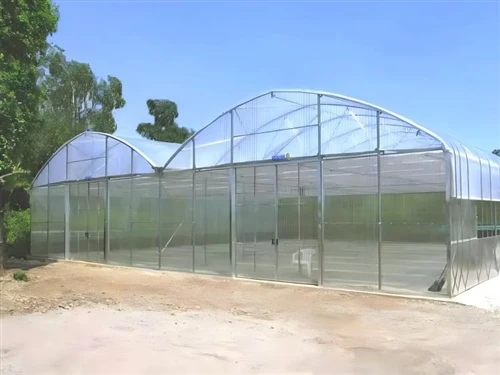
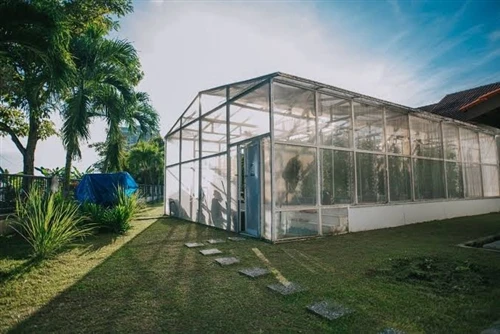
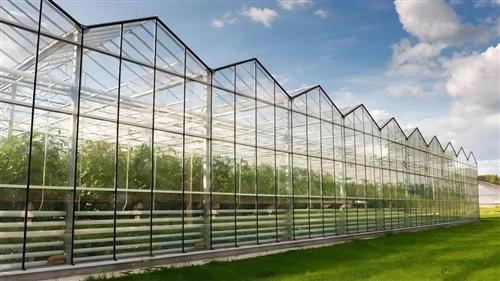
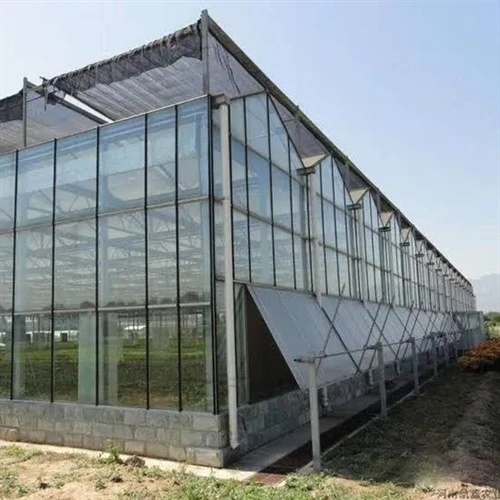
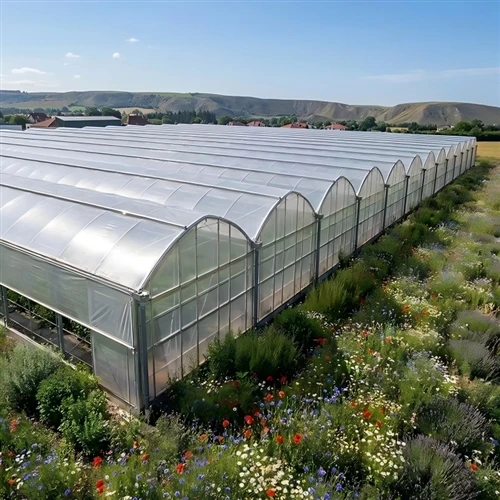
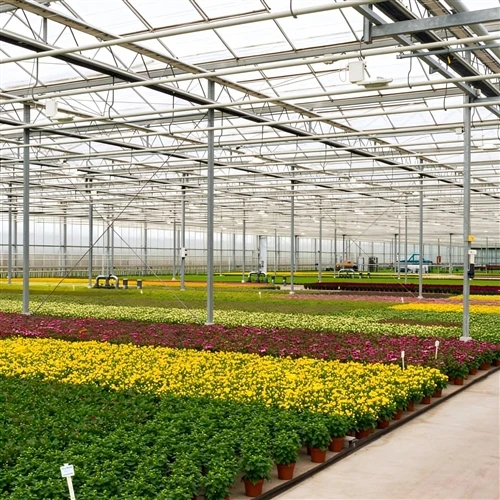
In a commercial cut-flower operation outside Kunming, operators compared four cladding options over a ten-year period. Plastic film required full replacement three times; glass demanded heavier framing and careful handling after two hail events; prepainted steel sheets showed coating peel and rust at cut edges within six years; hot-dip galvanized corrugated panels installed in 2016 still carried intact zinc layers with only routine washing. Similar patterns appear in highland Kenya and coastal Yunnan flower farms, where total ownership cost, not first-year price, decides long-term viability.
Light management and durability diverge sharply among the common choices. Tempered glass transmits 90 percent or more of photosynthetically active radiation and lasts decades, yet its weight forces stronger frames and raises both material and foundation costs. Multi-wall polycarbonate offers 75–85 percent transmission with better insulation and impact resistance, typically lasting 10–15 years before yellowing reduces light quality. Polyethylene film starts near 85–90 percent transmission but degrades under UV within 3–5 years, requiring repeated recovering that interrupts production cycles. Prepainted (color-coated) steel provides shade or reflectivity when desired, yet the organic coating is vulnerable to abrasion, chemical spray and cut-edge corrosion; field observations in humid Chinese and Southeast Asian nurseries show coating failure often beginning at fasteners within five to eight years.
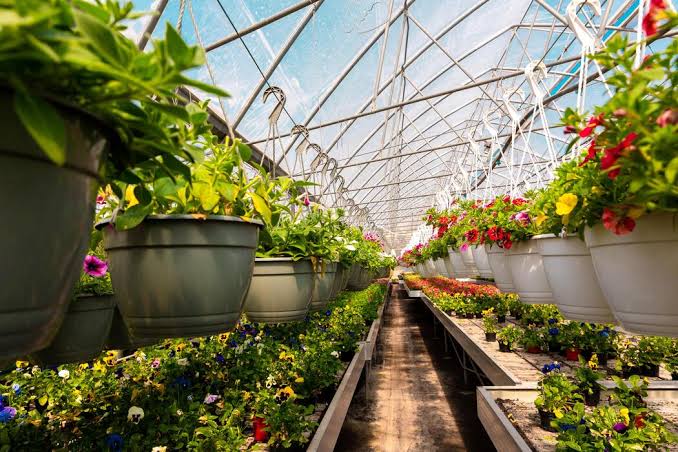
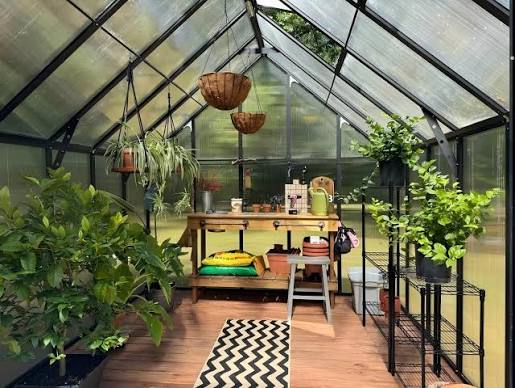
Hot-dip galvanized corrugated steel occupies a different niche. It does not transmit light-its role is structural cladding for lower walls, end walls or shaded roof sections-yet it delivers 20–30 years of service in inland humid conditions when zinc mass reaches Z275 or higher. Industry exposure data linked to ISO 14713 and American Galvanizers Association tests place average zinc loss near 0.5 µm per year in clean air; inside a fertilizer-rich greenhouse the rate rises, but the thicker metallurgical coating still outlasts painted surfaces. The corrugated profile adds stiffness at low weight, allowing thinner gauges (0.4–0.8 mm) that reduce frame loads and speed installation. In Yunnan and Shandong projects, matched galvanized frame-plus-cladding systems cut on-site assembly time by roughly one-third compared with mixed glass or polycarbonate builds.
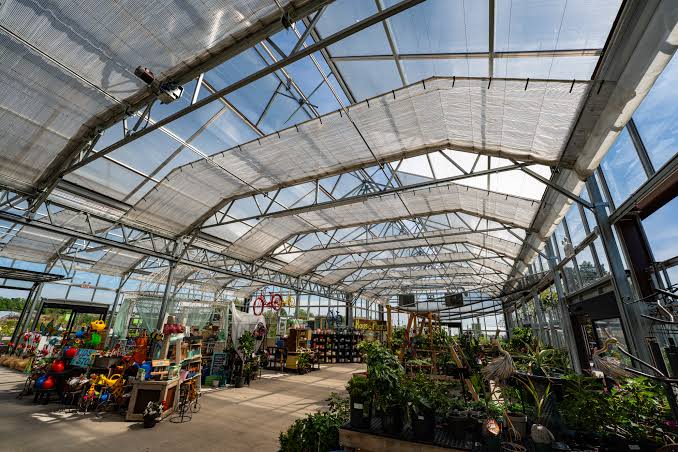
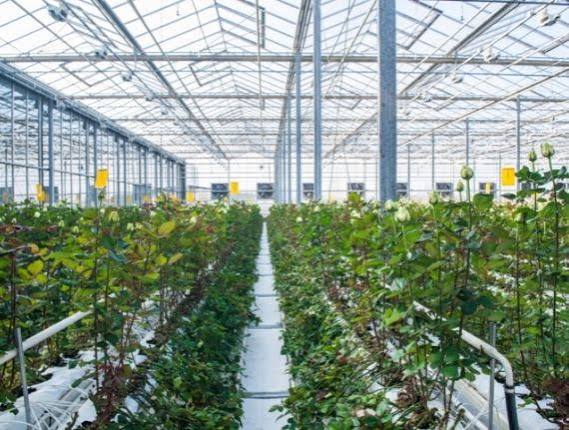
Cost arithmetic favors the galvanized option for many flower operations. Glass carries the highest installed cost per square meter and requires robust support. Polycarbonate sits in the middle range but still needs periodic panel replacement. Film is cheapest initially yet accumulates the highest labor and downtime over 15 years. Prepainted steel looks economical until coating failure triggers early repair. Galvanized corrugated panels sit between film and polycarbonate on first cost while matching or exceeding the longer service intervals of heavier materials, especially when used for non-transmitting walls and roofs where full light penetration is unnecessary. Growers in East Africa and southern China report that the combination of low maintenance and predictable lifespan converts the modest premium into measurable savings once replacement cycles and crop interruption are counted.
When the greenhouse program needs both light-transmitting upper surfaces and durable, low-upkeep lower cladding, galvanized corrugated steel supplies the structural half of the envelope at a total cost of ownership that remains competitive across humid tropical and highland flower production zones.
 English
- English
- 简体中文
- Français
- Deutsch
- 日本語
- Italiano
- Español
- Português
- русский
- bosanski
- magyar
- Català
- Čeština
- íslenska
- România limbi
- slovenčina
- Svenska
- فارسی
- Български
- Lietuvių
- Việt Nam
- Indonesia
- українська
- Gaeilgenah Éireann
- 한국어
- dansk
- Srbija jezik (latinica)
- ไทย
- Cymraeg
- O'zbek
- Melayu
- عربي
- বাংলা
- Malti
- Türkçe
- اردو
- slovenščina
- Ελληνικά
- עברית
- Polski
- हिंदी
- Nederlands
- hrvatski
- Kreyòl Ayisyen
- suomi
- Eesti
- Norsk
- Latviešu
- Bai Miaowen