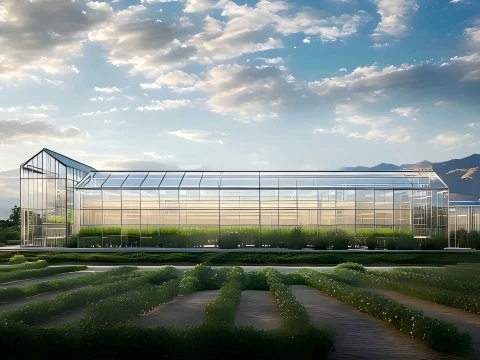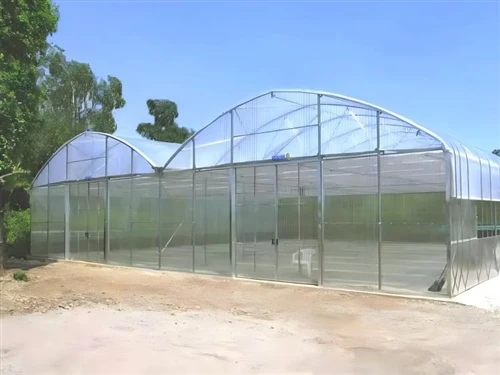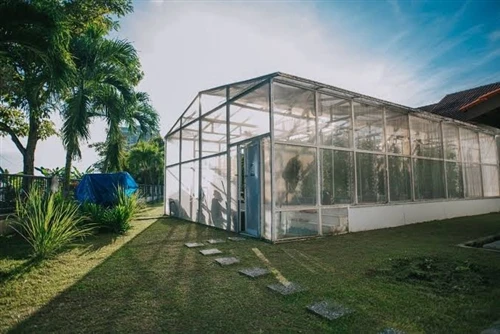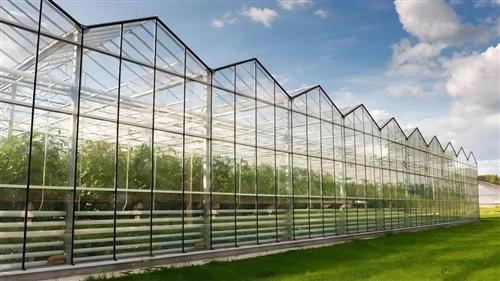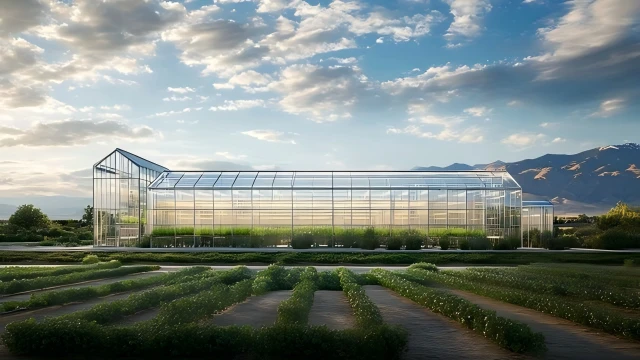
A greenhouse frame has two jobs. It shelters the crop from the weather outside, and it stands up to that same weather, year after year. When a frame fails, the steel is rarely the culprit; the design simply did not match the site.
That is why we ask for climate data before we talk about price. Wind speed, snow depth, humidity and temperature range change nearly every dimension of a frame. Get the climate wrong and you either pay for steel you do not need, or the frame fails in the first storm.
Below, we break down the four climate profiles we deal with most often across Africa, Southeast Asia and Central Asia. Whether it is a greenhouse frame for tropical climate or for snow country, the site decides the specification.
Climate First, Structure Second
Crops and structures rarely want the same thing from a greenhouse. In a hot, humid region, the crop needs moving air, while the frame needs corrosion protection. In a desert, the crop needs shade and warm nights; the frame needs UV- and dust-tolerant coatings. In cold regions, snow dictates the roof shape; on windy coasts, anchoring decides survival.
These demands often pull against each other. A steep roof sheds snow quickly but catches more wind. A wide span moves air well but weakens the frame. Before any steel is cut, we ask one question: what is the worst condition this greenhouse will ever face?
Tropical High Humidity: Ventilation First
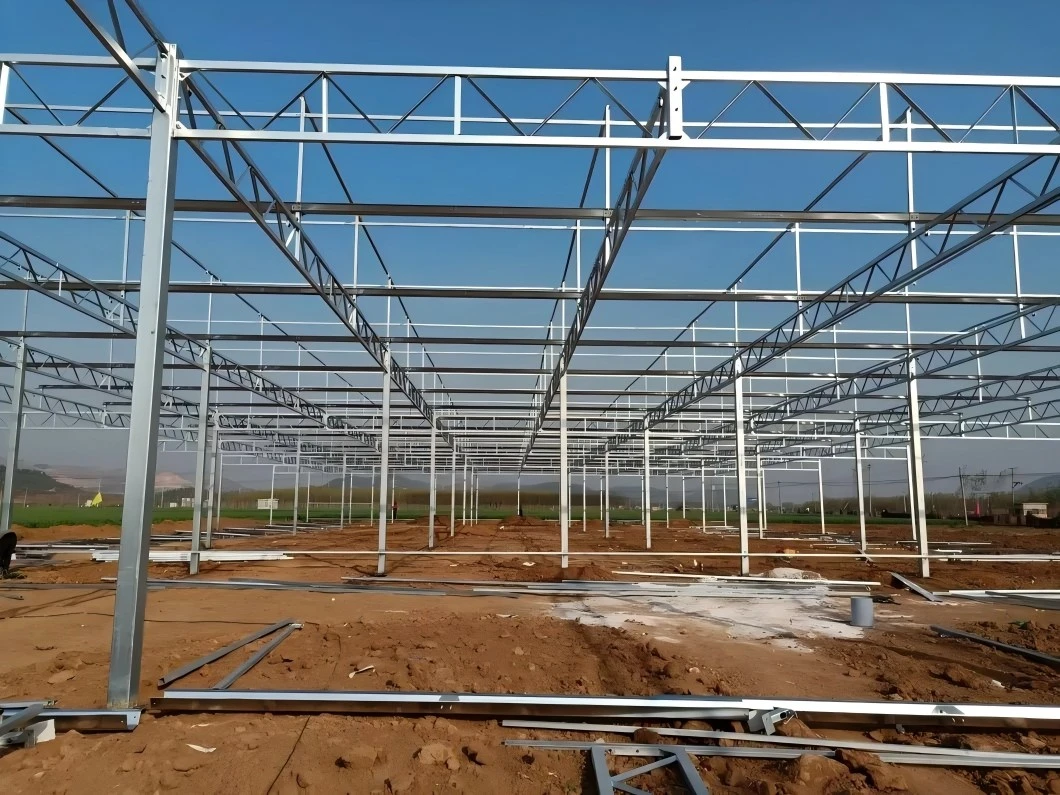
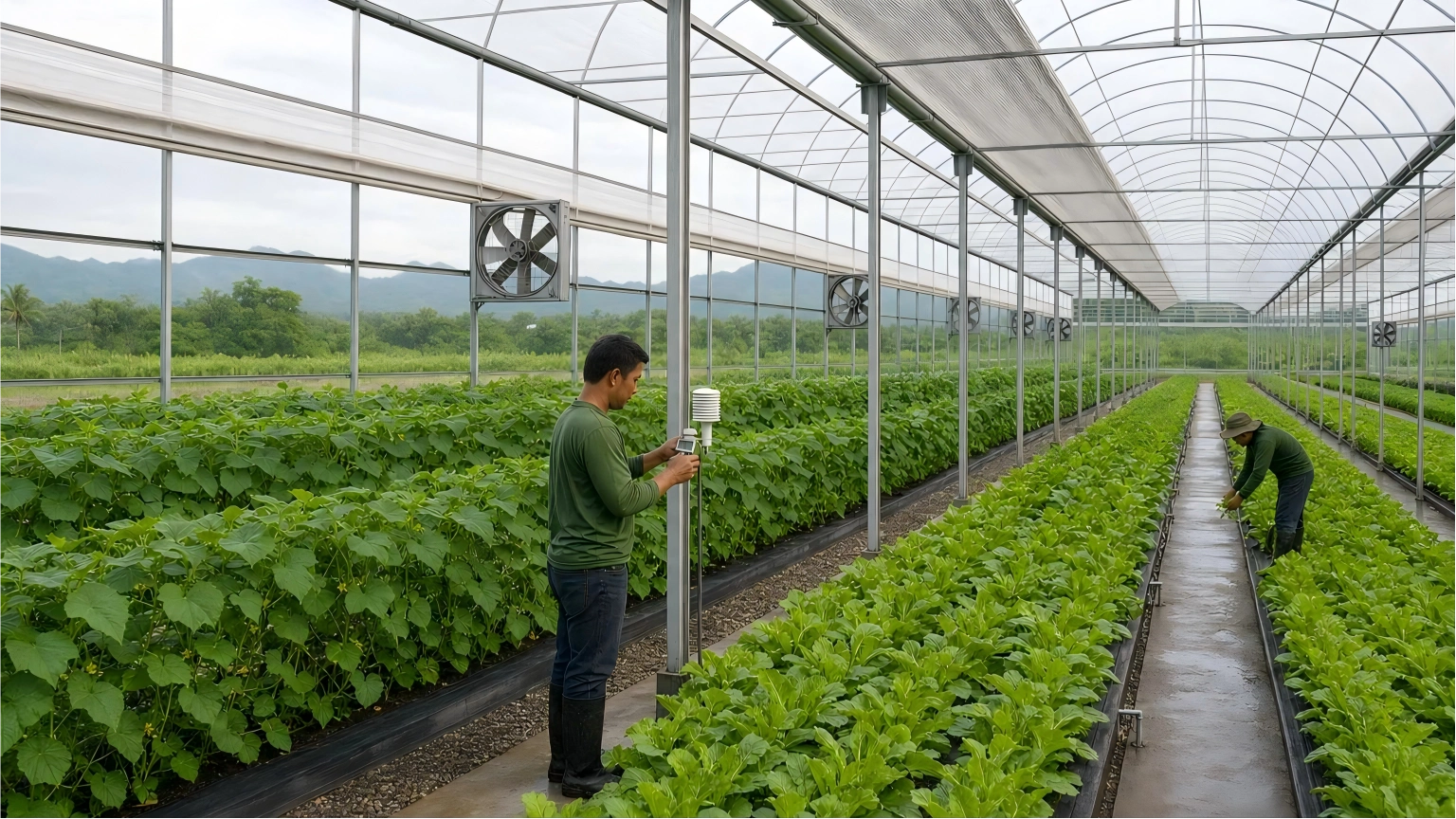
Southeast Asia is demanding on flowers and steel alike. Daytime temperatures hover around 30 °C for much of the year, and relative humidity frequently sits above 80 percent. In that air, ventilation is not an accessory; it is the point of the building. Still air traps heat and humidity and gives fungal diseases a foothold.
Good ventilation starts with the shape of the house. Higher eaves - 3.5 to 4.5 metres - give hot air a taller column to rise through before escaping via the roof vents. Side roll-up film curtains open the lower walls for plant-level cross-flow. As a rough rule, roof vent area should total about 20 to 25 percent of the floor area; fans support the design.
Humidity does not stop at the crop. Condensation, irrigation mist and fertilizer gases take a bite out of the frame. Zinc is the first line of defence, and it has to be specified from day one. We work with hot-dip galvanized components to ISO 1461:2022, usually Z275 or above, and pay close attention to cut edges and drilled holes - that is where corrosion starts. Our galvanized steel products span Z100 to Z275, including tube for frame fabrication. For the full corrosion picture and how to slow it down, see our galvanized greenhouse frame corrosion and lifespan guide.
Arid High Temperature: Shade, Insulation, Dust Control
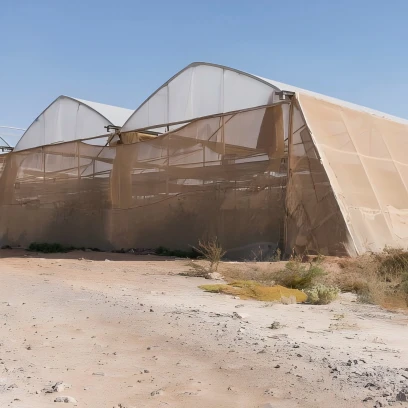
In Africa and the Middle East, the enemy is rarely cold or wind. It is the sun. Inside an unshaded greenhouse, temperatures can push past 50 °C, stressing the flowers and driving up water use.
The first defence is the cover system. Shading nets and UV-stabilized film cut the heat load before it reaches the crop. A high ridge line lets hot air escape through roof vents, cutting peak temperature. Light-coloured covers reflect more radiation than clear film.
Night temperature is the second problem. Desert climates can swing twenty degrees between day and night. Thermal screens above the crop trap heat and slow the drop, trimming heating cost.
Sand and dust are the quiet problem. Wind-blown particles scour the film and wear down the zinc coating. Sealed joints, protected threads and dust filters all help. The frame faces less corrosion pressure than in humid regions, but coating still matters: recoating a standing greenhouse is a slow, expensive job.
Cold Climate and Snow Load: Calculate, Shed, Reinforce
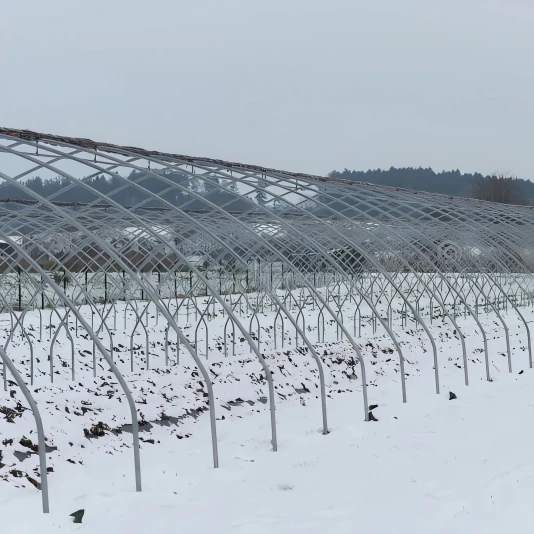
Central Asian winters are long, cold and snowy. Snow is a heavy load, and a patient one. A frame can sit under a marginal snow load for months, then give way in a single night.
Greenhouse snow load design is not a matter of guesswork. Roof snow load starts from the site ground snow load, adjusted for slope, exposure and thermal effects, following ISO 4355:2013 and EN 1991-1-3:2025. In practice, continental regions commonly need 0.5 to 1.0 kN/m² - roughly 50 to 100 kilograms per square metre - climbing with altitude and latitude; where local codes demand more, they win.
Roof shape does the next part. A pitch of 25 to 30 degrees lets snow slide off instead of piling up. Smooth film sheds snow more easily than rough cladding. Purlins and trusses should sit close enough that snow cannot bridge the spans.
The frame itself carries the final responsibility. Closer column spacing - 2.5 to 3.5 metres - shortens truss spans and adds stiffness. Main tubes need thicker walls, and truss connections should be engineered, not improvised. Foundations must go below the frost line, or frost heave will move them. Where nights drop below minus 20 °C, steel grade and welding procedure need low-temperature rating.
Coastal Strong Wind: Anchor and Streamline
Coastal Africa, east and west, and the cyclone belts are a different game. Cyclone zones can require design basic wind speeds of 40 metres per second or more. Wind pressure grows with the square of speed, so a small estimate error becomes a large load error.
Wind actions should be worked out to EN 1991-1-4:2026, or the national code where one applies, such as SANS 10160. It must cover steady pressure and gusts - a greenhouse rarely fails in steady wind.
Shape helps more than people assume. Streamlined arch frames see lower pressure coefficients than flat or sharply angled roofs.
The frame is only half the story. Most wind failures start at the foundation, not in the steel. Concrete footings, ground anchors and tie-downs must carry the full uplift force into the ground. Diagonal bracing and stiff connections spread lateral loads; large windward openings should be minimal - once film tears, pressure gets inside and pushes the frame apart. Anchorage and detailing for wind are covered in our greenhouse frame wind load guide.
Climate to Parameter Reference
The table below summarizes the starting parameters we typically use for single-span greenhouses with steel tube frames. Treat them as reference points, not finished design. Final dimensions must follow the local building code and be verified for the site.
Table 1. Recommended frame parameters by climate profile
|
Climate profile |
Eave height |
Column spacing |
Main pipe diameter |
Zinc coating |
|
Tropical humid (Southeast Asia) |
3.5–4.5 m |
3.0–4.0 m |
Ø50–76 × 1.8–2.5 mm |
Z275 or hot-dip ≥ 70 µm |
|
Arid hot (Africa, Middle East) |
3.0–4.0 m |
3.5–4.5 m |
Ø50–76 × 1.8–2.0 mm |
Z200–Z275 |
|
Cold and snowy (Central Asia) |
2.8–3.5 m |
2.5–3.5 m |
Ø60–89 × 2.5–3.0 mm |
Z275 |
|
Coastal wind (cyclone zones) |
3.0–4.0 m |
2.5–3.5 m |
Ø60–89 × 2.5–3.0 mm |
Z275 or GL AZ150 |
Reference ranges only. Site-specific structural design always prevails.
For components that will live with humidity, ammonia and salt, our agricultural-grade galvanized steel strip covers the Z100 to Z275 range.
Send Us Your Climate Data
A frame configuration is a calculation, not a guess. And it starts with your site, not with a catalogue.
Send us the basics for your location: maximum wind speed, design snow depth, average humidity and temperature range. Add the greenhouse size and the crop. Our technical team will come back with a configuration - steel grade, tube diameter and wall thickness, zinc coating, column spacing and truss layout.
We are a steel coil production and trading company that controls the material from coil to finished tube. The specification we quote is the specification we deliver. Submit your climate data through our inquiry page, or contact our team directly. You can also visit our website to review the product range first.