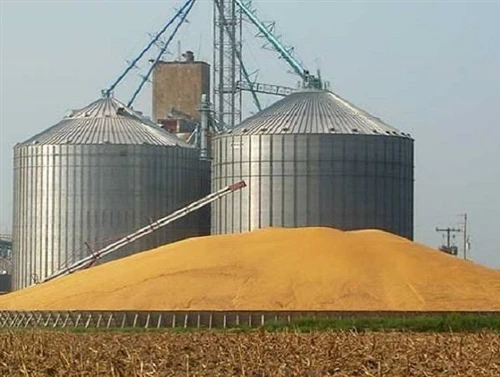
In the Mekong Delta and along the Gulf of Guinea, grain silos face a different corrosion regime from temperate inland sites. Continuous high relative humidity, frequent wetting from monsoon or coastal rain, and airborne chlorides keep the zinc surface wet for most of the year. Under these conditions the protective carbonate film that forms in drier air never stabilizes, so the zinc is consumed at rates closer to the upper end of ISO categories than to the lower.
ISO 9223 classifies first-year zinc corrosion rates as 0.7–2.1 µm/y in C3 (medium, mild coastal or humid industrial), 2.1–4.2 µm/y in C4 (high, calm seashore), and 4.2–8.4 µm/y in C5 (very high, surf or high-salinity coastal). ISO 14713 guidance and field coupon data confirm that long-term rates fall below the first-year figure once the surface film thickens, yet in continuously wet tropical atmospheres the reduction is modest. A standard Z275 coating (275 g/m² total both sides, approximately 19 µm per face) therefore exhausts its sacrificial reserve in roughly 3–5 years on a coastal Vietnamese or West African site; red rust follows quickly once the steel is exposed. The same coating in a dry inland C2 environment commonly lasts 20–30 years.
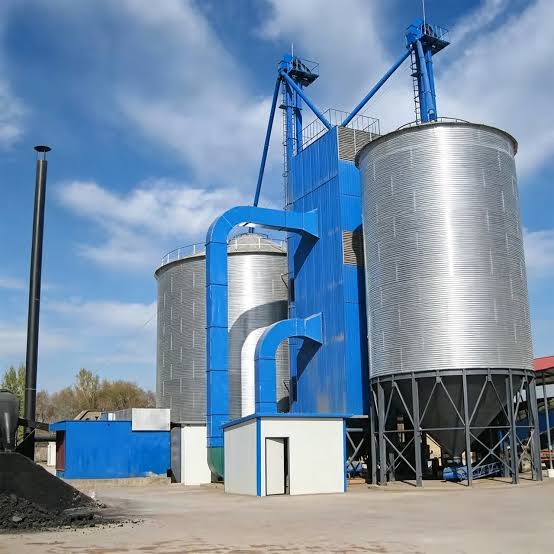
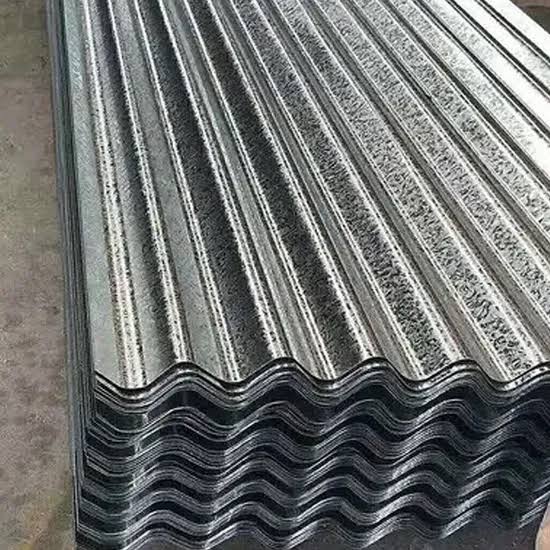
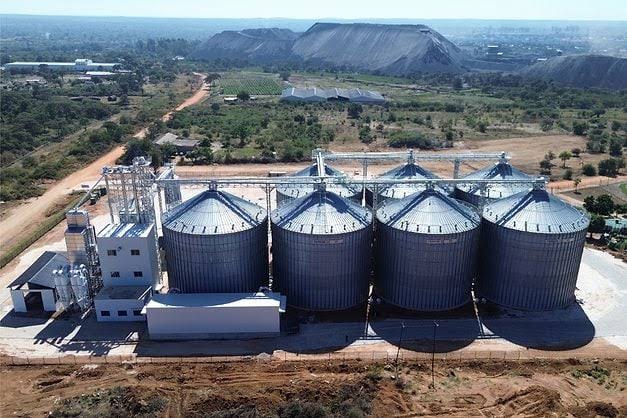
Project records from silo installations in Vietnam's rice belt, the Philippines, Nigeria, and Ethiopia show the practical outcome. Thin-coated corrugated panels develop widespread rust staining and localized perforation within five years when condensation or salt-laden air is present; operators then face either full wall replacement or progressive grain contamination. In contrast, panels supplied to Z450 (≈31–32 µm per face) or Z600 (≈42 µm per face) and detailed with continuous drainage have reached 20–25 years of service before any major coating maintenance, with some coastal terminals still sound after more than 30 years when ventilation and cut-edge protection are also correct.
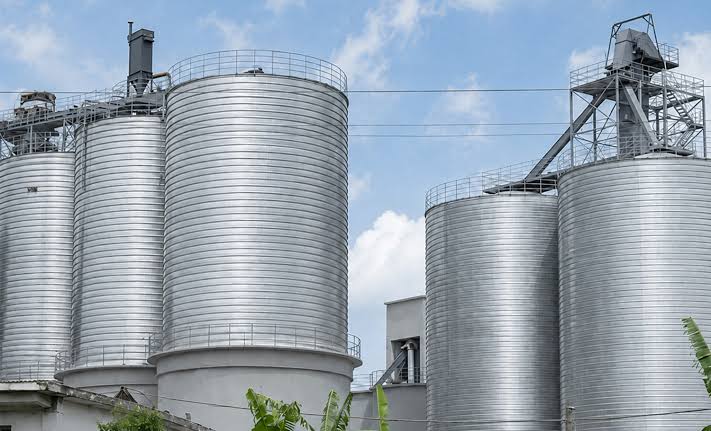
The corrugated profile itself contributes. Horizontal or gently sloping corrugations shed water rapidly and minimize the time of wetness that drives the higher ISO rates. Flat or poorly drained surfaces retain moisture in the troughs; the same zinc thickness then behaves as if it were in a more aggressive micro-climate. Combined with hot-dip metallurgical bonding (rather than thin electro-galvanizing), the thicker coating supplies the reserve needed for the elevated consumption rates measured under ISO C4–C5 exposure.
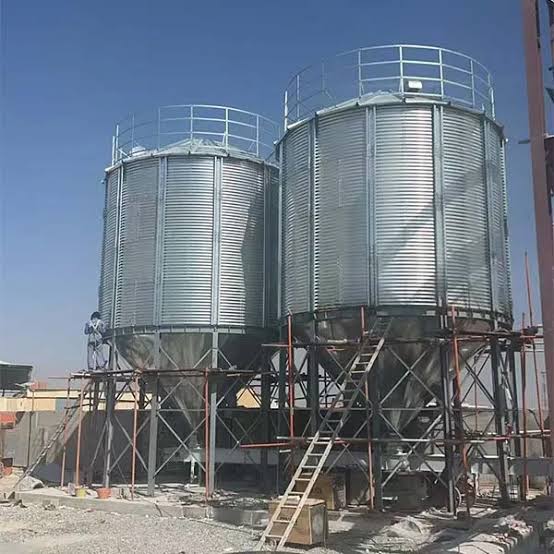
Recommended starting specifications for corrugated hot-dip galvanized sheet, based on ISO 9223/14713 rate bands and observed performance on Southeast Asian and African sites, are:
| Capacity band | Climate setting | Sheet thickness | Zinc coating |
|---|---|---|---|
| ≤500 t farm bins | Inland tropical, high rainfall, low salt (Mekong, inland West Africa) | 1.5–2.0 mm | Z450 |
| 500–2 000 t commercial | Same inland tropical | 2.0–2.5 mm | Z450–Z600 |
| Any capacity | Coastal or within a few km of open sea (Gulf of Guinea, Philippine ports) | 2.0–3.0 mm | Z600 minimum |
| >2 000 t terminal | High-chloride coastal or industrial | 2.5–3.5 mm | Z600 or higher |
These values assume proper seam and fastener detailing and periodic inspection; local chloride deposition or industrial pollution may justify one step higher. Specifying Z450 or Z600 corrugated sheet therefore matches the measured zinc consumption rates of tropical and coastal atmospheres and converts an expected 3–5-year life into the 20–30-year service interval required for grain storage infrastructure.