In crystalline silicon photovoltaic module production, the electrical links between cells determine both long-term field performance and conversion efficiency. As global installed capacity approached 3 TW by the end of 2025, with roughly 700 GW added that year according to IEA-PVPS market assessments, the volume of interconnect material required has scaled accordingly. Tin-plated copper ribbon (also called PV ribbon or tabbing wire) has become the standard means of joining cells and collecting current. High-purity copper cores combined with a controlled tin or tin-alloy surface layer deliver the solderability, conductivity, and environmental resistance needed for modules intended for multi-decade outdoor service across climates ranging from arid inland sites to humid coastal regions.
Material Performance Characteristics
The tin or tin-alloy coating melts in a moderate temperature window-typically 179–221 °C depending on composition (SnPb, SnAg, SnBi, or pure Sn)-allowing reliable joints to form without excessive heat input to the thin silicon wafers. Industry product specifications commonly list coating thicknesses of 10–40 μm per side, sufficient for wetting yet thin enough that contact resistance remains low. The copper substrate itself, often oxygen-free or electrolytic tough-pitch grades with purity above 99.9 % and conductivity near or above 100 % IACS, keeps series resistance minimal. Mechanical softness is equally important: elongation values above 20–25 % and yield strengths typically held below 90 N/mm² (with tensile strengths under 270 N/mm² in many commercial grades) help the ribbon accommodate the differential expansion that occurs during thermal cycling without fracturing the solder bond or the cell.


These attributes are validated through the qualification sequences defined in IEC 61215. Modules undergo 200 thermal cycles between –40 °C and +85 °C (with current applied during the higher-temperature cycles) and 1 000 hours of damp heat at 85 °C / 85 % relative humidity. Historical analyses of field returns and accelerated-test databases have repeatedly identified interconnect fatigue and solder-joint degradation as primary causes of power loss when ribbon properties or soldering parameters fall outside accepted windows. The tin layer further limits copper oxidation and moisture-driven corrosion that would otherwise raise resistance over years of outdoor exposure.
Surface Treatments and Selection Considerations
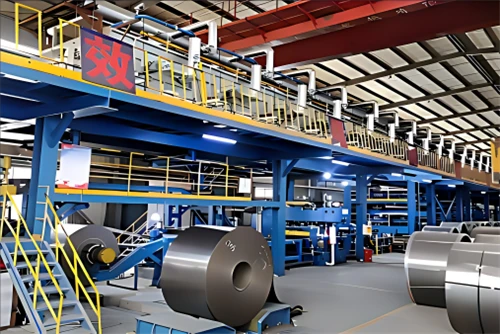
Plain copper without a coating shows poor solderability and is rarely used for cell interconnection. Silver plating offers excellent wetting and corrosion resistance but at substantially higher cost, confining it to specialized or high-value process flows. Other alloy coatings occupy intermediate positions when lower melting points or lead-free formulations are required. In practice, the large majority of production lines employ tin or tin-alloy plated ribbon in two principal geometries: narrow tabbing ribbon (commonly 0.6–2 mm wide and 0.1–0.3 mm thick) that series-connects individual cells, and wider busbar ribbon that aggregates current and routes it to the junction box. Both forms are produced by rolling high-purity copper wire or strip followed by continuous hot-dip tinning, a sequence that yields uniform four-sided coatings and essentially burr-free edges.


Deployment Across Module Technologies and Environments
The same ribbon families serve mainstream PERC lines as well as TOPCon and heterojunction architectures. In each case the ribbon must maintain low contact resistance after soldering while surviving the mechanical stresses introduced by larger wafer formats and thinner cells. Outdoor reliability requirements are essentially identical whether the modules are installed in utility-scale plants in high-irradiation regions or in distributed arrays subject to frequent temperature swings and elevated humidity. Because China accounts for the majority of global module manufacturing and a large share of annual installations, material specifications are frequently aligned with both domestic production standards and the international IEC framework; the resulting products are then exported for use in diverse geographic markets.

Supply and Process Compatibility
Manufacturers of photovoltaic modules and stringing equipment routinely specify ribbon width, thickness, coating alloy, and plating thickness to match their soldering equipment and cell metallization. Consistent coating uniformity and mechanical properties reduce rework rates on automated stringers and support the process windows required for both conventional and emerging interconnection methods. Suppliers capable of delivering tin-plated copper ribbon that meets these dimensional, electrical, and environmental criteria-while offering customization of the parameters listed above-enable module producers to maintain stable solderability, corrosion protection, and overall interconnect reliability.
For component manufacturers, equipment suppliers, and procurement teams seeking materials that combine predictable soldering behavior with the corrosion resistance demanded by long-term outdoor service, tin-plated copper ribbon remains a proven and adaptable solution. Inquiries regarding specific alloy compositions, dimensional ranges, or qualification support are welcomed.