Preparation, material choice, film thickness and the mistakes we see most often, from the technical team of a coated coil supplier.

We answer the same question most weeks. A customer has rejected a batch because the edges have rusted, and everyone wants to know whether the coil was at fault. Usually it was not. The coating left our line sound; the edge left the slitting line bare, and nobody treated it.
What follows is the method we give to fabricators who ask, written for slitting shops, roll formers, bracket makers and the crews on site.
Why the cut edge goes first

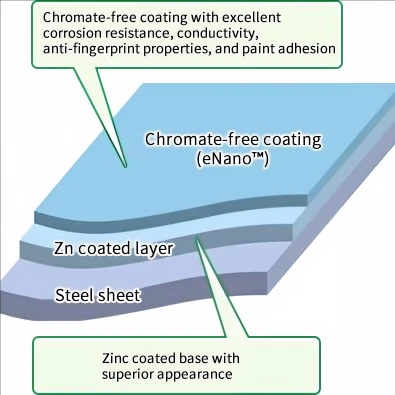
Shearing and slitting cut through the coating and leave bare steel on the cut face. On hot-dip galvanised coil (Z to EN 10346) the zinc beside the cut still protects that steel a few millimetres in, by consuming itself. Z275 carries roughly 20 µm of zinc per side. In chloride-bearing air (ISO 12944-2 C4 and C5) the reserve goes at the edge first, so the cut rusts while the flat surface still looks new.
Zinc-aluminium (AZ, 55% Al-Zn) keeps its appearance better in marine and industrial air, yet protects a cut edge less effectively, because the aluminium-rich layer is the weaker sacrificial anode. On AZ150 the edge goes earlier than on galvanised.
Prepainted is a different case. The film is a barrier and nothing else. Once the cut is bare, corrosion runs along the steel-to-paint interface and pushes the paint up from behind, so a blister you can see means a few millimetres of undercut you cannot.
Before you open the tin
Oil comes off first. Slitting oil, rust-preventive oil and handling grease all stop a primer from wetting steel. Wipe with solvent or use an alkaline cleaner, then let it dry properly. Customers have sent us photographs of a zinc-rich film that looked perfect at the gate and came off in sheets six months later, with oil underneath.
Rust and burrs next. Red rust comes off by hand or power tool to St2 or St3 under ISO 8501-1, and the burr and loose zinc with it. Paint over a burr and you paint over a gap that holds water.
On prepainted parts, abrade 5 to 10 mm of sound coating back from the edge and taper the step. That gives the repair a key and removes the zone where undercutting has started.
Then the weather. Metal should be at least 3 °C above dew point and rising. A part left in an unheated shed overnight sits at air temperature, and on a humid morning that is close enough to condense water under the brush.
Which product goes on the edge
Three types get used on site, and they are not interchangeable.
Zinc-rich primers come closest to putting the original coating back: zinc dust protecting bare steel the way the coil coating does. Judge them on dry-film zinc content and on the specification behind them, such as SSPC Paint 20. Thresholds sit around 65% to 80% by weight; below that you have a barrier paint with a zinc label.
Dedicated edge coatings are made for AZ and prepainted substrates: zinc or zinc-aluminium pigment, formulated to bond to bare metal and paint edge at once. Most are chromate-free; exterior grades use an aliphatic polyurethane binder so the repair does not chalk within a season. Test solvent compatibility on an offcut, because aromatic and ketone solvents soften a polyester topcoat.
General-purpose anti-rust paint is a barrier and no more. It slows corrosion while the film is intact and does nothing once it is breached. Fine for a part stored indoors for a month, wrong for a bracket on a coast for ten years.
The aerosol sprays installers keep in the van are convenient and usually too thin: the film lands unevenly on a vertical cut face and rarely reaches the stated thickness.
Table 1. Touch-up options for formed coated steel parts
|
Option |
Typical use |
Application difficulty |
Durability tendency |
|
Zinc-rich repair primer |
Bare steel at the cut; galvanised substrate |
Low |
Moderate |
|
Dedicated edge coating |
Zinc-aluminium and prepainted substrate |
Low |
Good |
|
General-purpose anti-rust paint |
Temporary protection |
Low |
Limited |
|
No treatment |
n/a |
n/a |
Poor |
Ratings are relative and assume the preparation described above.
How far, and how thick
Cover the cut face, carry the film 5 to 10 mm onto sound coating on both sides, and stop. That overlap seals the interface; a repair that stops at the edge leaves a hairline gap, and on prepainted steel the gap is where undercutting begins.
Two thin coats beat one heavy one: a first pass of 25 to 40 µm wet brushed into the cut face, then a cross coat after the data-sheet interval. On a 1.5 mm edge, aim for 40 to 75 µm dry; go past that and the film bridges the arris, traps solvent and cracks.
Every exposed face counts, including the second side of strip and anything punched. Let the film cure before you band or stack; strapping a soft coating abrades it where you were protecting it.
What goes wrong on site
Painting over oil, dust or condensation.
Coating one face and leaving the other bare.
Using a barrier paint where the edge needs sacrificial protection.
One heavy coat, which sags, traps solvent and cracks.
Coating an edge that will be welded later. Keep zinc-rich film 25 mm back from the joint; it fumes and leaves porosity.
What a repair cannot do
On-site repair of slit edge corrosion is a supplement. We would rather say so than let a customer plan around it. It cannot restore coating mass, and it cannot undo a burr.
Coating mass and type set the reserve, and a repair only covers the area it touches. Slitting quality decides whether there are crevices to paint over: a dull knife smears iron along the edge, and that iron corrodes from underneath. The site decides how fast it goes; ISO 12944-2 C2 through C5 covers most of what we ship into.
So inspect, against ISO 4628. A spot treated at the first sign of red rust costs a fraction of one left for a year.
Where the rust usually starts
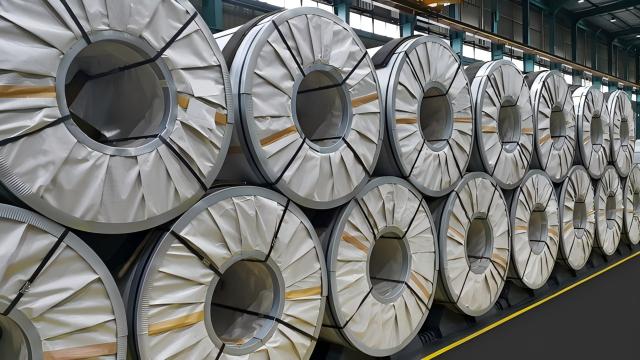
Most edge rust we are shown started in a coil store, not on a roof. Slit coil storage corrosion is a condensation problem: a coil colder than the air around it pulls water onto its edges, worst of all when a cold coil enters a warm, humid shed. Keep coils under cover, off damp concrete, and let them equalise before the wrap comes off.
Cut edge oiling protection is a transport measure, and we treat it as one. Rust-preventive oil applied at slitting covers the cut face and buys time in the container, provided the film is continuous and compatible with later coating or adhesive. It migrates, it comes off at degreasing, and where it stays it can spoil adhesion. It is not a service-life treatment.
Packaging closes the gap. Sheared coil packaging and slit coil wrap are built around the voyage: VCI paper, desiccant sized for the volume, a moisture barrier, edge protectors and strapping that holds without crushing the wrap. We agree coating mass, passivation and packaging on the order; those decide how much edge repair our customer does at the other end.
Ordering coil with the edge in mind
If you buy coil for parts cut and formed before installation, our technical resources page lists the inspection records sent with each coil, and the product pages carry coating masses and packing options. Send a drawing, the corrosivity category and the destination port through our contact page or an inquiry and we will confirm what that edge needs.