If you've ever specified steel for road signs, you know the real test isn't in the factory – it's out on the road. After a few years of sun, rain, and salt spray, many signs start to show their age. The substrate rusts at the edges. The reflective sheeting bubbles or peels because the surface beneath has lost its flatness. And eventually, the whole panel needs replacement, costing time and money.
We've seen this pattern repeatedly. That's why we focus on supplying Galvalume coated steel coils – not because it's a trendy product, but because it consistently solves these problems in the field.
What makes Galvalume different under the weather
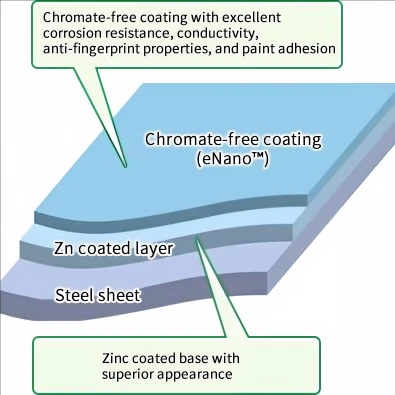
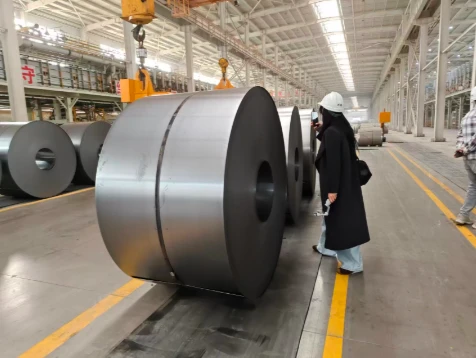
The coating is a 55% aluminium – 43.5% zinc – 1.5% silicon alloy. Unlike pure zinc, this combination gives you two layers of defence. The aluminium part forms a tough, slow‑corroding barrier that blocks moisture and oxygen. The zinc part acts as a sacrificial anode – if the coating gets scratched, zinc corrodes first, keeping the steel underneath intact.
In practice, this translates into a significantly longer service life. Independent atmospheric exposure tests conducted in accordance with ASTM G50 (Standard Practice for Conducting Atmospheric Corrosion Tests on Metals) show that Galvalume coated steel lasts three to six times longer than hot‑dip galvanised steel of the same coating weight, when exposed to identical outdoor environments – whether urban, industrial, or marine. Accelerated salt spray testing per ASTM B117 also confirms this gap: Galvalume coatings typically withstand over 2,000 hours before red rust appears, whereas conventional galvanised coatings show corrosion within 500 to 700 hours under the same conditions.
We regularly see Galvalume panels in coastal or snowy regions holding up well after 25 years, while galvanised ones often need replacement around the 15‑year mark. That's not anecdotal – it aligns with long‑term data from ASTM G50 test sites, where Galvalume samples remain largely rust‑free after two decades of marine exposure.
Heat and flatness – not just about rust
Road signs sit in direct sunlight, often on dark backgrounds. They absorb heat, expand, and sometimes warp. A warped sign loses its retroreflective performance, which is a safety issue. Galvalume reflects about twice as much solar heat as galvanised steel, so the panel stays cooler and more dimensionally stable. It also withstands temperatures up to 315°C without discolouring – a practical advantage if you're using any heat‑based painting or curing process.
Surface quality saves you a step
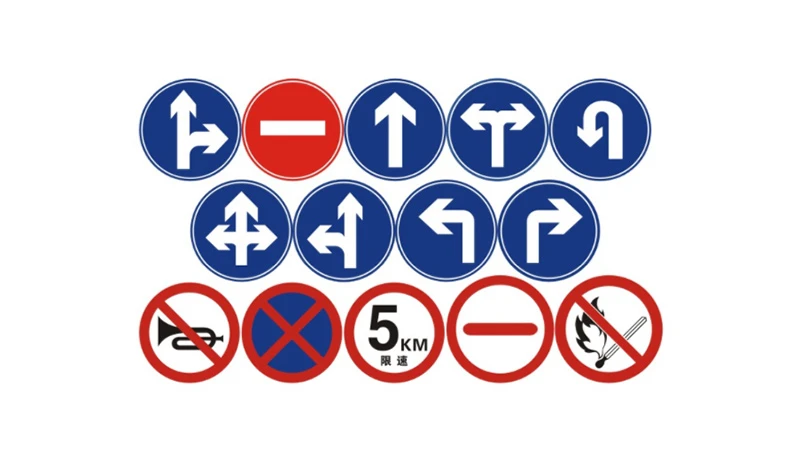
The reflective sheeting you apply – typically meeting ASTM D4956 – needs a clean, smooth, and uniform surface to adhere properly. Galvalume delivers that naturally. More importantly, you can paint it directly without the weathering or chemical pre‑treatment that galvanised steel often requires. For galvanised steel, ASTM D6386 (Standard Practice for Preparation of Zinc‑Coated and Zinc‑Alloy‑Coated Steel Panels for Testing Paint Adhesion) often recommends a weathering period or chemical treatment to ensure paint adhesion. With Galvalume, that step is unnecessary, simplifying your production line and reducing handling time and chemical usage – a benefit that many fabricators appreciate in daily operations.
Working with standard tools
No special equipment is needed. Galvalume cuts, punches, and bends just like galvanised steel. The coating stays intact through forming operations, so you don't get micro‑cracks that later become rust spots. Welding is also straightforward – just follow the same practices you already use.
Standards you can rely on
In China, GB/T 18226 covers corrosion protection for highway traffic steel components. Our Galvalume products fully comply with that specification. We also keep an eye on revisions, like the recent update that includes zinc‑aluminium‑magnesium coatings, so we can advise you on the best match for your specific project.
One caveat – and a fair question
We'll be honest: Galvalume isn't ideal for every single environment. In strongly alkaline conditions (pH above 9), galvanised steel can sometimes perform equally well. But for typical roadside exposure – urban, rural, coastal, or snowy – Galvalume gives you a better lifecycle cost, backed by the ASTM test data mentioned above.
A partner who delivers consistency
As a steel coil supplier and trader, we don't just ship a product. We maintain tight chemical and thickness tolerances from coil to coil, because we know that consistency matters when you're running a high‑volume sign manufacturing line. We also provide mill test certificates and technical support whenever you need to validate a specification.
What we'd like you to do next
If you're planning a new road sign project, or simply reviewing your material specifications, we invite you to request a sample coil or a data sheet. Better yet, send us your environmental conditions and expected service life – we'll run a rough cost comparison between Galvalume and galvanised options for your site, using the ASTM exposure data as a reference.
We're here to help you make a decision based on facts, not fluff. Reach out to our technical team – we'll respond with practical advice and clear numbers.