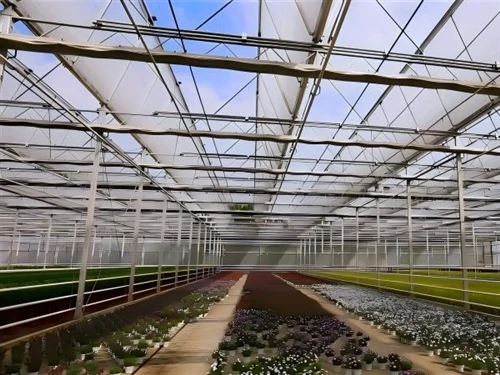
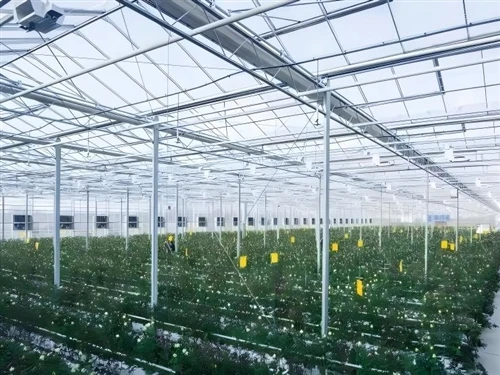
Across temperate and humid regions, raised beds for mixed flower and vegetable plantings have shifted toward corrugated galvanized steel. In suburban yards of the Pacific Northwest, balcony gardens in dense Chinese cities, and commercial nursery rows in Shandong and northern Europe, growers are replacing wood and plastic more frequently than five years earlier. The change is driven by observed performance under continuous soil contact rather than marketing claims alone.
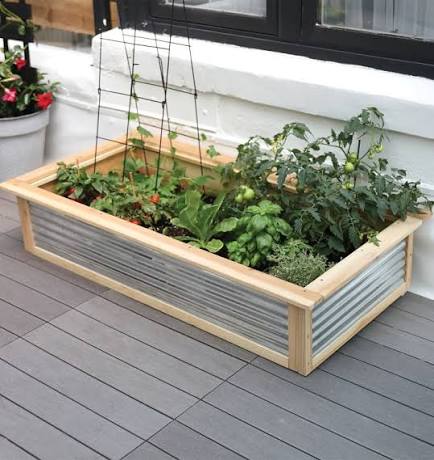
Structural Resistance to Lateral Soil Load
Wet soil exerts continuous outward pressure. Untreated or even pressure-treated wood often bows at mid-span within three to seven seasons as moisture softens the fibers and insects (termites, carpenter ants) exploit the resulting voids. Recycled-plastic or HDPE beds, while rot-proof, lose stiffness under the same load and can warp or crack after repeated freeze-thaw cycles or prolonged summer heat above 35 °C.
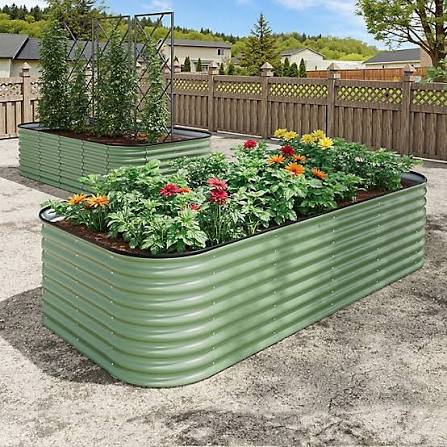
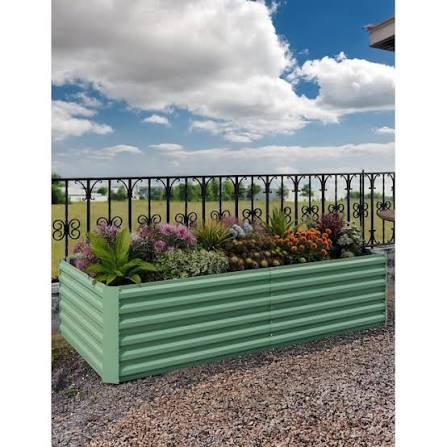
Corrugated galvanized panels gain rigidity from geometry. The ridges distribute force along the length of the wall much as corrugated cardboard resists crushing better than a flat sheet of identical thickness. Extension guidance from Skagit County (Washington State University) notes that standard 30-gauge corrugated panels remain serviceable for many years when vertical supports are spaced no farther than four feet. Heavier consumer kits (approximately 0.6–0.8 mm / 22-gauge) further reduce the need for intermediate bracing on typical 1.2 m × 2.4 m beds. Field observations reported by nursery operators in humid coastal zones of China and the U.S. Gulf Coast show less mid-wall deflection than comparable wood frames after three full growing seasons.
Drainage and Soil Biology
Most corrugated steel beds are supplied open at the bottom. Excess water exits freely into the underlying soil profile, reducing the risk of root-zone saturation that is common in plastic planters with solid bases or in wood beds whose lower boards swell and seal. Earthworms and soil microbes can move upward from native ground, improving aggregation and aeration without mechanical tillage. University of Minnesota Extension guidance emphasizes that free drainage also accelerates spring soil warming, allowing earlier planting of cool-season flowers and greens in zones 4–6. In contrast, poorly drained plastic beds can retain standing water after heavy rain, while wood absorbs moisture and eventually decays at the soil line.

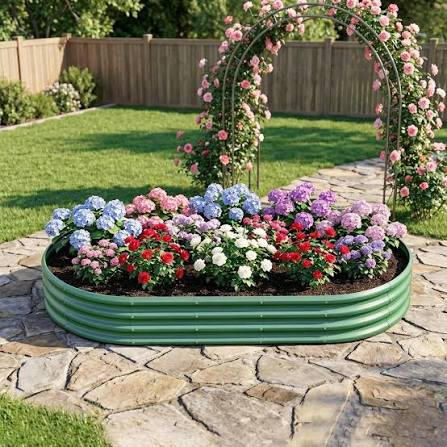
Color and Site Adaptability
Pre-painted galvanized (PPGI) panels accept durable polyester or PVDF coatings in dark green, charcoal, sand, or mill-finish silver. The color options let a bed blend with courtyard plantings, match commercial branding at flower nurseries, or remain visually quiet on a compact urban balcony. Because the coating is applied over the zinc layer, cut edges and fastener points remain the primary corrosion sites rather than the broad faces. In practice, dark-green and natural galvanized finishes have appeared with increasing frequency in 2024–2025 commercial installations from Dongying-area manufacturers and in North American retail kits.
Measured Longevity and Cost Context
Virginia Tech's SPES-425 comparison (2022 data for a standard 4 ft × 8 ft × 12 in bed) placed a galvanized steel kit plus fill at approximately $177, versus $188 for untreated wood and $213 for pressure-treated lumber. The same publication cites earlier research indicating that 14-gauge hot-dip galvanized steel can reach 35–50 years before first perforation under favorable conditions; University of Minnesota Extension describes properly galvanized steel as "virtually rust-resistant for upwards of 50 years." Consumer-grade corrugated kits are thinner, so realistic service lives more commonly fall in the 15–25-year range when soil pH is kept between roughly 6.0 and 7.5 and free drainage is maintained. Australian and New Zealand long-term studies of buried galvanized structures report typical zinc-coating loss rates of 2–6 µm per year in free-draining soils (moisture content below 20 %), supporting multi-decade performance before the underlying steel is exposed.
Plastic beds typically require replacement after 5–10 seasons once UV degradation and thermal cycling reduce impact strength. Untreated wood rarely exceeds 5–10 years in humid climates before rot or insect damage necessitates rebuilding. The combination of geometric stiffness, open-bottom drainage, and available color finishes therefore accounts for the widening preference for corrugated galvanized steel in both residential flower gardens and commercial plantings through 2025–2026.