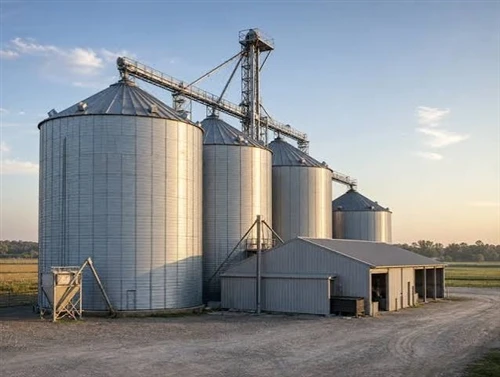
A 400-ton maize harvest on a mixed farm in the North China Plain once filled temporary bags and open sheds. Within months, rodents and mold took roughly 8 percent of the volume, a rate documented in a 2008 sample survey by China's State Administration of Grain that averaged household storage losses near that figure, with rodents responsible for nearly half. Operators in the same region who switched to sealed steel storage later recorded average losses near 1 percent on demonstration sites. The shift did not require a concrete bunker. It used corrugated panels that arrive pre-formed, pre-punched, and joined by bolts so a crew can match the silo's height to the exact tonnage the farm expects that season.
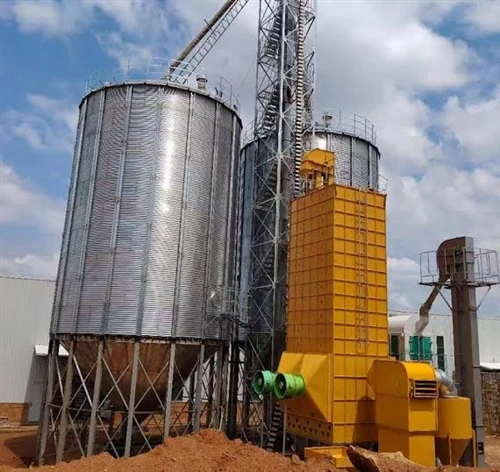
For holdings that move between 100 and 1,000 tons, fixed-diameter concrete or welded tanks often sit half empty one year and overflow the next. Modular corrugated sheets let the height change by adding or removing rings. A 6-meter diameter unit can sit at roughly 300 tons when the wall is kept to 12 meters; the same diameter reaches near 1,000 tons once the wall is extended. Manufacturers such as those publishing technical sheets for bolted corrugated systems list plate widths around 1.2 meters and heights of 0.5 meters per module, so the final stack is chosen after the buyer states the grain type and bulk density. Foundation work proceeds while the panels are still being galvanized, which shortens the overall calendar compared with sequential cast-in-place construction.
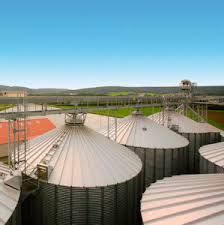
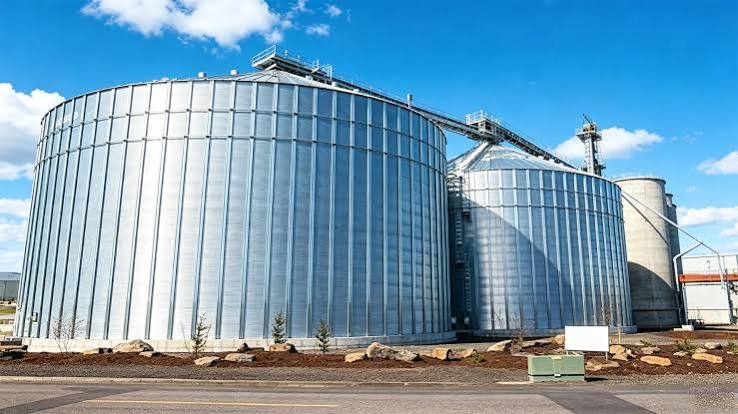
On site the work is assembly rather than fabrication. High-strength bolts, typically grade 8.8, with sealing washers pull the corrugated sheets into a continuous cylinder. Field accounts from suppliers of 500- to 1,000-ton bolted grain units describe four- to five-person crews completing the shell in 7–15 days once the foundation is ready; smaller 30- to 100-ton modules have been reported finished in a single day by the same crew size. No field welding is required, which matters where open flame is restricted near dry grain. Panels ship flat in containers, so remote farms in Southeast Asia or inland Africa can receive a complete kit without specialized heavy transport. Once upright, individual sheets can later be replaced if damaged, an option concrete walls do not offer.
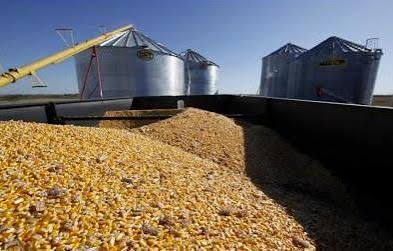
Corrosion resistance follows the zinc mass chosen for the local climate. Continuous hot-dip coatings in the Z275–Z600 range (275–600 g/m² total) are standard. Exposure data summarized by the American Galvanizers Association and aligned with ISO 14713 show zinc loss of roughly 0.5–2 µm per year in dry inland rural air, supporting 20–30 years of service for a Z275 coating before significant red rust appears. In humid subtropical zones or near coastal grain belts the same data indicate faster consumption, so suppliers commonly step to Z450 or Z600. Project notes from tropical sites in Vietnam and Nigeria record 25-plus years when the coating matches the corrosivity category and aeration keeps internal humidity controlled. The galvanizing is applied before shipment, so every panel carries a uniform layer rather than a field-applied coating that can miss edges.
Operators who installed such units report earlier market access and lower spoilage. In Central America, family-scale metal silos tracked by the Swiss Agency for Development and Cooperation cut storage losses from double-digit percentages to under 1 percent, freeing grain that could be sold when prices rose. North Carolina State University analysis of on-farm facilities in the 60,000- to 200,000-bushel range (roughly 1,500–5,000 tons at the upper end, but with parallel economics for smaller bins) showed net returns of roughly 25 cents per bushel over a ten-year average once operating costs were subtracted. For a 500-ton farm the same logic scales: reduced rodent and mold damage plus the ability to hold grain through a price dip often recovers the silo cost inside a few seasons.
The practical result is storage that fits the farm's actual volume, goes up without prolonged disruption at harvest, and holds its protective coating for decades when the zinc weight matches the local climate. Small and mid-size operators can therefore treat storage as an adjustable asset rather than a permanent concrete commitment. For project-specific recommendations on panel thickness or coating, contact us.
 English
- English
- 简体中文
- Français
- Deutsch
- 日本語
- Italiano
- Español
- Português
- русский
- bosanski
- magyar
- Català
- Čeština
- íslenska
- România limbi
- slovenčina
- Svenska
- فارسی
- Български
- Lietuvių
- Việt Nam
- Indonesia
- українська
- Gaeilgenah Éireann
- 한국어
- dansk
- Srbija jezik (latinica)
- ไทย
- Cymraeg
- O'zbek
- Melayu
- عربي
- বাংলা
- Malti
- Türkçe
- اردو
- slovenščina
- Ελληνικά
- עברית
- Polski
- हिंदी
- Nederlands
- hrvatski
- Kreyòl Ayisyen
- suomi
- Eesti
- Norsk
- Latviešu
- Bai Miaowen