

You rely on stable low-temperature environments to preserve inventory integrity in cold storage facilities. Galvanized steel serves as a standard structural substrate for wall, roof, and framing systems due to its mechanical strength and wide availability. Its inherent high thermal conductivity, however, creates thermal bridging points that undermine insulation performance.
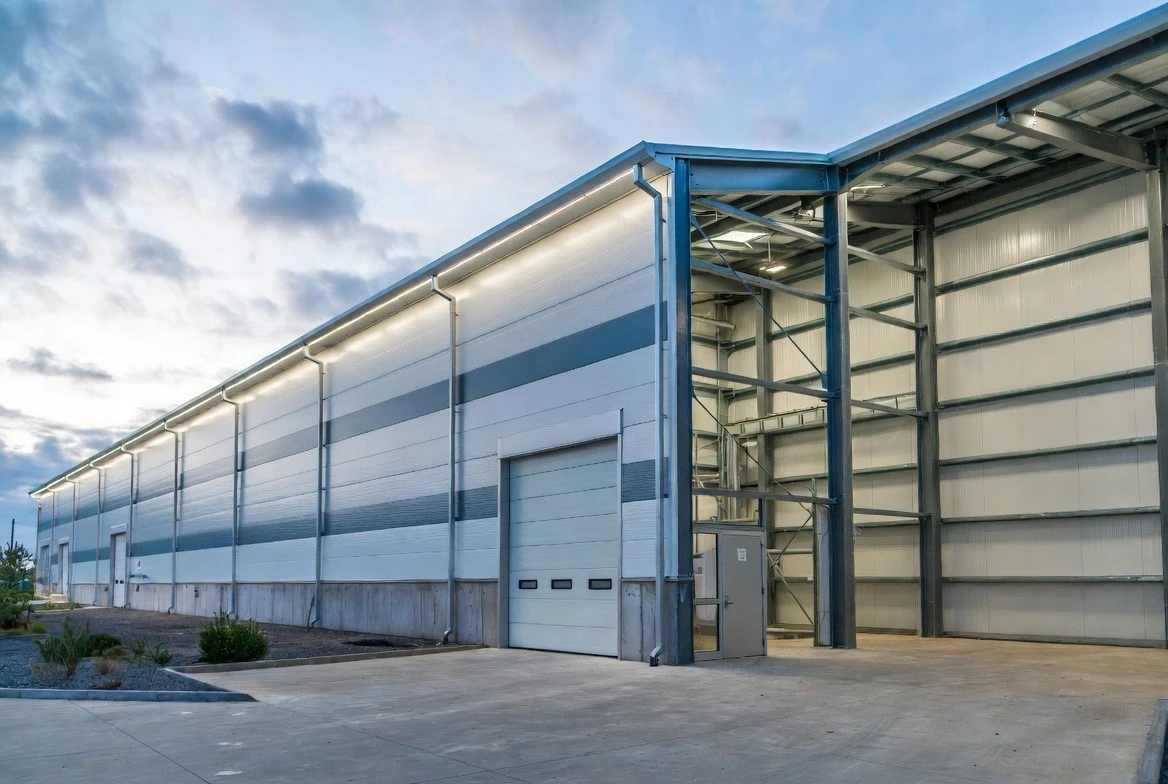
Thermal Bridge Principle
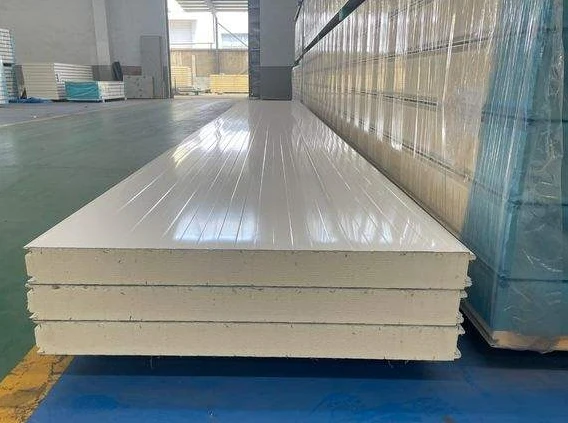
Metal conducts heat at a far higher rate than fibrous or foam insulation materials. Steel members that pass through the insulation layer form continuous heat transfer paths. These paths allow external heat to penetrate the envelope and internal cooling to dissipate outward, raising refrigeration load even when insulation thickness meets nominal specifications.
You cannot eliminate thermal bridges using galvanized steel alone - this is a fundamental physical property of all metallic materials. Our galvanized steel coils function as a high-performance structural base, not a standalone thermal solution. They reduce heat transfer risk effectively only when integrated with a complete insulation and vapor barrier system. Without such a system, heat infiltration causes surface condensation, ice buildup, elevated refrigeration load, and energy consumption significantly higher than that of conventional warehouse structures.
Field-Verified Material Performance
We have ten years of production and trade experience in steel coils, and have addressed these envelope performance pain points across dozens of cold storage projects. We supply galvanized steel coils formulated for low-temperature, high-humidity operating conditions, providing a dimensionally stable base for long-lasting insulation systems.
Low-Temperature Performance Comparison: Standard vs. Cold-Storage-Specific Galvanized Coils
|
Performance Parameter |
Standard General-Purpose Galvanized Coils |
Our Cold-Storage-Specific Galvanized Coils |
|
Low-temperature toughness |
Reduced impact resistance at sub-zero temperatures, with cracking risk during fabrication or cyclic temperature changes |
Maintains consistent toughness down to -40°C, compliant with deep-freeze operating requirements |
|
Zinc coating uniformity |
Thickness deviation across coil width, with thin-edge areas vulnerable to early corrosion |
Strict thickness tolerance control per EN 10346, no weak points across the full coil surface |
|
Humidity corrosion resistance |
Susceptible to white rust under prolonged high-humidity exposure |
Passivated surface treatment, passes 1000+ hours of cyclic salt spray and humidity testing |
|
Forming compatibility |
Prone to coating peeling or springback deformation during roll forming |
High flatness and ductility, compatible with precision insulated metal panel (IMP) stamping and on-site bending |
|
Envelope service life |
Visible corrosion typically appears within 5–8 years in cold and humid environments |
Stable protective performance for 15+ years under normal operating conditions |
Unlike general-purpose coils, our products deliver uniform zinc coating, reliable low-temperature toughness, superior flatness, and consistent formability. They resist white rust and corrosion during long-term humid operation, and perform reliably during IMP stamping, bending, and on-site installation - avoiding deformation or coating damage that would create thermal leakage paths.
Steel Grade and Zinc Coating Selection Guide
You can select material specifications based on your facility's operating temperature and ambient environment:
Chilled storage (0°C to 10°C, inland dry locations): Grade DX51D+Z with Z120 zinc coating is recommended. It balances structural performance, basic corrosion protection, and project cost, and is suitable as a substrate for standard insulated panels.
Low-temperature freezer (-25°C to 0°C, standard inland environment): Grade DX52D+Z / S350GD+Z with Z180 zinc coating is advised. It offers enhanced low-temperature toughness and corrosion resistance, and maintains stable structural performance under continuous low-temperature operation.
Coastal high-salt / high-humidity cold storage (Middle East, Southeast Asia port and coastal zones): Grade S350GD+Z with Z275 heavy zinc coating is recommended. The increased zinc mass provides elevated salt spray and humidity corrosion resistance, and adapts to harsh coastal atmospheric conditions.
Our coils maintain consistent quality for both factory-fabricated panels and on-site spray foam applications. We recommend customized zinc coating thickness and high-toughness steel grades to match your low-temperature environment, preventing common issues such as uneven corrosion protection or brittle fracture during bending.
When paired with a complete high-R insulation and vapor barrier system, this integrated envelope design reduces external heat gain, lowers refrigeration load, and controls condensation and frost risk - without compromising structural safety. The full system can reduce refrigeration energy consumption by 25%–35% compared with conventional cold storage envelopes, and extend the service life of the building envelope by more than 10 years.
Project Reference Cases
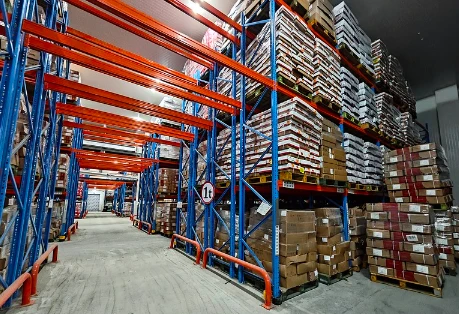
FreezPak Logistics Warehouse, New Jersey, United States (2021)
This facility adopted steel framing with 6-inch high-performance IMPs on galvanized substrates. The system achieved R-48 thermal performance at operating temperatures of -10°F to 0°F, and has maintained stable, energy-efficient operation since commissioning.
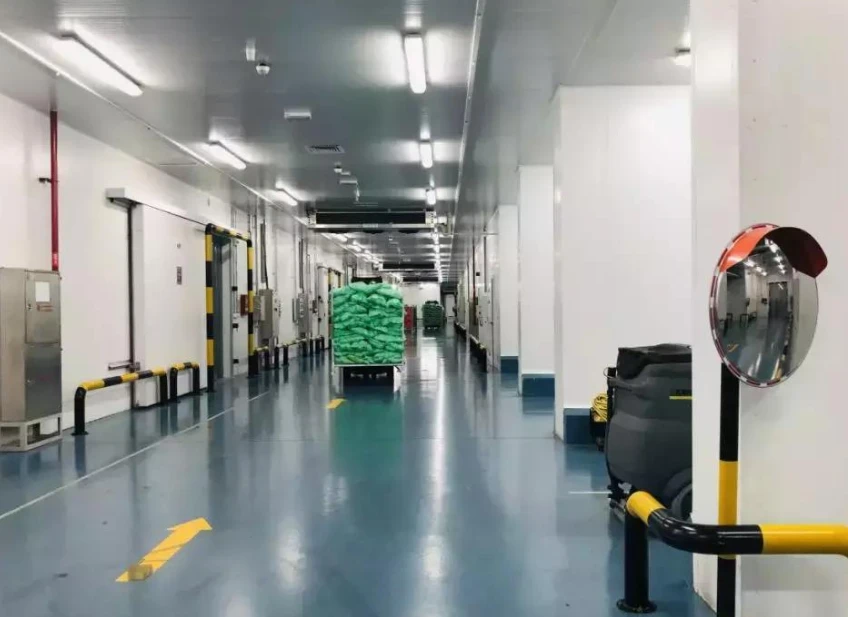
Coastal Fresh Produce Cold Chain Hub, Dubai, UAE (2023)
This 12,000 m² deep-freeze facility is located in a high-temperature coastal zone with severe salt fog corrosion. It uses our S350GD+Z Z275 heavy zinc-coated galvanized steel coils as the substrate for 6-inch PIR insulated panels. Operating continuously at -18°C, the envelope delivers R-42 overall thermal performance. After two years of operation, no white rust or coating degradation has been observed on the steel envelope, and measured refrigeration energy consumption is 31% below the local industry average.
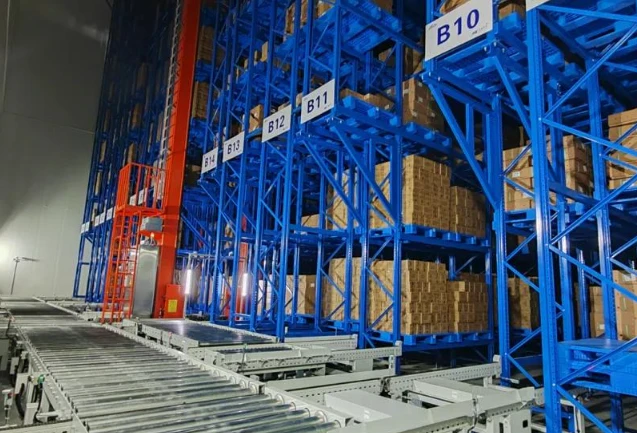
Laem Chabang Port Multi-Temperature Cold Storage, Thailand (2022)
This 8,500 m² project is situated in a tropical high-humidity coastal area. Our DX52D+Z Z180 galvanized steel is used for both wall and roof panel substrates, paired with closed-cell spray foam and a 0.08 perm vapor barrier system. The facility maintains 0–4°C for chilled goods and -20°C for frozen goods. It achieves 28% annual refrigeration energy savings, with zero corrosion defects on the steel structure through multiple high-humidity monsoon cycles
Core Solution Advantages
Strictly controlled zinc coating mass for long-term corrosion and white rust resistance, suitable for high-humidity and coastal salt-spray environments:
- Stable, formable, and durable coil quality with reliable low-temperature toughness, avoiding brittle fracture under sub-zero conditions
- Full compatibility with high-R insulation systems, supporting 25%–35% refrigeration energy savings for the complete envelope system
- Extended building envelope service life by 10+ years, reducing long-term operation and maintenance costs
- Professional one-stop material selection guidance for new construction and retrofit projects
Explore Related Resources
You can find additional technical details on our site:
- View full dimensional specifications and test reports in the Galvanized Steel Coil Product Center
- Browse more global project profiles in the Cold Storage Engineering Case Library
- Download the technical guide: Cold Storage Envelope Thermal Design Reference Manual
Shandong Pinjie New Materials Co., Ltd. provides tailored galvanized steel coil solutions for your new construction or retrofit cold storage projects. Our technical team will review your project specifications and provide full material support.


