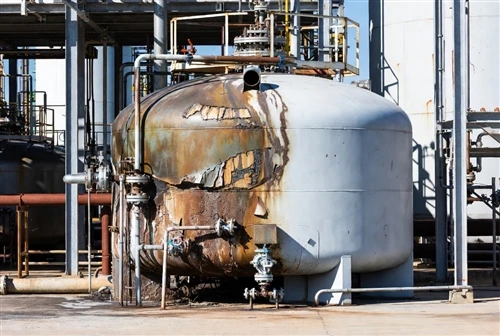
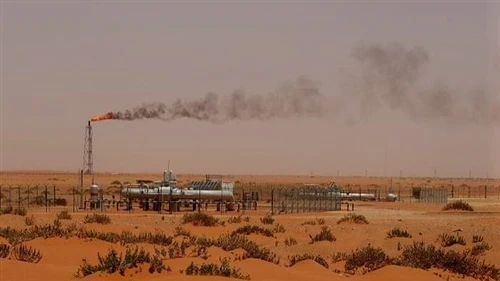
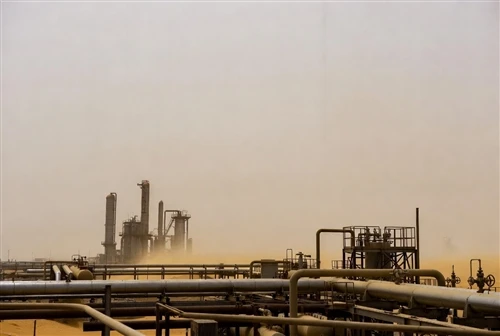
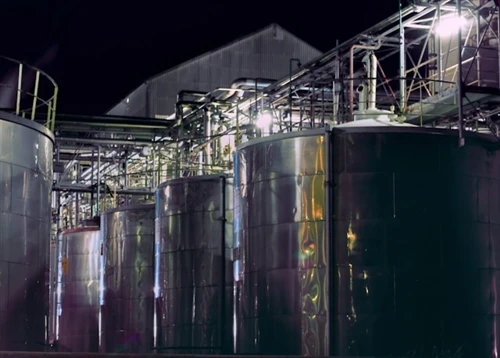
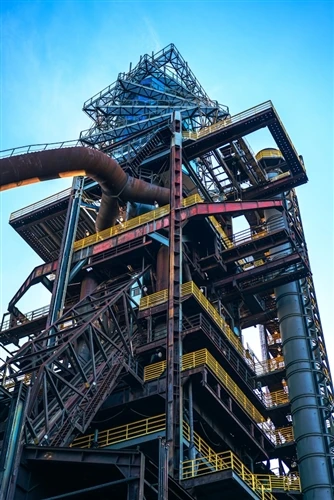
These high-risk conditions demand more than generic alloy lists. Empirical selection begins with laboratory coupon data and in-situ ultrasonic thickness mapping drawn from NACE MR0175 sour-service guidelines and plant-specific process-stream analyses. Uniform corrosion, pitting, crevice attack, and stress-corrosion cracking each respond differently to chromium, molybdenum, and nickel content, so a graded matrix of coated and stainless products is required rather than a single "best" grade.
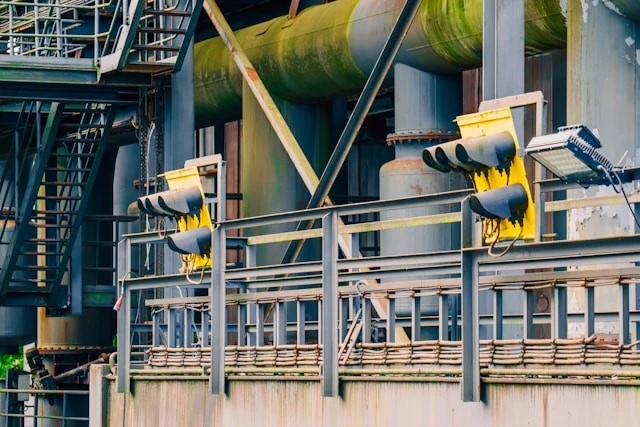
For process piping and vessels handling dilute acids or chloride-bearing streams below 60 °C, 316L austenitic stainless (2–3 % Mo) consistently outperforms 304L in pitting-resistance equivalent number (PREN) testing; prepainted versions of this grade further extend atmospheric durability on external surfaces. Where higher strength and chloride SCC resistance are needed-typical of heat-exchanger shells or offshore-adjacent units-duplex 2205 (UNS S32205) delivers yield strengths near 450 MPa while maintaining PREN values of 34–36. Extreme H₂S or oxidizing-acid service shifts selection toward nickel alloys or titanium, yet many structural and cladding applications remain economically served by hot-dip galvanized coils (Z180–Z275 coatings) or 55 % Al-Zn galvalume substrates whose barrier-plus-sacrificial protection has been quantified in ISO 12944 CX marine-atmosphere exposure trials. Color-coated galvanized and galvalume coils add organic topcoats that resist acid-rain and alkaline wash-down environments common around reactor buildings.
Workshop adaptation follows process zoning. Acid-storage and neutralization areas favor 316 prepainted stainless coil for tanks and ducting; high-temperature furnace-adjacent structures use heavier-gauge galvanized or galvalume sheet for secondary supports and cladding; cooling-water and utility corridors accept standard galvanized coil where H₂S partial pressure stays low. This zoning approach, validated across multiple Chinese coastal and Middle Eastern plants, avoids over-specification while limiting localized failures at flanges and welds.
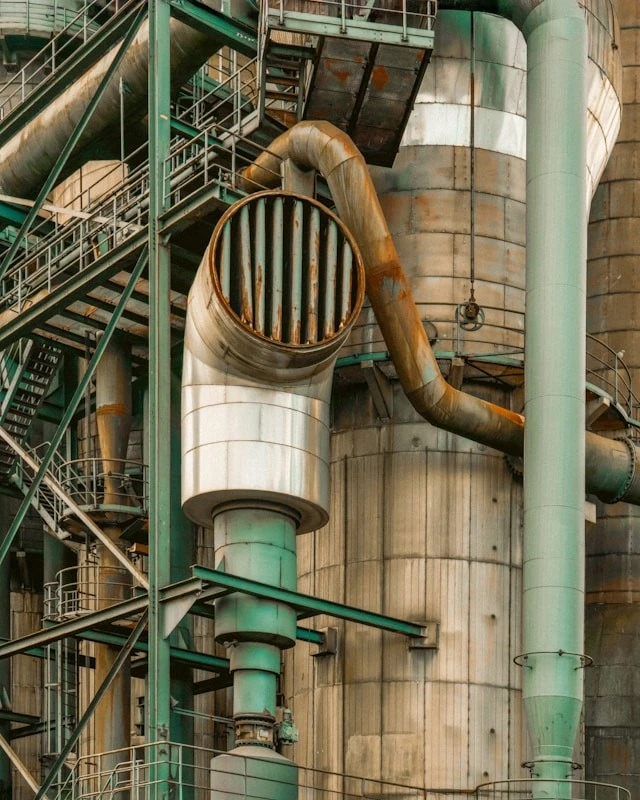
Safety and regulatory compliance rest on documented material traceability and ongoing monitoring. NACE MR0175/ISO 15156 certification for sour service, combined with periodic ultrasonic surveys and online corrosion probes, keeps residual risk within acceptable thresholds. Plants that adopt this matrix report fewer leak events and longer intervals between turnarounds, converting material cost into measurable integrity gains.
For project-specific coil recommendations matched to acid concentration, temperature, and H₂S levels, review the available 316 prepainted stainless coil, hot-dip galvanized steel coil, prepainted galvanized steel coil, and galvalume options for coastal and industrial exposure. Contact the technical team with process data to obtain tailored quotations and mill certificates.