Railway networks depend on a wide range of steel components - rails, bridge girders, overhead line structures, signal gantries, and fastening systems. Each endures cyclic loading over decades: high-frequency train passes, wind-induced oscillations, and thermal expansions and contractions. While static strength is essential, fatigue resistance often dictates the service life of these critical parts.
Two distinct fatigue regimes dominate railway applications. The first is high-cycle bending fatigue, caused by repeated flexural stresses in bridge decks or support beams that deflect under each train pass. The second is contact fatigue, occurring wherever steel surfaces meet under high pressure - rail-wheel interfaces or bolted connections. Both mechanisms initiate microcracks that gradually propagate, potentially leading to brittle fracture if the material's fatigue threshold is exceeded.
International fatigue testing standards

Railway components undergo rigorous fatigue validation. For rails, EN 13674-1:2011 mandates crack-growth and full-scale bending tests (Section 8). For other structural elements, designers refer to EN 1993-1-9 (Eurocode fatigue design) and ISO 1099:2017 (axial force-controlled fatigue testing).
In North America, ASTM E466 establishes S-N curves under elastic strain, while ASTM E647 measures crack propagation rates using compact tension specimens.
| Region | Core Standard Code | Application Scope |
| EU | EN 13674-1, EN 1993-1-9 | Rail & structural steel fatigue design |
| Global General | ISO 1099:2017 | Axial controlled fatigue testing |
| North America | ASTM E466, ASTM E647 | S-N curve & crack growth test |
| China Railway | GB/T 3075, TB/T 1354 | Full-scale rail bending test |
For Chinese projects, GB/T 3075 (equivalent to ISO 1099) and TB/T 1354 (full-scale rail bending) remain widely used. The key is selecting a protocol that matches the actual loading mode - bending, tension-compression, or shear - because fatigue behaviour varies significantly with stress state.
Critical fatigue parameters for material selection
We recommend focusing on three measurable properties:
The S-N curve, particularly the fatigue limit at 5×10⁶ cycles or higher. Common structural steels show axial fatigue strength of roughly 250–350 MPa, but this drops by 20–30% at stress concentrations (bolt holes, weld toes). For reliability-based design, request probability-based (P-S-N) curves.
The fatigue crack growth rate (da/dN) versus stress-intensity factor range (ΔK) - essential for damage-tolerant design and inspection planning. Fine-grained pearlitic or tempered martensitic microstructures typically exhibit slower crack growth and higher thresholds.
Residual stress distribution - tensile residuals from welding or straightening lower fatigue strength, while compressive stresses are beneficial. X-ray diffraction or ultrasonic techniques can quantify these stresses and guide post-processing treatments.
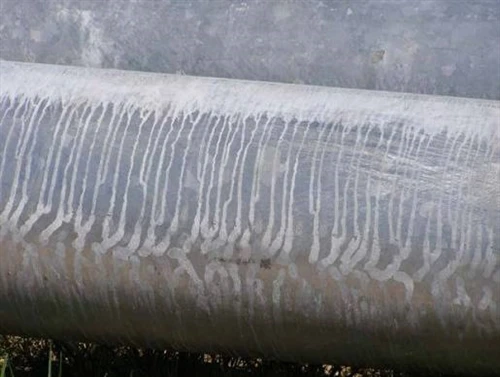
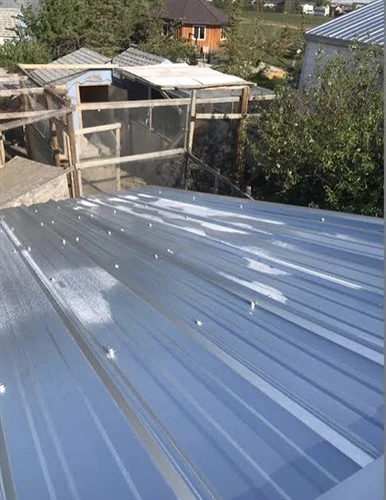
Corrosion & Fatigue Correlation: Pits act as stress raisers that initiate cracks much earlier than on a pristine surface. Protective coatings - hot-dip galvanising, zinc-aluminium alloy (galvalume), or organic paint systems - directly enhance long-term fatigue durability by preventing surface degradation. When specifying coated steel, ensure the coating does not introduce hydrogen embrittlement and that the substrate meets the required fatigue properties.
Three common mistakes in procurement
From our global project experience, we frequently see:
Overemphasising static properties - yield strength and elongation do not correlate well with fatigue resistance. High-strength steel can have inferior fatigue performance if inclusion content or grain size is uncontrolled.
Ignoring surface condition - scratches, dents, or corrosion pits dramatically reduce fatigue life. Specifications often lack strict surface quality requirements, especially for uncoated parts.
Assuming generic fatigue data apply - published S-N curves are usually derived from small, polished specimens. Real-world components with welds, cut edges, and coatings behave very differently. We always advise fatigue tests on prototypes or production samples.
How we support your project needs

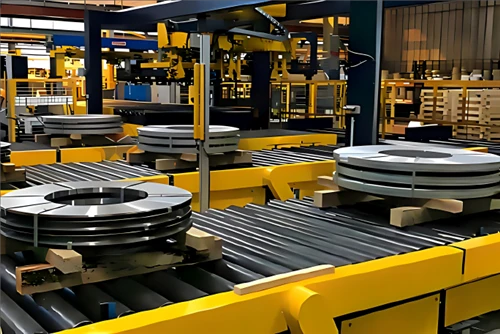
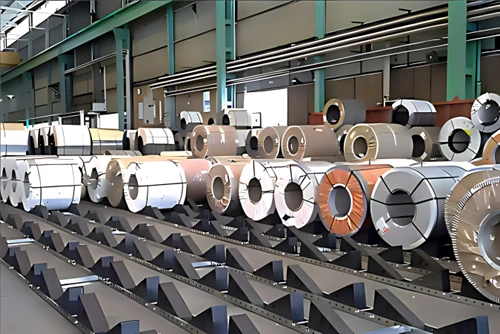
As a producer and supplier of steel coils for diverse industrial applications, we ensure fatigue performance through consistent material quality. Our processes - from hot rolling to controlled cooling - deliver uniform microstructures, low inclusion levels, and predictable residual stresses. For infrastructure projects, we offer coils in various grades and surface finishes, including corrosion-resistant coatings that extend service life in aggressive environments.
Every coil comes with comprehensive test certificates. Upon request, we arrange fatigue testing at accredited laboratories per ISO, ASTM, or EN methods. Our technical team assists with grade selection, coating recommendations, and interpretation of fatigue data - matching your chosen steel to the actual loading and environmental conditions of your railway application.
For your next project - new track construction, bridge replacement, or overhead electrification - share your specification requirements with us. We will provide a tailored solution backed by robust material evidence, without obligation. A railway structure that remains safe and functional for decades is the ultimate measure of engineering foresight and material excellence.

Get Custom Steel Fatigue Solution for Railway Projects
Send your technical specifications, loading parameters and environment requirements to our technical team