Project Overview
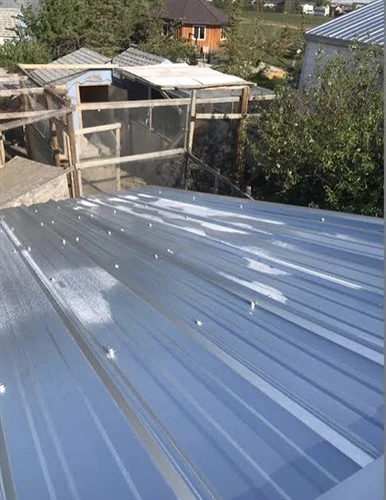
An 80 MW photovoltaic plant was developed in Sonora, Mexico, 1–5 km from the Sea of Cortés, in a climate with >80% humidity, heavy salt aerosol deposition, high UV, and strong winds. The client mandated a 25-year lifetime with >85% performance at year 25, facing C4–C5 corrosivity per ISO 12944-2:2017. Our scope covered only high-anti-corrosion steel coils and plates for fixed-tilt mounting structures - hot-dip galvanised and ZAM (zinc-aluminium-magnesium) coated products. All other balance-of-system equipment was provided by other contractors.

Key Challenges
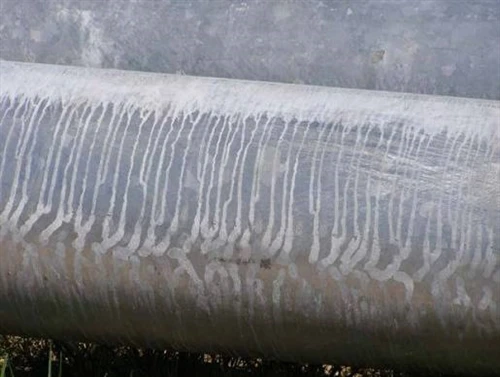
Coastal sites like Puerto Libertad accelerate degradation from salt-laden aerosols. Without mitigation, galvanised steel develops white rust and pitting within 2–4 years, aluminium edges corrode, and PID can cause annual power losses of 1–2%. O&M costs run 20–30% higher than inland.
Structural Weakening
Structural weakening under combined salt, humidity and wind loads.
Electrical Faults
Potential electrical faults from corrosion - module PID managed by the module supplier.
Shortened Asset Life
Zinc corrosion in C5 conditions reaching 4.2–8.4 µm/year, threatening the project IRR.
Risk Assessment and Trade-offs
We evaluated coating loss rates, insulation breakdown, and maintenance frequency. Standard HDG offered lower CAPEX but higher long-term OPEX; enhanced coatings raised CAPEX by 10–15% but cut OPEX. Post-COD monitoring (12–18 months) used visual inspections, ASTM E376 magnetic thickness gauges on sampled sections, and IV curve tracing on 5–10% of arrays by the integrator.
Standard HDG
Lower CAPEX - lower upfront material cost
Higher long-term OPEX - more frequent maintenance and replacement
Shorter service life in C4–C5 coastal environments
Enhanced Coatings (Recommended)
Raises CAPEX by 10–15% - higher initial investment
Significantly cuts OPEX - reduced maintenance and replacements
25-year service life validated for C4–C5 coastal conditions
Solutions: High-Performance Coated Steel Coils - Tailored for Fabrication
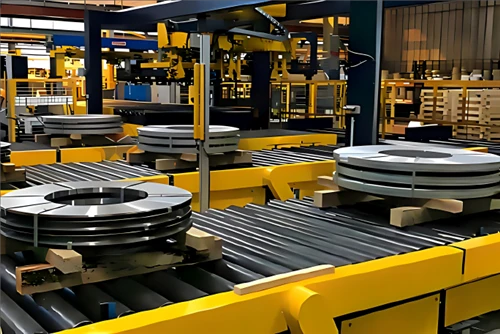
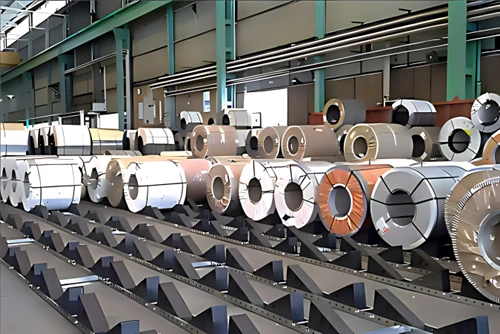
As a dedicated coil and plate supplier, we did not fabricate the final mounting structures; instead, we provided premium coated steel coils engineered specifically to withstand this aggressive coastal environment while offering excellent workability for our client's downstream processing. Our portfolio included hot-dip galvanized and ZAM-coated coils with fully customizable coating weights - we recommended a minimum of 320 g/m² (approx. 45 µm) per side for the C4–C5 zone, and even thicker duplex layers (metallic base + organic topcoat) for splash-prone areas. The ZAM option, with its aluminium and magnesium alloying, delivers superior edge protection and a self-healing effect on cut edges, which is critical when the contractor shears, punches, and roll-forms the coils into purlins, beams, and columns. We also supplied mill-edge conditioning and light oiling to prevent transit corrosion, and offered slitting and cut-to-length services to match the fabricator's exact dimensional requirements, reducing on-site waste and handling time.
-
320g/m²
- 3,000h+
- 25yr
- C4–C5

Beyond corrosion resistance, we prioritized formability and weldability. Our substrates were low-carbon steel grades with controlled chemistry and mechanical properties, ensuring consistent bending, stamping, and welding without cracking or coating delamination - a frequent issue with overly hard materials. Each coil came with a full mill certificate and traceability; we conducted in-line coating thickness monitoring using X-ray fluorescence, supplemented by cross-section microscopy and adhesion tests. Third-party salt spray testing (ASTM B117 equivalent) confirmed over 3,000 hours without red rust, validating a 25-year service life in the Sonora coast. We also provided on-site coating verification with portable thickness gauges upon delivery, and we collaborated with the client early on to select the optimal coating type and weight based on local corrosivity data, not by rigidly adhering to a single standard but by offering performance-based recommendations. This flexible approach allowed the contractor to fabricate robust structural components while our supply guaranteed consistent material quality, dimensional precision, and protective packaging (interleaving paper and moisture-barrier wrapping) for safe ocean transport. Fasteners and buried elements were handled by others, but we supplied technical guidance for compatibility.
Implementation and Results
Production ran in 20-day batches; all shipments arrived 5 days early. The client's fabricator processed our coils into mounting structures without any material-related delays, even in sandy and windy site conditions. Early monitoring (12–24 months) showed average zinc loss <5 µm on sampled sections. Module degradation (0.5–0.8% annually) and capacity factors (≈25–30%) remained within warranty. Corrosion-related anomalies were significantly lower than in non-optimised reference projects, streamlining O&M.
Conclusions
This case proves that a coil-supply-focused model - delivering high-performance coated steel with tailored coating weights, excellent formability, and rigorous quality control - can effectively meet severe coastal corrosion challenges without the supplier being involved in structural fabrication. We recommend early corrosivity assessments and close collaboration between coil supplier and fabricator to optimise coating specifications. Our experience demonstrates that decoupling material supply from other balance-of-system procurement does not compromise project reliability, and offers a cost-effective, flexible solution for future coastal PV developments.