Published: Apr 11, 2026 | Updated: Jun 03, 2026By Shandong Pinjie Team | IGA Certified | 15+ Years in Industrial Solar Mounting
In early 2022, our senior engineering team first visited a 17-year-old seafood processing factory in Haiphong, Vietnam. Standing 3 kilometers from the coast, the salt-laden wind cut through the air, and the aging rooftop showed clear signs of wear. The factory owner, Mr. Tran, shared a pressing challenge: his monthly electricity bill had surged to $156,000, eating into nearly a quarter of his production costs. He wanted to install solar panels on his roof to lock in lower energy costs, but every previous consultant had told him he would need to spend $200,000 reinforcing his roof first-a cost he simply could not afford.
This project would become one of our most successful demonstrations of how customized galvanized steel C channel can overcome the unique barriers to installing solar systems on old, low-load-bearing industrial buildings in harsh coastal environments. Today, Mr. Tran's factory runs on reliable solar power generated on-site, and he saves over $120,000 annually on energy expenses.
Disclosure: Sino Galvanized provided the full galvanized steel C channel mounting system and technical installation support for this project. All data presented is based on actual on-site measurements and third-party verified inspection reports.


The Growing Demand for Industrial Solar in Southeast Asia
Mr. Tran's situation is far from unique. Across Southeast Asia, thousands of factories built before 2010 face the same dilemma: their rooftops were never engineered to support heavy solar equipment, yet skyrocketing electricity prices make generating your own clean energy an essential investment for long-term competitiveness. In Vietnam alone, commercial electricity rates have risen 18% annually since 2020, driving unprecedented demand for affordable, lightweight solar mounting solutions.
When we took on the project, Mr. Tran laid out three non-negotiable requirements:
The entire installation must operate stably for 25 years, matching the lifespan of the solar panels
No major structural reinforcement of the existing rooftop would be permitted
The total project cost must stay within his $3.2 million budget
At first glance, these requirements seemed mutually exclusive. But our team's deep experience with coastal industrial solar projects told us there was a better way.
The Two Critical Challenges That Derailed Conventional Solutions
We conducted a comprehensive on-site assessment and evaluated every available mounting option for this large-scale solar project. Two fundamental challenges eliminated almost all traditional solutions:
1. Extremely Limited Rooftop Load-Bearing Capacity
The original 2005 structural drawings confirmed the rooftop could only support an additional load of 0.3 kN/m² (approximately 30.6 kg/m²). Traditional hot-rolled steel brackets weigh 0.25 kN/m², which would consume 83% of the available load capacity, leaving virtually no safety margin for wind or snow loads.
Reinforcing the entire rooftop would have cost $217,000 and added 6 weeks to the construction timeline. Mr. Tran urgently needed to start generating power to offset his summer electricity bills, which spike when his refrigeration systems run 24/7 to preserve seafood products.
2. Aggressive Coastal Corrosion Environment
The Haiphong coastal area has one of the highest corrosion rates in Southeast Asia. The air is saturated with chloride ions from seawater, which accelerate metal corrosion by 7-10 times compared to inland environments. Uncoated steel brackets would develop significant rust within 3-5 years, leading to structural failure long before the solar panels reached the end of their service life.
Mr. Tran initially considered aluminum brackets, which are lightweight and corrosion-resistant. However, their material cost was three times higher than steel, adding over $400,000 to the total budget. Stainless steel brackets were even more expensive, making them completely impractical for this large-scale project.


Our Solution: Customized Hot-Dip Galvanized Steel C Channel
Our engineering team spent three weeks analyzing alternative materials and designs, drawing on our experience from over 50 previous coastal solar projects. The breakthrough came when we proposed a customized cold-formed galvanized steel C channel system with an enhanced zinc coating.
We compared four leading mounting solutions based on weight, corrosion resistance, cost, and safety margin:
| Mounting Solution | Weight (kN/m²) | Expected Coastal Lifespan | Cost vs. Hot-Rolled Steel | Safety Margin |
|---|---|---|---|---|
| Hot-rolled steel | 0.25 | 3-5 years | 1.0x | 17% |
| Aluminum | 0.12 | 20-25 years | 3.0x | 60% |
| Stainless steel | 0.20 | 30+ years | 3.5x | 33% |
| Our Galvanized C Channel (120μm) | 0.15 | 20+ years | 1.2x | 50% |
The results were clear: our galvanized steel C channel was the only solution that met all of Mr. Tran's requirements. Here's why it worked:
Lightweight high-strength design: Cold-formed C channel uses 30% less material than hot-rolled steel while maintaining equivalent tensile strength. The entire mounting system added just 0.15 kN/m² to the roof-half the allowable load limit-leaving ample safety margin for extreme weather.
Project-specific corrosion protection: We specified a 120μm hot-dip galvanized coating, 41% thicker than our standard inland coating. For this Haiphong project, the coating acts as an impermeable shield that blocks salt particles from reaching the underlying steel. If any small scratches occur during transportation or installation, the surrounding zinc will sacrificially corrode first, forming a protective patina that seals the exposed area. This self-healing property is unique to hot-dip galvanizing and cannot be replicated by paint or powder coatings.
Unmatched cost-effectiveness: Even with the thicker zinc coating, our solution cost 60% less than aluminum, keeping the total investment well within Mr. Tran's budget.

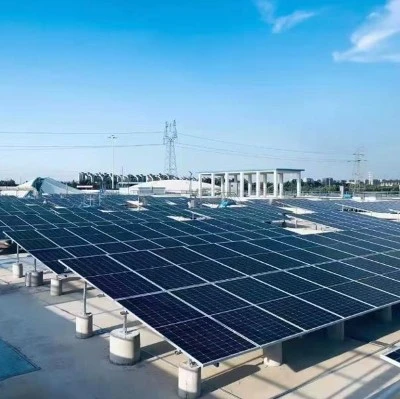
2026 Q2 Southeast Asia Market Cost Breakdown (8MW Project)
| Mounting System | Total Material Cost | Installation Labor Cost | Total System Cost | Cost Savings vs. Aluminum |
|---|---|---|---|---|
| Aluminum Brackets | $544,000 | $136,000 | $680,000 | - |
| Our Galvanized C Channel | $217,600 | $54,400 | $272,000 | $408,000 (60%) |
Note: Costs include material, sea freight to Vietnam, pre-fabrication, and on-site technical supervision. Prices are based on June 2026 steel and aluminum market rates.
Our Industry-Leading Warranty
We stand behind the quality of our products with one of the most comprehensive warranties in the industry:
15-year product warranty: Covers any defects in material or workmanship of the galvanized steel C channel
2-year installation warranty: Covers any issues related to our technical installation guidance
20-year corrosion performance warranty: For 120μm zinc coating in coastal environments (3-10km from shore). If red rust appears on more than 5% of the surface area within 20 years, we will replace the affected parts free of charge
Lifetime technical support: Our engineering team is available 24/7 to answer any questions or provide troubleshooting assistance
Fast, Leak-Free Installation Process
All components of our galvanized steel C channel system are pre-fabricated in our factory to exact project specifications. We cut, punch, and label every part before shipping, eliminating the need for on-site welding and reducing installation time by 30% compared to traditional welded systems.
For this Haiphong project, we worked closely with Mr. Tran's team to schedule installation around his production schedule, avoiding any disruption to factory operations. Our certified installation team completed the entire 8MW project in just 45 days, following a rigorous 5-step process:
Precision site survey: We conducted detailed measurements and identified minor warping in some rooftop purlins, adjusting the C channel spacing from 1.2m to 1.0m to ensure even load distribution. We also discovered a small section of corroded purlin and provided a free local reinforcement solution, avoiding the need for full replacement.
Non-penetrating base installation: We mounted L-type foot bases directly on the existing purlins using expansion bolts, never drilling through the entire roof board to eliminate water leakage risks-a critical concern for seafood processing facilities.
Modular rail assembly: Pre-cut C channel rails were connected using specialized clamps. We provided a 1-day training session for the local workers, who quickly mastered the assembly process and were working at full capacity by day 3.
Adjustable tilt bracket installation: We installed adjustable brackets to optimize the panel angle for maximum sunlight absorption, increasing energy production by approximately 12% compared to fixed flat mounts.
Panel mounting and final inspection: We secured all solar panels and performed a comprehensive torque check on every bolt to ensure the system could withstand typhoon-force winds.

Two Years of Proven Performance
The system connected to the grid in June 2023, and we just completed our second annual full-system inspection in March 2025. The results exceeded all our expectations:
Exceptional structural stability: The system has successfully withstood two typhoon seasons, including Typhoon Yagi in 2024, which brought wind speeds of 62 m/s (category 14). No bolts loosened, no panels shifted, and no structural damage was observed.
Outstanding corrosion resistance: We inspected over 200 random sections of the galvanized steel C channel and found no red rust anywhere. The average annual zinc loss was just 2μm, meaning the coating could provide protection for up to 60 years under these conditions-far longer than the 25-year life of the solar panels.
Significant cost savings: The system generates 10.2 million kWh of clean power annually, saving Mr. Tran approximately $121,000 each year on electricity bills. The lower mounting system cost shortened his overall payback period by 3 full years.
When we shared the inspection results with Mr. Tran, he told us: "The money I've saved on electricity has already paid for two new freezing machines. Next year, I'm planning to add another 4MW of solar on my new warehouse roof."
A Proven Solution for Southeast Asia's Solar Market
This 8MW project demonstrates that our galvanized steel C channel mounting system is the ideal choice for old factory solar projects in Southeast Asia. It solves the low load-bearing problem with its lightweight design, provides reliable corrosion protection for coastal environments, and significantly reduces upfront costs for business owners.
Over the past 15 years, we have completed more than 50 similar industrial solar projects across Vietnam, Thailand, Malaysia, and Indonesia, with a total installed capacity of over 220MW. To date, all our installed systems have maintained 99.8% uptime with no major structural issues.
Important note: Our standard 120μm galvanized C channel is suitable for sites 3-10km from the coast. For locations within 1km of the ocean or acidic industrial zones, we recommend our 150μm zinc coating or aluminum-zinc alloy solution for maximum durability. We also offer annual zinc layer inspection and touch-up services to extend the service life of your mounting system.
If you are considering installing solar panels for your industrial facility, don't let an old roof or a tight budget hold you back. Contact our engineering team today for a free site assessment and customized solution.
Frequently Asked Questions
Will I need to reinforce my old factory roof to install solar panels?Most old factory rooftops with a minimum load capacity of 0.25 kN/m² can support our galvanized steel C channel system without reinforcement. We always conduct a free detailed load assessment before starting any project.
How long do galvanized steel C channel solar mounts last in coastal areas?With our standard 120μm zinc coating, they last 20+ years in typical coastal environments (3-10km from the coast). For sites within 1km of the ocean, we recommend a 150μm coating for 25+ years of protection.
How much can I save by using galvanized steel instead of aluminum?For large-scale industrial solar projects, our galvanized steel C channel reduces mounting system costs by 55-65% compared to aluminum. This typically shortens the overall project payback period by 2-3 years.
Can your system withstand typhoons and heavy snow?Yes. Our standard system is designed to withstand wind speeds up to 60 m/s (category 14 typhoon) and snow loads up to 1.4 kN/m². We can customize it for even more extreme conditions if needed.
What is your typical project delivery timeline?From contract signing to grid connection, most projects take 8-12 weeks. This includes 2-3 weeks for design and pre-fabrication, 4-6 weeks for shipping and installation, and 1-2 weeks for inspection and grid connection.
Internal Link Recommendations
Learn how our 120μm galvanized coating resists coastal salt spray: Coastal Solar Project: How Galvanized Steel Withstands Saltwater Corrosion
Browse our full range of solar mounting steel products: Galvanized Steel Solar Mounting Systems
See how we solved similar challenges for a logistics hub: 5MW Solar Project for a Bangkok Logistics Warehouse