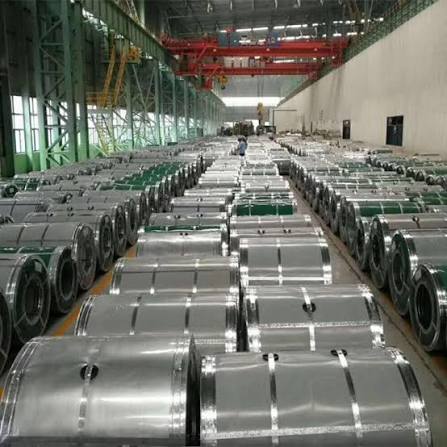
We have been supplying steel coil to Southeast Asian construction projects for over a decade. Among all the applications we see, cold storage in Indonesia gives us the most pause. Not because the steel is difficult to produce, but because the operating environment punishes shortcuts in ways that only become obvious after the building is up and running. By then, the bills are already piling up.
Consider the daily reality inside your freezer warehouse

You are standing in a -22°C cold room somewhere in Jakarta. Outside the dock door, the air is 34°C with 85 percent relative humidity. Every time a forklift brings in a new pallet, that warm, moisture-laden air rushes in. It hits the cold ceiling panels, the cold wall cladding, the cold steel racking. Instant condensation, which quickly turns to frost. Over an eight-hour shift, the door opens dozens of times. Each cycle adds another thin layer of ice onto every steel surface.
When the defrost cycle kicks in, that ice melts. The water runs down and seeps into panel joints. Then the temperature drops again and the water refreezes, expanding and prying the seams apart. Once a joint is compromised, moisture migrates deeper, right into the insulation core. Over months, those sandwich panels soak up water like a sponge. We have measured panels that gained over 500 kilograms of trapped ice. That extra dead load stresses the roof framing. In one facility we inspected, the entire ceiling system had sagged noticeably, and the operator had no idea why until we cut a core sample.
Condensation leads to corrosion, and corrosion never sleeps
The constant wet-dry cycling is bad enough, but if your site is near the coast, the air carries chloride salts. Those salts accelerate rust formation exponentially. We have seen Z60-galvanized roof panels showing red rust streaks around every fastener within a single rainy season. At the wall-to-roof junction, section thickness loss reached 37 percent after only four years. That is not a laboratory projection; that is an actual measurement we took from a Surabaya freezer that was still in operation.
Low temperature adds another layer of risk. Ordinary Q235 steel loses impact toughness below -10°C. A forklift bump that would merely dent a warm column can actually crack a frozen one. That crack grows with every thermal expansion and contraction cycle. Eventually the racking shifts out of plumb, and you notice it when pallets no longer slide into their slots smoothly. By then, the structural integrity is already compromised.

Surface coatings often fail when you need them most
Many contractors take a shortcut with spray-applied paint. In a cold room, however, the paint film shrinks at a different rate than the steel substrate. Adhesion breaks down, and flakes begin to peel off. Those flakes drop onto your product-frozen seafood, meat, or pharmaceuticals. A single contaminated pallet can cost thousands of dollars. And you cannot simply touch up the paint overnight. To recoat, you have to warm the room, relocate the inventory, and shut down operations for several days. The revenue lost during that downtime often dwarfs any savings from using cheaper paint in the first place.
What we actually recommend for your facility
We do not rely on brochures or guesswork. We run tests under conditions that mimic real Indonesian freezer operations, and we share the data openly with our clients.
Start with the steel substrate. We insist on Q355 low-temperature grade. This material retains impact toughness down to -40°C, so it can absorb the daily knocks from material handling equipment without cracking.
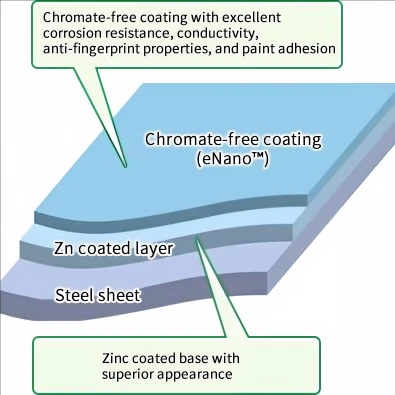
Next, look at the coating. For exterior cladding and structural framing in high-humidity zones, hot-dip galvanized coil is the only reliable choice. But you need more than a standard coating. We specify a minimum zinc weight of 150 grams per square meter, which we call Z150. For projects within five kilometres of the coastline, we strongly advise Z275 or even Z450. After galvanizing, we apply a passivation layer and a flexible organic topcoat with a glass transition temperature below -30°C. That topcoat moves with the steel as the temperature swings from tropical heat to freezer cold, so it does not crack or peel.
For interior surfaces that you see and touch every day, pre-painted coil offers a smooth, pinhole-free finish. The continuous coil-coating process gives uniform adhesion across the entire sheet. We have subjected our PPGI samples to salt-spray testing for 1,200 hours, and the coating retained over 92 percent adhesion. That translates to no flaking, no product contamination, and no costly repainting cycles.

Three design rules that matter as much as the steel itself
Even the finest coil cannot salvage a building with fundamental design flaws. We always remind our clients of three critical points.
First, position the vapour barrier on the warm side of the insulation. In Indonesia, that means the outside face. And seal every penetration with purpose-made boots, not ordinary tape. Tape dries out and cracks within two years under local conditions. We have pulled out tape that had turned into brittle dust.
Second, increase insulation thickness well beyond what you would use in temperate climates. For a -22°C freezer, aim for R-50 on the roof and R-40 on the walls. If you use less, the dew point falls inside the panel core, and you get hidden condensation that you cannot see until the panel bulges or delaminates.
Third, design for thermal movement. Your steel frame expands under the afternoon sun and contracts at night. If you bolt panels rigidly, the joints will tear apart over time. Use slotted holes and resilient sealants that accommodate that daily movement.
Compliance is your safety net, not a bureaucratic hurdle
Indonesia enforces SNI standards to protect building owners. Our coils are produced to meet SNI 07-7033-2004 for hot-dip galvanizing and SNI 3567-2024 for cold-rolled steel. Structural engineers should reference SNI 1729-2020 and seismic code SNI 1726-2019. We deliver every shipment with complete mill test certificates, and we coordinate with your fabricator to ensure the surface finish stays intact through handling and installation.
The real cost of getting it wrong
We have watched clients save 5 percent on their steel specification, only to pay 50 percent more in repairs within five years. Replacement of rusted panels, recoating of structural columns, reinforcement of sagging roof systems-and all of that while the freezer stands empty and your customers wait for their orders. That cost comes straight out of your operating margin. It is not something you can pass on to your clients.
We would rather help you get it right from the start
If you are planning a cold storage facility in Indonesia, send us your design conditions: the operating temperature, local humidity data, the site location, the type of panels you intend to use, and the expected door opening frequency. We will model the corrosion risk for your specific situation, recommend the optimal coating system, and supply sample panels for you to test in your own environment.
Make your decision on data, not on a sales pitch. Your warehouse is built to last decades. Let us make sure the steel performs as promised, without the nightmares that come from cutting corners.
Get Custom Steel Coil Solution for Your Indonesia Cold Storage
Share your project parameters, we provide corrosion risk analysis, steel grade & coating suggestion, free material samples and full SNI standard certification documents.