At Shandong Pinjie New Material Co., Ltd., our technical team has worked with zinc-coated steel products for 10 years, supplying materials to construction, manufacturing and agricultural clients across the globe. One question we get on nearly every client consultation is the real difference between regular spangled and Zero Spangle Galvanized Steel, and which grade makes sense for their specific project.
Over the decade, we've seen plenty of costly mismatches: buyers pick spangled material for high-end painting work and end up with surface defects, or overpay for spangle-free grade on concealed structural parts where it adds no practical value. The two products share the same core anti-corrosion principle, but their production differences create very real gaps in processing performance and long-term cost efficiency.
Our zero spangle galvanized products have been adopted for dozens of commercial greenhouse projects throughout Southeast Asia. Several of these customer projects have been highlighted in industrial media as benchmark cases of durable agricultural infrastructure.
Production Process & Visual Differences


The distinction between the two grades forms entirely during the hot-dip galvanizing line, right after the steel strip exits the molten zinc bath. Both start as base galvanized steel coil, which can later be sheared into custom galvanized steel sheet sizes. What sets them apart is how the zinc coating is cooled, and the chemical makeup of the zinc bath.
Traditional spangled GI Steel uses a natural cooling process. As the zinc layer cools gradually, zinc crystals form and grow into visible, snowflake-like patterns across the surface. The finish has a bright metallic sheen, and the textured surface is widely recognized as the classic look of galvanized steel.
Our zero spangle galvanized steel is manufactured under stringent process control. We restrict trace element content within the zinc bath and adopt fast cooling treatment to nearly fully inhibit zinc crystal formation. The finished steel boasts a smooth, consistent matte silver finish without any visible spangle grain. Such rigorous production supervision and full-scale quality inspection drive up manufacturing costs, resulting in a modest price markup and marginally extended lead times compared to conventional spangled galvanized steel.
Real-World Performance Differences
First, a point we clarify with every client: at equal zinc coating weight, regular-spangled and zero-spangled zinc-coated steel offer nearly identical baseline corrosion resistance. The presence or size of spangles does not make one inherently more rust-resistant than the other. This is one of the most common misconceptions we encounter in procurement.
Where the two grades diverge noticeably is in downstream processing and scenario-specific functionality, based on our years of field feedback:
1.Coating and paint adhesion

The smooth, consistent surface of zero spangle material provides an even base for painting, powder coating and color coating. When applied properly, the final finish is uniform, with no underlying texture showing through. For visible parts that require a flawless surface, this eliminates cosmetic rework. We've had clients in the past try to cut costs by using spangled GI Steel as a substrate for color coating, only to face an "orange peel" effect on the finished surface and incur extra rework costs. For any high-standard finishing work, zero spangle is the only reliable choice.
2.Precision forming performance
Zero spangle galvanized steel sheet has a more consistent surface friction profile, which reduces the risk of scratches and coating damage during stamping, deep drawing and complex bending. This makes it the preferred option for high-tolerance manufactured parts. Spangled material works well for standard structural forming, where surface appearance is not a critical requirement.
3.Performance in agricultural settings
For projects using galvanized steel for greenhouses and livestock facilities, surface smoothness has practical operational benefits. The flat, even surface of zero spangle material is easier to wipe down and sanitize, with fewer tiny crevices where dust, residue or microbes can collect. This is a meaningful advantage for operations that follow strict biosecurity protocols, such as organic farming or intensive livestock production. For basic greenhouse structural frames where routine cleaning is less frequent, standard spangled material remains a cost-effective and fully functional option.

Where Each Grade Works Best
From our 10 years of project delivery, the simplest selection rule is this: choose based on whether the part will be visible, and whether it will go through secondary coating or precision processing.
Regular Spangled galvanized steel is our go-to recommendation for structural and concealed applications:
Building structural components: light steel keels, purlins, support brackets and other hidden framing work
Industrial infrastructure: cable trays, electrical enclosures, and ventilation ducts installed in ceiling voids or equipment rooms
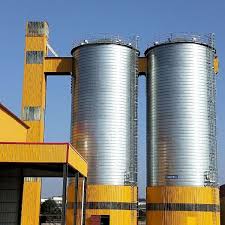
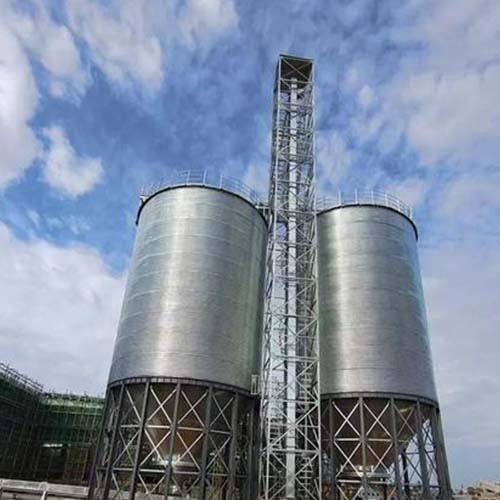
Basic agricultural structures: grain storage silos, farm building frames, and entry-level greenhouse projects where structural durability is the primary goal
In these use cases, the spangled texture has no impact on performance, and the lower material cost makes it the most economical choice.
Zero Spangle Galvanized Steel is specified for projects with stricter surface or processing requirements:
Home appliance and automotive parts: outer casings for refrigerators, washing machines and HVAC units, as well as automotive body panels that require high-quality paint finishes
High-end building materials: architectural curtain walls, exterior decorative panels, and products intended for fluorocarbon coating
Precision manufacturing: server chassis, high-end office furniture, and complex stamped components
Premium agricultural operations: commercial organic farms, high-value crop greenhouses and intensive livestock facilities. It is also the standard substrate used for high-quality color-coated steel production.

Practical Selection Advice From Our Technical Team
After helping thousands of clients specify materials for their projects, we've put together a few straightforward guidelines, plus one common myth to dismiss.
Let's start with the myth again: larger or more visible spangles do not mean better corrosion protection. Corrosion performance depends almost entirely on total zinc coating weight and coating adhesion. At the same zinc mass per square meter, both grades deliver equivalent baseline rust protection.
For quick, confident specification:
If your project involves concealed structural parts, general ductwork, or components that will not be painted or visibly exposed, spangled galvanized steel sheet is the most appropriate and cost-effective choice.
If your parts require high-quality painting, color coating, precision stamping, or will be visibly exposed to end users, specify Zero Spangle Galvanized Steel to avoid cosmetic defects and rework costs.
For greenhouse projects specifically:
Standard commercial growing operations working within a budget: Spangled material with a Z180–Z220 zinc coating strikes a reliable balance between durability and upfront cost.
Organic farms, high-value crop production, livestock facilities, and projects in coastal high-humidity areas: Zero spangle galvanized steel for greenhouses with a Z250–Z275 zinc coating is the better long-term investment. It holds up better against consistent humidity, fertilizer and pesticide residues, and requires less frequent surface maintenance.
One final practical note: if your project involves on-site welding, both grades will experience some zinc burn-off at the weld seam, and we recommend applying a zinc-rich paint touch-up after welding to maintain corrosion protection. This is a detail many first-time buyers overlook, regardless of which spangle grade they choose.
After 10 years in this industry, our core advice is simple: don't overspecify, and don't underspecify. Pick the grade that matches your actual performance needs, and you'll get the best balance of upfront cost and long-term service life.
If you're working through material specifications for an upcoming project and need help picking the right grade, our technical team is available to walk through your requirements and offer tailored guidance.