In earthquake-prone regions, high-rise curtain wall installations face persistent challenges: inter-story drifts impose cyclic stresses on framing, risking glass detachment, connection fatigue, and anchor failure. Rigid designs without adequate compliance often lead to water ingress, costly repairs, and extended downtime. The solution lies not in making the façade stiffer, but in enabling it to move with ground motion-and that requires steel with specific, measurable properties beyond those of ordinary carbon steel.

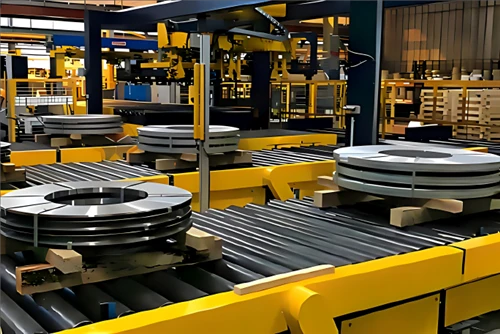
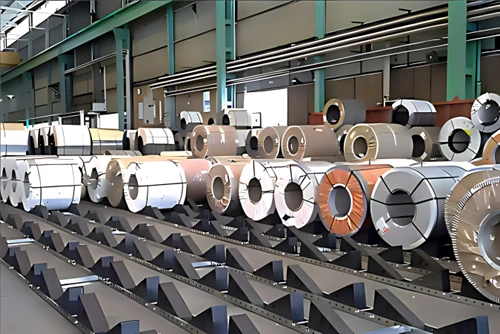
Shandong Pinjie New Material Co., Ltd. supplies steel coil materials engineered specifically for seismic curtain wall framing. Our coils support mullions, brackets, and sub-structures that accommodate drifts in the 1.0–1.5× range of anticipated building sway. This capability is achieved through three core material mechanisms, each of which sharply distinguishes our product from conventional carbon steel.

Base metal toughness – Our low-alloy grades are micro-alloyed with niobium and vanadium, and processed via controlled rolling to refine grain size. This delivers high elongation (≥22%) and excellent impact toughness even at low temperatures, allowing controlled yielding under cyclic strain. In contrast, ordinary carbon steel (e.g., Q235 or SS400) typically offers lower elongation (≤18%) and a higher ductile-to-brittle transition temperature, making it prone to micro-crack initiation during rapid drift reversals-a critical failure mode in seismic events.

Post-forming deformation capacity – Our coils are cold-rolled and annealed to optimize the balance between strength and ductility. Finished channel and box sections retain sufficient uniform elongation to redistribute stresses around slotted connection holes and slip joints, enabling the framing to rotate and slide repeatedly without permanent set. Ordinary carbon steel, often delivered in as-rolled condition, suffers from work hardening during forming; its yield strength increases but ductility drops, so the same joint details would concentrate strain at fastener clusters, leading to premature yielding or tearing under the 1.5× drift design requirement.

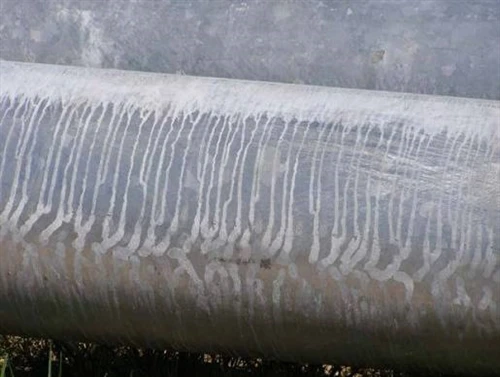
Coating fatigue resistance – Our zinc-aluminum-magnesium or PVDF coatings are formulated with enhanced flexural adhesion, so they do not micro-crack or delaminate after hundreds of cyclic bending cycles. This preserves corrosion protection at anchor threads and sliding interfaces-a hidden but frequent failure point. Ordinary carbon steel with standard galvanized or painted coatings typically shows cracking at bend radii below 3t after only 50 cycles, accelerating galvanic corrosion and loosening bolted connections over time.

Together, these differentiators mean that our steel does not merely "allow" movement-it manages it predictably, reducing sudden breakage and post-event water infiltration. Fabricators benefit from consistent coil-to-component quality, streamlining shop fabrication and site assembly. Projects using our materials have shown less remedial work after seismic events; the PwC Centre in Christchurch, for instance, retained its glass panels without major loss after the 2011 quakes-a real-world validation of drift-compatible design.
For procurement teams and developers, the choice is clear: ordinary carbon steel may suffice for static loads, but seismic resilience demands steel with proven toughness, deformability, and coating endurance. Shandong Pinjie New Material Co., Ltd. offers these solutions with full batch traceability, custom thicknesses, and on-site support-ensuring that curtain wall performance stays reliable long after the ground stops shaking.