The protective mechanism begins with the zinc coating itself. Once exposed to the atmosphere, the zinc surface rapidly forms a tightly adherent patina of zinc oxide and zinc hydroxide that subsequently converts to basic zinc carbonate. This inorganic film is essentially inert to ultraviolet radiation; it neither chalks nor undergoes the chain-scission reactions that destroy polymer binders. Empirical atmospheric-exposure programs conducted by ASTM Committees A05 (Metallic-Coated Iron and Steel Products) and G01 (Corrosion of Metals) across more than two dozen North American sites-from rural Pennsylvania to industrial New Jersey and marine Florida-demonstrate that zinc corrosion rates rarely exceed 0.3 mils (7.6 µm) per year and are frequently as low as 0.04–0.1 mils per year in milder environments. Critically, the data attribute the bulk of metal loss to moisture and airborne pollutants rather than to UV flux, confirming that the patina remains stable under prolonged solar radiation.
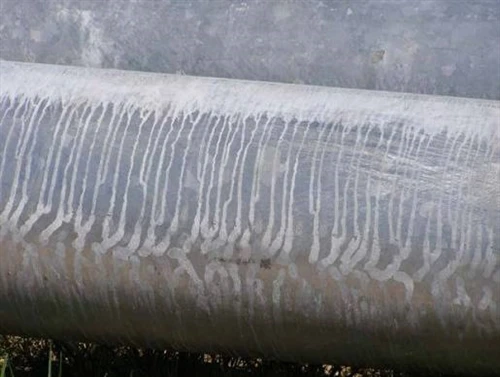
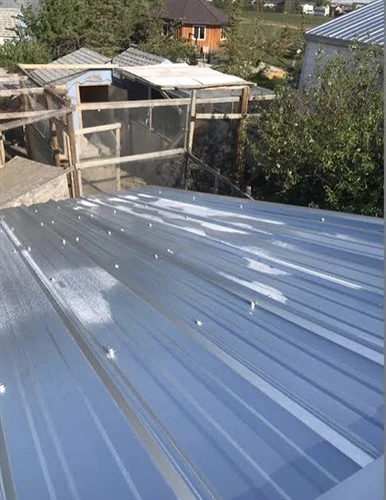
Long-term appearance stability follows directly from this chemistry. Within six to twenty-four months the initially bright or spangled surface weathers to a uniform matte gray. Unlike painted finishes, whose color shift is measured in ΔE units that progressively worsen, the galvanized patina stabilizes and thereafter changes only imperceptibly. Field observations of galvanized back pans and structural supports in curtain-wall assemblies after ten to twenty years of service in both temperate and high-UV climates show retention of coating integrity and absence of the chalking or peeling that necessitate overcoating of organic systems.

Selection therefore centers on matching coating mass and fabrication quality to the expected service environment. For most curtain-wall back pans and secondary supports, continuous galvanized sheet meeting ASTM A653 (or equivalent EN 10346) with a minimum coating of Z180–Z275 provides an ample zinc reservoir. Where higher structural loads or post-fabrication coating is required, batch-galvanized components conforming to ASTM A123 ensure full coverage of edges and welds. Drainage and ventilation detailing remain essential to minimize prolonged wetness, while compatible UV-stable gaskets and sealants complete the system. Accelerated protocols such as ASTM G154 fluorescent-UV/condensation cycling and ASTM D5894 cyclic corrosion testing can be used to verify duplex systems when an organic topcoat is specified, yet bare galvanized surfaces typically outperform coated alternatives under pure UV stress.
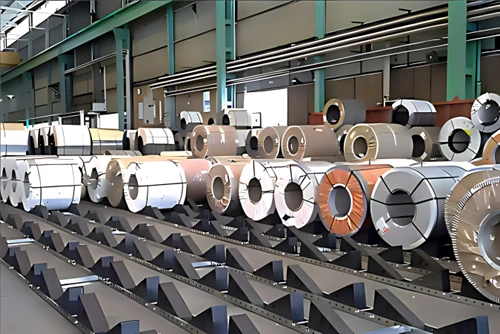
When curtain-wall designers specify hot-dip galvanized steel coil or galvanized steel sheet formulated for building façades, they obtain both sacrificial corrosion protection and inherent UV stability documented by decades of ASTM atmospheric data. Contact the technical team at sino-galvanized.com to discuss coating mass, surface finish, and certification packages suited to high-UV project locations.