Sites within a few kilometres of open water or subject to elevated chloride deposition are routinely classified under ISO 9223 as C4 (high) or C5 (very high) corrosivity. In these atmospheres the first-year zinc corrosion rate rises from roughly 0.7–2.1 µm/a in a typical C3 environment to 2.1–4.2 µm/a (C4) and 4.2–8.4 µm/a (C5), according to the ranges published in ISO 9223:2012. Simply specifying a heavier pure-zinc coating therefore yields rapidly diminishing returns; a more systematic approach that combines coating chemistry, thickness and, where necessary, an organic top-coat is required.
Determining the Corrosivity Category
Distance from the shoreline is only a first indicator. Chloride deposition rate, measured by the wet-candle method of ISO 9225, together with time of wetness and any industrial SO₂ contribution, governs the final classification. Published dose-response functions in ISO 9223 show that chloride deposition above approximately 300 mg m⁻² d⁻¹, especially when combined with high humidity, commonly places a site in C5. Sheltered surfaces that are not regularly rain-washed can experience still higher effective corrosivity because hygroscopic salts accumulate. Projects within about 1 km of an exposed coast or industrial harbour therefore default to C5 unless measured deposition data demonstrate otherwise; sites 1–10 km inland typically fall into C4, while distances greater than 10 km usually remain C3.
Behaviour of Pure-Zinc Coatings
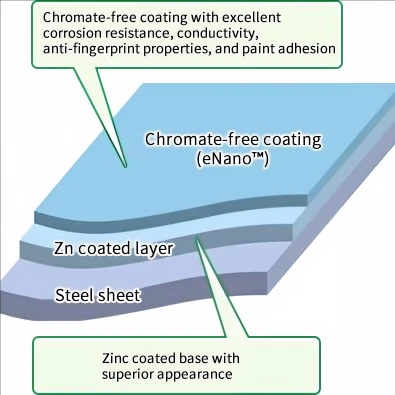
Hot-dip pure-zinc layers protect by sacrificial action and the gradual formation of basic zinc carbonates or hydroxychlorides. In high-chloride atmospheres the protective patina is continually disrupted, so the zinc is consumed at the elevated rates given above. A Z275 coating (approximately 20 µm mean thickness per side) may therefore provide only 5–10 years to first maintenance in C5 conditions-well short of the 15–25-year high-durability window commonly required by ISO 12944 for structural or cladding applications. Increasing thickness further improves absolute life linearly but does not change the underlying consumption mechanism, and the added cost and weight bring limited practical benefit once the design life is already compromised.
Advantages of Aluminium-Zinc Alloy Coatings
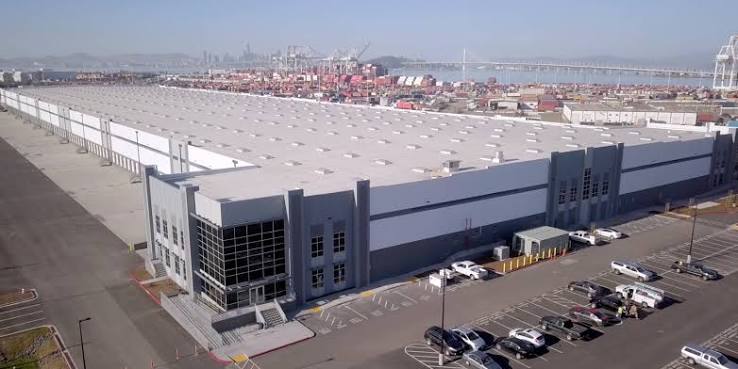
55 % Al–Zn (AZ) coatings develop a more stable aluminium-rich oxide barrier that resists chloride penetration more effectively than pure zinc. Long-term atmospheric exposure programmes summarised in industry technical notes (e.g., GalvInfoNote 1.4) have recorded corrosion rates for equal-thickness AZ coatings that are typically two to four times lower than pure zinc on flat surfaces in moderate-to-severe marine sites. The residual zinc phase still supplies limited galvanic protection at cut edges, although edge performance remains inferior to pure zinc. Consequently AZ150–AZ200 layers are frequently preferred for coastal cladding and roofing once the environment reaches C4.
Why C5 Almost Always Requires a Duplex System
Even an AZ200 coating is unlikely to satisfy a 15-year or longer design life in genuine C5 atmospheres when used bare. ISO 12944 therefore treats C5 (and the extreme CX category) as environments in which metallic coatings alone are rarely sufficient; a duplex system-metallic coating plus a weather-resistant organic top-coat-is the normal recommendation. The organic layer slows chloride access, protects the metallic coating from direct weathering and restores a uniform appearance. High-durability C5 systems typically combine a zinc- or AZ-based substrate with a multi-coat paint scheme whose total dry-film thickness and barrier properties are specified to meet the standard's performance criteria.
Practical Selection by Distance from the Coast
| Distance from open sea | Typical corrosivity | Recommended metallic coating | Additional measures |
|---|---|---|---|
| >10 km | C3 | Z180 or AZ150 | Bare coating usually adequate |
| 1–10 km | C4 | Z275 or AZ200 | Colour coat advisable for longevity and aesthetics |
| <1 km or industrial port | C5 | AZ200 | Weather-resistant colour coat essential (duplex) |
These distance bands are industry rules of thumb derived from ISO 9223 environmental descriptors and field observations; site-specific chloride measurements remain the definitive basis for specification.
Typical Applications
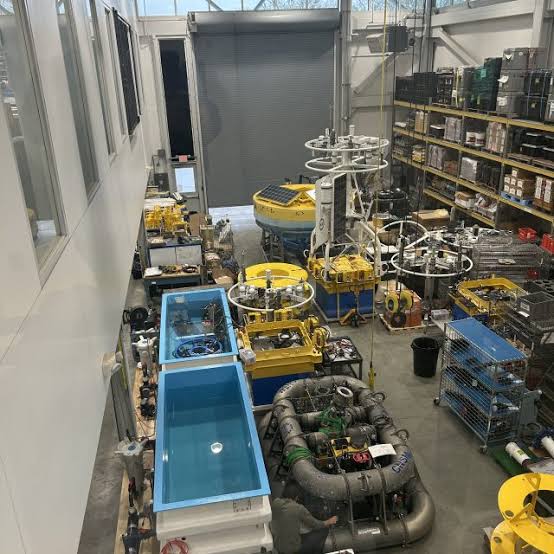
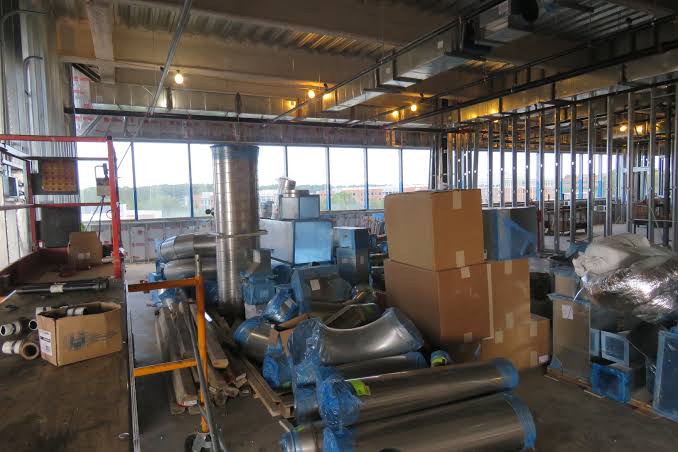
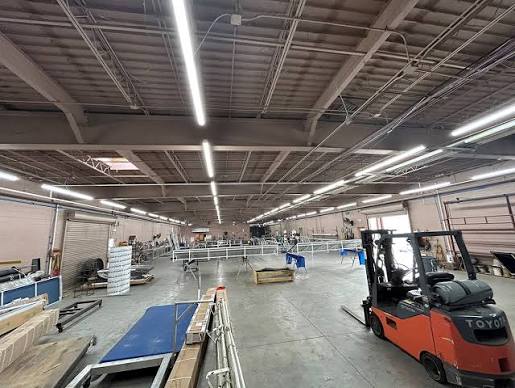
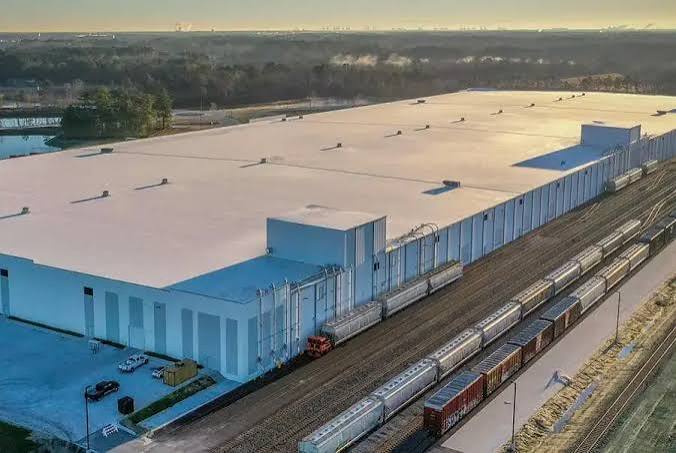
The same logic applies to coastal industrial workshops, port warehouses and logistics halls, seaside commercial or residential buildings, and infrastructure such as substation enclosures or conveyor galleries located in marine-climate zones. In each case the combination of high zinc or AZ substrate with a properly specified colour-coat system provides the most reliable route to the required service life.
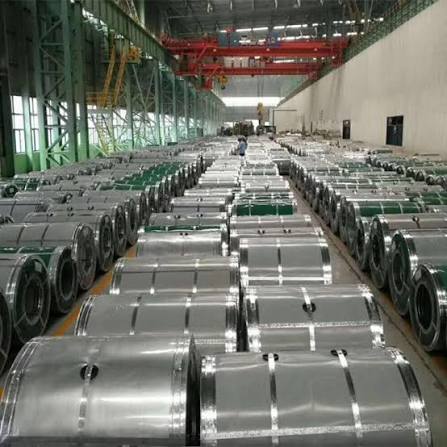
High-zinc (Z275 and above) and AZ150–AZ200 coils, both bare and pre-painted with weather-resistant systems suitable for C4–C5 exposure, are available for these environments. Specifiers can match coating mass and paint system to measured or estimated corrosivity so that the finished cladding or structural element meets the intended durability without unnecessary over-specification. Contact us for project-specific recommendations.