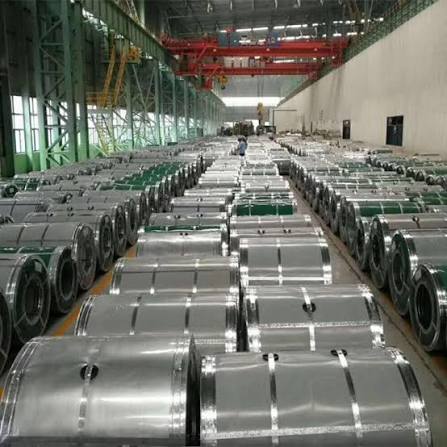
Why the roofs we quote now look different
Five years ago, when a fabricator called us about roofing coil, the conversation was about thickness, zinc weight and price per ton. Gloss rarely came up. It comes up now, and not only from architects. Fabricators ask for it because their clients have started complaining about glare, and because a charcoal roof that mirrors the sky photographs badly. We noticed the change in residential enquiries first, then in commercial work. Two things made it practical: coating lines now hold a low gloss across a long run without the mottling that used to show up on the fourth or fifth coil, and the market moved to anthracite, slate and bronze, where high gloss reads as plastic and matt reads as metal. So the question buyers send us is no longer whether matt is durable. It is which matt, and how do you specify it so the next coil matches this one.
Where the wrinkle comes from

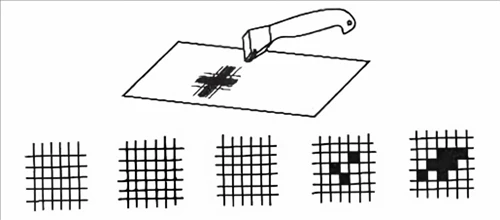
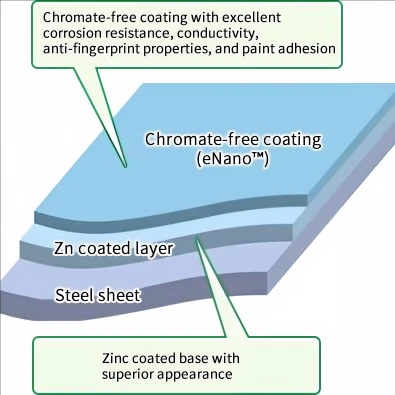
Start with the process, because it explains most of what follows. The pattern is not a film and not a laminate. It is put into the paint while the paint is still wet, by a textured applicator roll in the finish coater, then cured. Depth is usually under 100 microns. What leaves the oven is coated strip whose surface is part of the coating system. That matters to you twice. Nothing can peel, because there is nothing separate to peel. And the steel underneath is the same steel, with the same yield and elongation, so you are not re-qualifying your roll former, only your bend test. Gloss is the measurable part. Measured at 60 degrees under ISO 2813, standard gloss coil sits around 30 to 60 units and a matt or wrinkle between roughly 3 and 10. When a buyer says matte, ask for the number rather than the adjective. Two coils can both be called matte and sit four units apart.
What texture does to light, and what it does not do

Glare is a geometry problem. A gloss roof at midday returns a narrow beam, and that beam lands in a window, a windscreen, or the facade opposite. It is uncomfortable to look at, and on a residential street it is the complaint that reaches the developer after handover. Scatter the beam and the problem softens. Textured steel sends light in many directions, so the roof still reads bright but stops acting as a mirror. Panel crowns, which face the sun hardest, lose that hard highlight. What texture does not change is solar reflectance. If your project is assessed for a cool roof rating, color and pigment are doing the work, and a matte charcoal roof is still a dark roof. Infrared-reflective pigments are the lever there, and they should be backed by a test report rather than a color card.
The part buyers underestimate: the panel, not the paint
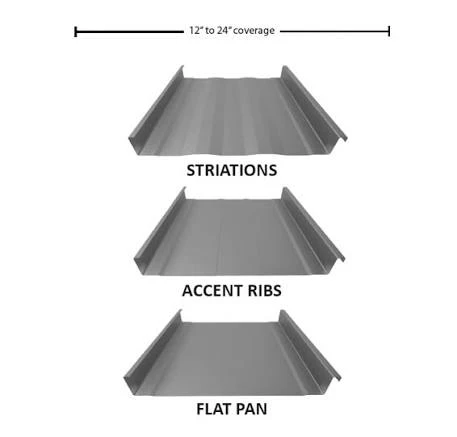
Most of the complaints we are asked to investigate are not coating failures. They are appearance problems that a coating either hides or exposes. Long panels are never perfectly flat. Roll forming leaves slight waviness, and a wide pan can oil-can between ribs. Under gloss, each of those areas catches light at a different angle and you can see them from the far end of the site. Under texture the reflection is already diffuse, so the same panel reads as one plane. This is why standing-seam and concealed-fix fabricators moved to matt before the architects did. Dirt behaves the same way. Runoff on a gloss roof leaves bright tracks that contrast with the surrounding color; on textured steel the marks are there but stop standing out. Texture does not prevent soiling, it changes how much of it you see. What keeps color honest is the coating: SMP for roughly a decade of moderate UV, PVDF at around 70 percent fluoropolymer for coastal, high-UV or long-service roofs, evidenced by gloss retention and Delta E from accelerated weathering rather than a datasheet adjective.
Choosing between matt, gloss and bare galvanized
Three surfaces come up in most of our enquiries, and they behave very differently once the roof is up. The table below is a starting point for a conversation with your designer rather than a specification, because the numbers move with the coating system and the panel profile.
Table 1. Surface finish comparison for roofing
|
Surface |
60-degree gloss (GU) |
Dirt visibility |
Where it normally goes |
|
3 to 10 |
Low |
Premium residential, commercial complexes, public buildings |
|
|
Standard gloss PPGI |
30 to 60 |
Medium |
Industrial sheds, warehouses, general cladding |
|
Bare galvanized coil |
20 to 50 |
High |
Temporary works, low-exposure functional roofing |
We still ship a lot of standard gloss coil, and for a warehouse seen from a highway it is the correct answer. Bare galvanized is a functional material and behaves like one, dulling and chalking within a few years, which is acceptable on a site hoarding and not acceptable on a villa. The step from gloss to matt is small in cost, because it adds a process step rather than a new chemistry. Matt Wrinkle PPGI roofing has moved from a seasonal special order to something we would rather keep on the floor.
Specifying it so nothing comes back
Thickness is your engineer call, though the roofing range we ship runs from 0.45 to 0.6 mm. Let the exposure set the substrate: Z275 zinc inland, AZ150 zinc-aluminum on the coast, with the ISO 9223 corrosivity category deciding which. Color is where projects go wrong. RAL is a reference, not a promise; 7016 in matt and 7016 in gloss are different animals, and a phone screen will mislead you. Approve a physical sample in the light the building will actually be seen in, on the profile it will be formed into. Then put the numbers in writing: dry film thickness for primer and topcoat, T-bend result to EN 13523-7, allowed color difference between coils in one batch, and salt spray hours if the site is coastal. A 2T bend is what a roofing profile normally needs, and 3T buys margin. Ask for the coil ID stenciled on the wrap and keep the retained sample. When a question arrives three years later, that sample is the only honest answer you will have.
Where we would not use it
Not every project should specify this finish, and we say so before quoting. If the roof will never be seen from an occupied position, texture is money spent on nothing. Where the coating system was chosen on price alone, a cheap matte will chalk and patch, and the texture makes patching harder to hide rather than easier. On tight bends with heavy film weights, cracking appears sooner on textured stock. None of it helps an underspecified substrate, either. A matte textured color coated steel roof is bought for how it looks in its fifth year, so the money belongs in the coating and the zinc, not in the pattern.
What we supply, and what we will not put our name to
We hold and ship matt and wrinkle PPGI from 0.3 to 1.2 mm, in widths from 600 to 1250 mm, SMP or PVDF, RAL matched, fine orange-peel or coarse wrinkle, packed eye-to-sky with edge protection and traceable by coil number. Send the RAL number, texture grade, thickness, width and tonnage, and we will come back with the sample, the measured gloss and the earliest production slot. For premium roofing PPGI 2026 specifications, the sample set goes out with the quotation, not after the order. What we will not do is sign your span, your fixing pattern or your thermal performance. Those belong to your engineer, and a coil supplier who offers them is telling you something about himself.