Variations in Zinc Requirements Across PV Environments
In the course of reviewing coating performance data from utility-scale and rooftop arrays spanning inland China, Southeast Asian industrial zones and coastal installations, the same pattern emerges: a single zinc thickness rarely serves every site equally well. Inland fixed-tilt farms in low-corrosivity atmospheres can operate successfully with moderate coatings, while coastal or high-humidity rooftop projects demand substantially thicker layers to counteract accelerated zinc loss. Field observations from projects near the Gulf of Thailand and along the Chinese coastline show that underestimating local corrosivity often leads to premature white rust or base-steel exposure well before the 25-year design life of the modules.

Relevant ASTM Parameters for Structural and Sheet Products
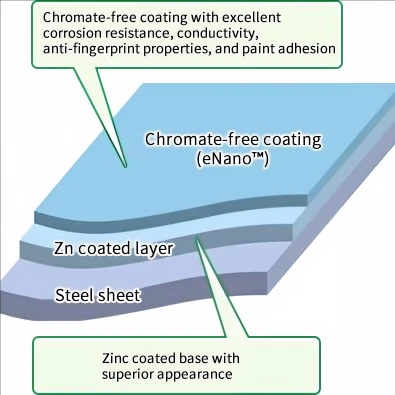
Two ASTM specifications govern most PV mounting steel. ASTM A123/A123M applies to fabricated structural shapes, plates and pipes; its minimum average coating thickness is linked to steel thickness and category-commonly 100 μm for structural shapes thicker than 6.4 mm and 75 μm for many pipe and tubing sections. ASTM A653/A653M covers continuously galvanized sheet and coil, expressed by coating designation: G90 (Z275) provides roughly 19–21 μm per side, while heavier designations such as G115 or G185 increase that figure. For most PV applications seeking alignment with IEC 62548 guidance, practitioners typically specify a minimum of 75–85 μm under A123 or at least Z275 under A653, with particular attention to weld zones and cut edges that must retain adequate residual thickness after fabrication.
Service Life Linked to Coating Thickness
Zinc corrosion rates published under the ISO 9223 classification system supply the practical link between thickness and longevity. In rural or mild C2–C3 atmospheres the annual zinc loss is often only 0.5–1.5 μm, allowing a G90/Z275 coating to deliver 20–50 years of protection. In industrial or urban settings the rate rises to 1.5–5 μm per year, and in coastal C4–C5 environments it can reach 2–4 μm or more. Consequently, an 85–100 μm coating becomes the more realistic choice if a 25–40 year service interval is required without intermediate recoating. Salt-spray results under ASTM B117 consistently show that thicker hot-dip layers postpone the appearance of red rust far beyond the performance of thin electroplated alternatives, confirming the field correlation.
Practical Selection Guidance
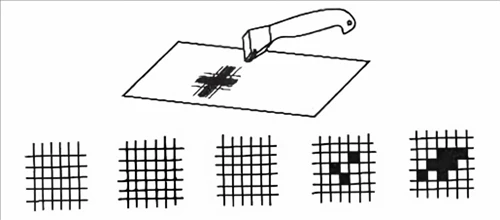
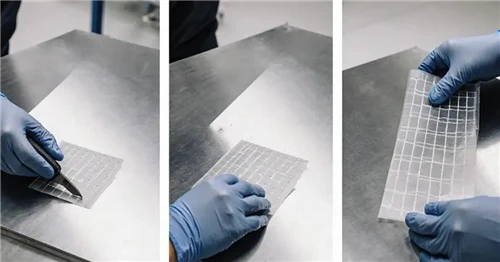
The most reliable approach begins with a site-specific corrosivity assessment rather than a generic minimum. For inland or moderate-humidity rooftops, Z275 or an 75–85 μm A123 coating is frequently sufficient. Coastal farms, high-humidity industrial roofs and locations with frequent salt-laden winds benefit from 85–100 μm or heavier designations, sometimes supplemented by Zn-Al-Mg alloy coatings that have demonstrated multi-fold improvements in marine exposure trials. Verification should include magnetic thickness gauging at multiple points after fabrication, following recognised sampling methods such as those outlined in GB/T 4956 or equivalent ASTM practice.
Matching Products for Different Project Profiles
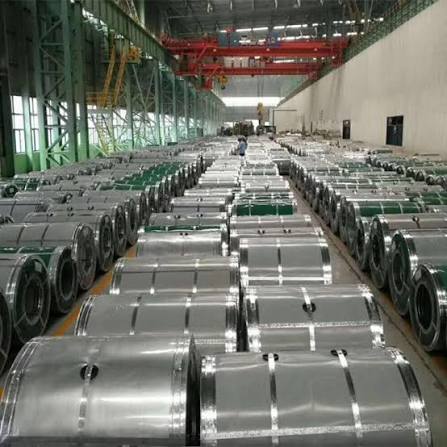
Our production range of high-quality hot-dip galvanized steel coil and structural sections is deliberately configured to cover these graded requirements. Coil can be supplied to Z275 and heavier designations suitable for cold-formed purlins and rails, while fabricated members meet A123 thickness minima appropriate for ground-mount posts and heavier brackets. The same material base also supports the lightweight rooftop mounting profiles used where roof load limits demand thinner yet adequately coated sections.
Next Step for Project Specification
If you are finalising coating requirements for an upcoming array, a short discussion of site corrosivity and structural category will allow precise matching of thickness and alloy system. Please contact our technical team to review available coating options against your project's location and design life targets.